
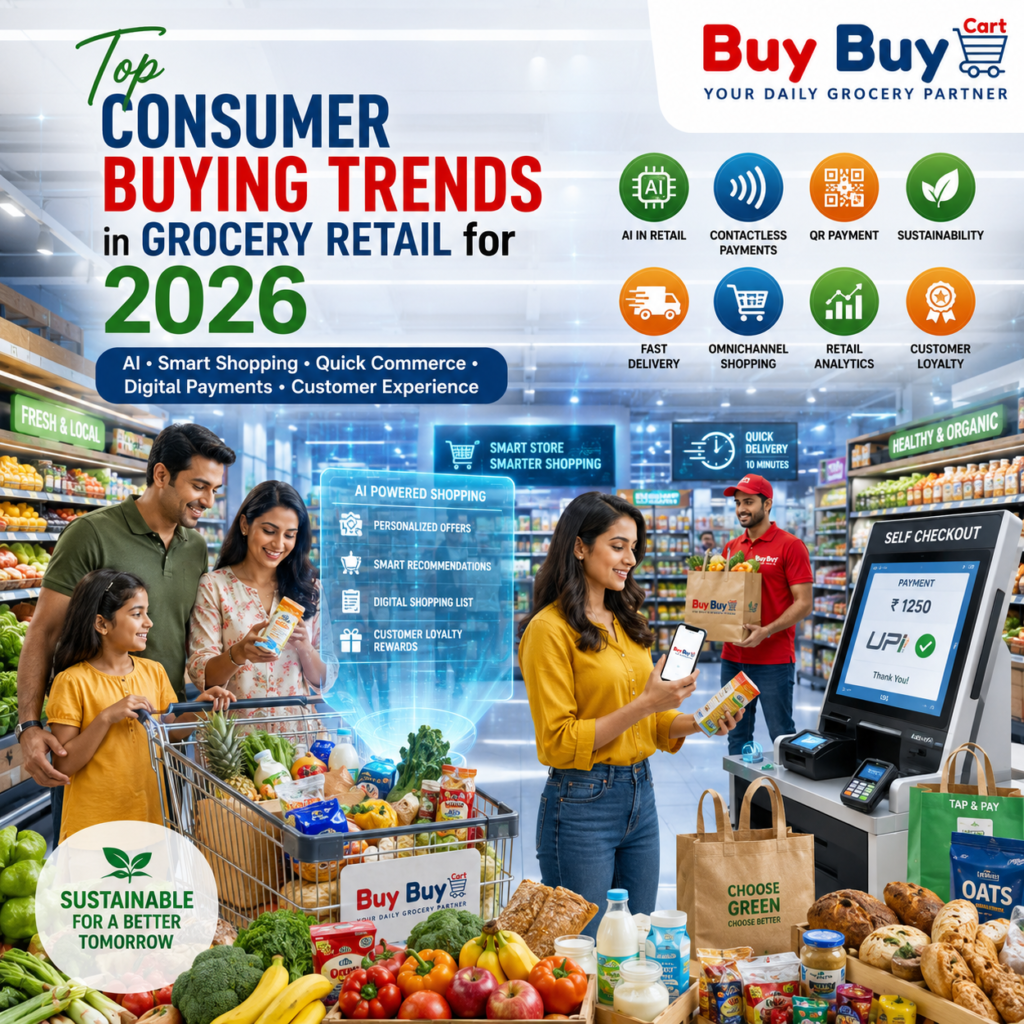
Over the recent past, the grocery retailing sector has transformed itself at a fast pace. The advent of technology, the changing expectations of consumers, inflation, the emergence of digital payments, and the popularity of quick commerce have changed the way in which people buy goods for normal consumption. Consumers in contemporary times expect convenience, speed, low rates, incentives, and ease of shopping, either through a physical store or over the Internet.
The changing grocery trends will have a far-reaching impact on grocery retailing now and in the future all over India and the world. It is important for grocery stores, supermarket owners, retail entrepreneurs, investors, etc., to know about these changes. Customers change in their shopping behaviour, and grocery businesses cannot ignore this fact.
Regardless of whether you manage a small Kirana store or are seeking to grow your supermarket, keeping abreast of the latest grocery shopping trends can enhance client loyalty, boost sales, and create the conditions for sustainable development.
Importance of Grocery Trends in 2026
The grocery retail industry is entering a brand-new age in which customers expect more than just shelves filled with merchandise. Modern shopping patrons conduct comparison shopping via the Internet, check reviews for the product, look for healthy options, and consider the possibility of getting items delivered fast as soon as they decide to buy something. This change in consumer expectations is forcing supermarket owners to change their approach to running their business.
Customers with a digital-centric mentality are becoming the new norm. The availability of mobile applications, digital grocery shopping, QR payment systems, and recommendations provided by artificial intelligence has made shopping convenient and fast.
At the same point in time, the competition within the grocery retail market keeps on rising. Big supermarket chains, small grocery shops, local delivery marketplaces, and rapid commerce companies all target the same audience. Therefore, customer care, innovation, stock management, and choice of technologies have become more relevant than ever.
By understanding the newest grocery trends, retail industry players make better investments and raise their profitability.
Top Grocery Trends Shaping Consumer Buying Behaviour in 2026
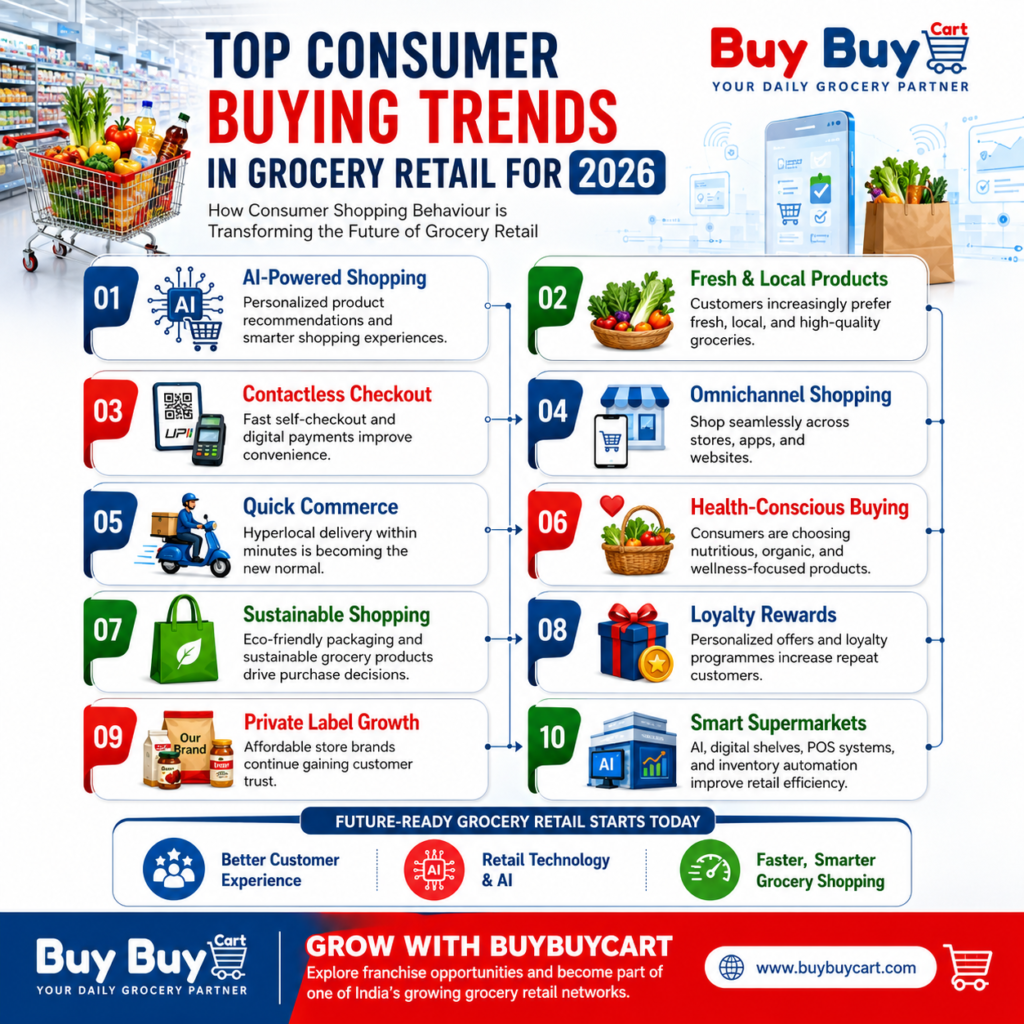
AI-Powered Personalized Shopping
Nowadays, artificial intelligence is becoming one of the main impulses for grocery retail transformation. The use of AI in stores allows supermarkets to understand customer’s preferences, review their shopping history, and suggest goods for sale based on their buying pattern.
Instead of offering the same special deals to every buyer, traders can practice personal discounts.
Growing Demand for Fresh and Local Products
The market response of consumers is shifting towards their preference for the freshness and the quality of goods. Fresh fruits, vegetables, dairy goods, baked items, and other FMCG goods that are sourced locally are now preferred over those that are made in bulk.
The practice of sourcing from local producers and suppliers can also help customers create trust while saving on shipping costs. The trend is expected to intensify in the grocery market of India.
Automated Checkouts and Contactless Transactions
Long queuing systems in supermarkets create problems for consumers. Smart checkout systems, self-checkout kiosks, QR code payment systems, UPI-based transactions, and contactless payments are expected to be the norm by 2026.
Shortening of the checkout process will enhance the client experience as well as cause them to come again, in addition to helping retailers deal with peak hours effectively.
Omnichannel Grocery Shopping Feature
Customers are no longer interested in the difference between online and offline shopping; for them, omnichannel retail shopping means that they will be able to browse for products and make purchases at their convenience.
In order to provide customers with a smooth and effective shopping experience, grocery retailers are linking the traditional stores with digital applications.
Quick Commerce and Hyperlocal Delivery
Quick commerce has changed customers’ expectations completely, since many of them expected to get grocery deliveries not in hours but in a few minutes.
In urban areas, hyperlocal delivery can really work in favor of supermarkets, since urban customers value fast deliveries and fresh products more than cheap prices.
Health-Conscious Buying Habits
Health consciousness is influencing grocery shopping decisions more and more. Customers are looking for organic products, meat substitutes, foods without sugar, millet-based foods, healthy snacks, and natural ingredients.
Grocery retailers that are able to provide customers with healthy product options will definitely succeed in attracting more customers.
Eco-Friendly Packaging and Sustainable Products
When making a purchase, consumers are increasingly incorporating sustainability into their considerations. People are putting importance on the type of packaging used, reusable bags, and production methods used to make products.
By taking steps towards sustainability, retailers can not only minimize their negative environmental impact but also improve their brand image in the eyes of customers with environmentally friendly views.
Loyalty Programs and Personalized Offers
In today’s world, customer loyalty has become more important than acquiring new customers. Digital loyalty programs offering unique bonuses, regular discounts, and birthday promotions help businesses drive repeat purchases.
Private Label Products Becoming More Popular
Private label products are on the rise as they provide value at affordable prices. Consumers are buying product lines of retailers in many categories such as food items, household products, and personal hygiene.
For supermarkets, private label products lead to increased profit and competitive branding.
Smart Stores Using Retail Technology
With the gradual advancement of technology, the grocery retail future relies on smart supermarkets.
Grocery stores implement technologies to improve efficiency and streamline their operational processes. Among the most popular retail technologies are innovative POS (point of sale) systems, inventory management software, and demand forecasting solutions based on artificial intelligence.
Also Read: How to Boost Grocery Sales with WhatsApp Marketing
How Grocery Retailers Can Prepare for These Grocery Trends
To know how to prepare for future grocery trends, grocery stores must not only adopt cutting-edge technology. Grocery operations need to find the balance between customer innovation and operational efficiency.
The layout of stores can be improved in order to make shopping better and inspire customers to buy all possible products. Efficient inventory management leads to better availability of goods and less waste. According to experts, grocery retailers should create an effective system of marketing, including the use of WhatsApp and social media.
Technology should help grocery retailers both satisfy customers and improve their business model.
Specific implementation steps include:
- Advance the point of sale systems along with billing counters
- Advance inventory management by utilizing retail tech.
- Create customized promotions and customer loyalty schemes.
- Improve in-store navigation and the arrangement of goods on shelves.
- Enhance online grocery shopping and hyperlocal delivery.
- Train employees to provide quality service every time.
Retailers who are constantly innovating will be in a better position to respond to changing shopping practices and trends in supermarkets.
BuyBuyCart’s Adaptation to the Future of Grocery Retail
While customer expectations continue changing, BuyBuyCart is focused on developing the modern grocery retail experience enabled by its name. This grocery brand adapts constantly to the latest grocery trends today with the help of competitive pricing, a customer-centric shopping experience, digital means, and a growing grocery network in India.
Additionally, BuyBuyCart realizes that the future of grocery retail is the combination of brick-and-mortar supermarket operations and technology-driven solutions for simplifying grocery shopping.
If you plan to commence your own supermarket business, it is very important for you to understand the changes that are taking place in the grocery market of India when entering the grocery industry.
Conclusion
The upcoming grocery retail industry of 2026 is going to be led by modern technology, convenience, sustainability, personalization processes, and innovation aimed at customers. From using AI for shopping experiences, omnichannel retail, and a concept of quick commerce to smart supermarkets and eco-friendly practices, these trends are going to change both the shopping behaviors of customers and the business activities of retailers.
Companies that are willing to accept innovations in the sphere of retail, improve customer experience, implement retail technologies, and adapt to changing buying behaviour will survive in the coming years.
Frequently Asked Questions (FAQs)
- What are the winning grocery trends in 2026?
In 2026, the best grocery trends include artificial intelligence-driven personalisation, omnichannel grocery shopping, quick commerce, hyperlocal delivery, cashless payments, eco-friendly grocery shopping, futuristic supermarkets, and enhanced customer loyalty systems.
- How does artificial intelligence change grocery retail?
Using AI, grocery retailers analyse consumer habits, enhance inventory management, project expected demand, improve marketing activities, and create better shopping experiences.
- Why is it significant to have omnichannel grocery shopping?
Thanks to omnichannel retail, customers can shop seamlessly through stores, websites, and mobile applications, which makes the whole process more convenient.
What do consumers want from supermarkets these days?
Today’s supermarket customers expect the following advantages: competitive prices, fresh goods, speedy checkout, digital payment options, personalised offers, prompt delivery, and high-quality service.
How can grocery retailers stay on top of the competition?
To maintain competitive advantages, retailers need to harness retail technology, focus on customer experience, utilise digital marketing, strengthen customer loyalty systems, and enhance inventory management.