buybuycart.com

BuyBuyCart Admin

What Makes Customers Loyal to a Supermarket Brand

What Makes Customers Loyal to a Supermarkets Brand?

Supermarkets are constantly under pressure to bring in customers and keep them coming back to their store due to the ever-increasing competition within the retail industry. As there are more and more places to shop than ever before (local grocery stores, hypermarkets, and online grocery shopping), just providing grocery items isn’t going to get you there; supermarkets will need to put a greater emphasis on building solid customer relationships if they want to be successful in this competitive market. Customers who have developed loyalty to a supermarket brand represent one of the most valuable assets to a supermarket brand. Not only do loyal customers tend to buy from you regularly, but they also typically spend more over time and share their experience with others (friends/family), decreasing overall costs associated with acquiring new customers and increasing long-term revenue for your business. The retention of existing customers also contributes greatly to the overall success of a supermarket in terms of its profit margins. Many factors contribute to customer loyalty in supermarkets, and they include: Product Quality, Pricing, Customer Service, Convenience, Trust, and Personalised Experience. Knowing these factors can assist retailers in establishing an atmosphere where customers will continue to return on a weekly basis. This article will discuss the important factors that contribute to customer loyalty and the means in which supermarkets can improve the way they maintain a relationship with their customers as the retail environment continues to evolve. Why Customer Loyalty Matters for Supermarkets In addition to simply being a frequent visitor, loyalty involves the emotional bond and level of trust a shopper has developed with a supermarket’s brand. In the example of supermarket loyalty, it is evident that when customers consistently select the same supermarket, even if there are other supermarkets nearby, they have established an emotional connection that has transcended the price they pay for products at the supermarket. This positive association with the supermarket will lead customers to make more purchases at that location, as well as be more likely to participate in the supermarket’s promotional activities and advocate on behalf of the supermarket to others. The recommendation of a loyal customer may ultimately lead his or her family members, friends, or members of the online community to shop at the same supermarket. Some of the key advantages of having a loyal customer include: The customer has a higher lifetime value as a customer; repeat purchases are made more frequently; the cost to advertise and acquire new customers is decreased; there is an enhanced brand image; loyal customers will show increased resistance to promotions from competing businesses; there is an increased word-of-mouth referral from a loyal customer; the supermarket will experience enhanced profitability and stability in revenues. By investing in customer retention strategies, supermarkets have the potential to have long-term financial success compared with focusing solely on attracting new customers to their stores. Key Factors That Make Customers Loyal to Supermarkets Good Quality and Freshness of Products The primary reason people go back to grocery stores is trust in the quality of the products. Customers get a strong impression of a grocery store’s quality when they see fresh produce, fruit, vegetables, dairy, meat, and bakery goods. Grocery customers also want to feel comfortable knowing that the grocery store has safe, high-quality products, and that their money will be well spent on groceries. Another reason why customers return to grocery stores is reliability. Customers want to know that they can depend on finding good-quality products every time they shop. A grocery store with consistently fresh and high-quality produce and an established reputation will gain the confidence of grocery customers as they continue to shop. There are some reasons why customers develop loyalty based on the quality of groceries: If a grocery store meets the above criteria, grocery customers will naturally develop better loyalty to the grocery store. Competitive Pricing and Value Price is a significant factor influencing how customers shop for groceries, but not all loyal customers are loyal strictly due to price. Customers may focus more on value than they do price, and some customers will choose to pay a little extra if they believe they are getting better quality, convenience, or service in the end. Supermarkets that are able to communicate value to their customers tend to outperform their competition. Supermarkets can create the perception of low prices while still maintaining a profit by utilising strategic promotions, discounts, bundles, and private-label products. What customers want: When retailers implement a reasonable price strategy, they create a continual purchase opportunity for the shopper while also building customer satisfaction. Excellent Customer Service Outstanding customer service can turn one-time customers into long-term customers. When customers have a friendly, personable interaction with employees, are helped by knowledgeable employees, and receive help in solving problems quickly, it creates a positive experience they will remember. Today’s consumers expect more than just a transaction to take place when they shop at the supermarket. They want employees who can recommend products to them, answer their questions, and help them locate the products they need. Resolving complaints quickly shows customers that the supermarket cares about their business. Good customer service practices include: Approachable and Friendly Employees Resolving Complaints Quickly Personalised Assistance to Customers Train Professional Staff Provide Helpful Recommendations for Customers Consistent Service Quality A good overall customer experience in a supermarket can often be the key decision-making factor in determining whether a customer will choose to shop at that supermarket over competing supermarkets. Convenient Shopping Experience Consumers increasingly prefer to shop conveniently. Today’s busy shoppers prioritise convenience when choosing grocery stores because they offer a simple, stress-free shopping experience. Every step of the shopping experience, from parking availability to store layout, affects the consumer’s overall experience as they navigate through the store. An organised store layout allows the consumer to locate the items they wish to purchase quickly. An efficient checkout service lowers wait times and increases customer satisfaction levels. The more convenient the shopping experience is for the customer, the more likely it

What Makes Customers Loyal to a Supermarkets Brand? Read More »

Best Location Selection Tips for Opening a Grocery Store

Best Location Selection Tips for Opening a Grocery Store

Starting a grocery store can be an exciting opportunity, but there is one decision that may determine whether or not your grocery store will be visited regularly – where to put it! Many grocery store owners spend a lot of money on inventory, interior design, technology, and marketing, but then fail to make enough money because of their choice of location. A good grocery store location can provide you with frequent customer traffic, loyal customers, visibility, and expanded growth potential over time. On the flip side, a poor grocery store location can lead to increased operating costs and lower sales potential. If you are considering opening a small kirana store, a neighbourhood grocery store, or a supermarket franchise outlet, you should make the best grocery store location your number one objective. In this guide, we will look at practical tips for choosing grocery store locations from actual experiences of retailers, customer behaviours, and trends of the market. Why Grocery Store Location Matters More Than Anything Else The majority of customers who buy groceries are motivated by convenience; therefore, compared to businesses in which customers are willing to travel numerous miles for their product, convenience is much more important to a grocery store customer. When customers can find a grocery store that is convenient in: They will oftentimes accept a slightly higher price for the products, because the store saves them time. This is the reason that grocery retail companies spend considerable time developing their location strategy prior to opening a store. A strong location can: Understanding Your Target Customers Before Selecting a Location Know what kind of customers will shop at your store before starting to search for a location. Questions to Consider: Who will be purchasing from your Grocery Store? Different types of customers have different preferences when it comes to shopping. Example: Business professionals like to be able to quickly make purchases and have digital methods available to pay for items.Families want larger stores with more variety in the product line.College-aged students want low prices and close locations.Seniors like to shop where they live. Stores located near areas primarily possessed of residential structures may outperform locations primarily positioned near business establishments when it comes to the daily purchasing of groceries. Understanding the demographics of your target customers will guide your decisions on how you want to position the grocery store for the best overall results. Conduct Local Market Research Before Finalising Any Property One of the biggest mistakes new grocery entrepreneurs make is choosing their shopping location based purely on rent. Just because a place has low rent does not mean it will be a profitable business. What is included in local market research? Areas to analyse: Spend time reviewing the area during the following times of the day: You will find consumer movement patterns that are not visible in the reports. Also Read: How to Start a Profitable Grocery Store Business in India Analyse Footfall Very Carefully What is footfall analysis? Footfall analysis measures the number of potential customers who walk past your location on any given day. A busy site will generally create a greater number of opportunities for impulse buying and re-visits. But not all footfall is created equal. For example, someone walking past your location by a busy bus stop will have thousands of customers a day passing through the site, but if those customers are all just commuters on their way to or from work, grocery store sales will still be limited. On the other hand, if you are located in a residential area with only average foot traffic, you will most likely sell more groceries than you would at a bus stop because the residents will always need to buy groceries every day. The objective is to find relevant footfall instead of just high footfall. Choose Grocery Store Locations Near Residential Areas Residential neighbourhoods are one of the top types of grocery locations. Why? Because grocery items are bought over and over again. Typically, people will use grocery stores closest to their homes for items such as: Grocery stores positioned near residential developments (apartments, gated communities, and residential neighbourhoods) enjoy daily consistent sales. Many successful supermarket chains have opened grocery stores close to residential clusters, due in part to this fact. Check Accessibility and Parking Availability And while a grocery store may have great product offerings and low prices, shoppers will avoid a grocery store if it is not easy to get to. Look for properties that have: Easy Access to Roads Shoppers should have ease of access for both entering and exiting the grocery store. Availability of Parking The availability even of a small number of parking stalls can have an extremely positive impact on the customer experience. Easily Walkable Pedestrian-friendly locations also increase the number of times a grocery store is used. Delivery Convenience If you provide home delivery, ease of access enhances the efficiency of your delivery personnel. The ability for customers to access your grocery store location has a direct impact on the level of customer satisfaction and repeat patronage. Competitor Analysis Will Help You Learn What the Market Wants Most first-time store owners don’t want to take a location that already has existing competitors. This is a mistake! Studies have shown that a level of competition often translates to some level of demand. Instead of staying away from the competition, spend time analysing their business. You want to look closely at: When you find competitors offering the same products as you, look for ways you can differentiate your store from the competition. Should the competition offer limited options for fresh produce, use your store to specialise in high-quality produce. If your competition limits the speed of their checkouts, you could attract customers with fast, efficient checkout methods. Visibility Can Increase Walk-In Customers A business located in a “hidden” location will have a more difficult time attracting customers regardless of how good the products being sold are. As a general rule, the best grocery store locations are

Best Location Selection Tips for Opening a Grocery Store Read More »

How AI in Grocery Retail Is Transforming Shopping in 2026

How AI in Grocery Retail Is Transforming Shopping Experience

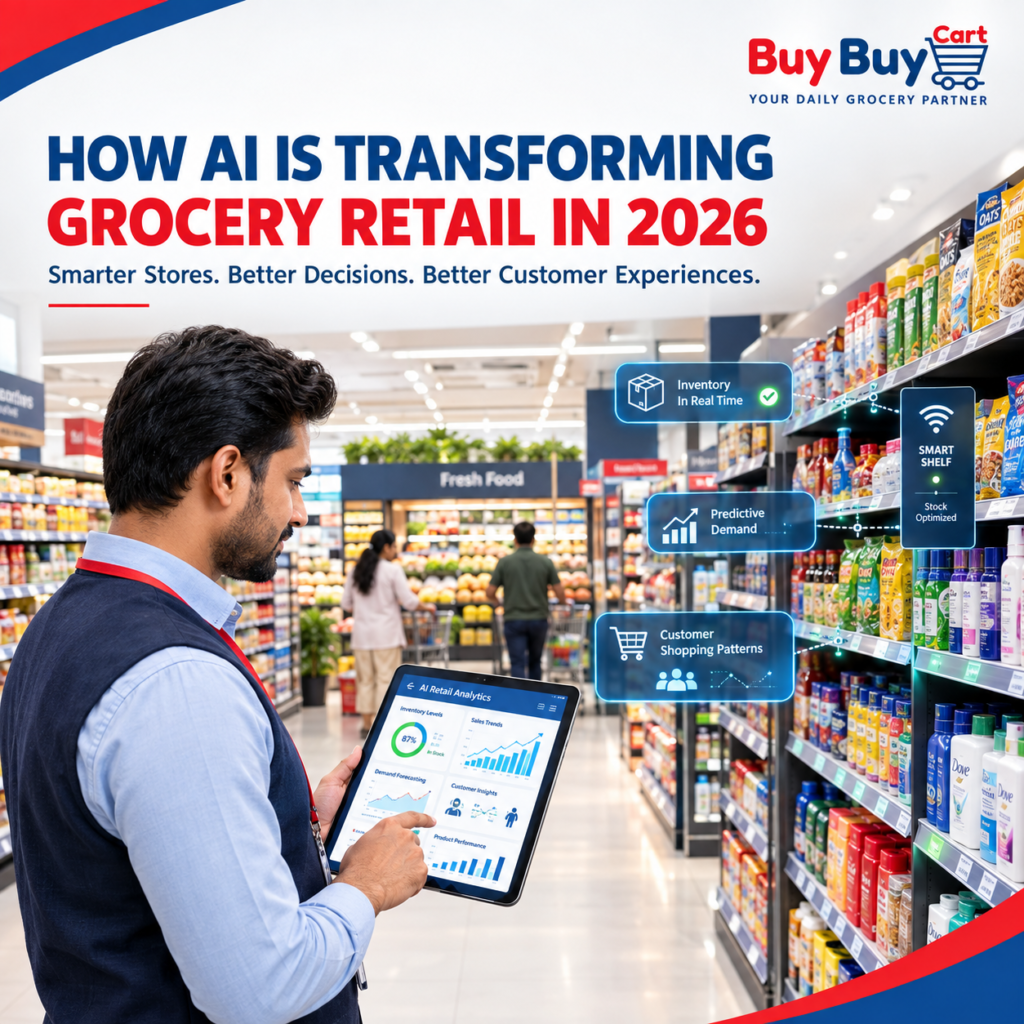
AI in Grocery Retail: A while back, people used to go grocery shopping at their local store, pick what they needed, join a very long queue, check out, and go home—all within a reasonably short amount of time. In this day and age, when shoppers go grocery shopping, customer expectations are different. Shoppers expect to get through checkout faster, get personalised offers, and have their product availability requirements met accurately, as well as have an easy digital payment transaction, to give them a hassle-free experience when they go to purchase groceries. If it takes a customer 15 minutes to wait in line at a store to pay for groceries, customers are more likely to choose to shop at another store the next time they need groceries. Because of these changes, grocery providers are looking to technology to help them, and one of the tech-related innovations that is driving the transformation of grocery shopping is grocery retailers’ use of AI. AI is being used for many grocery retail operations and processes such as store inventory management (with the help of computers), office and store automation processes, application of customer analytics, and grocery retailers using machine learning or AI for customer checkout (when customers pay for the groceries that they purchased). Regardless of whether you operate a kirana store, run a grocery supermarket, or you’re looking to open a grocery franchise in the future, you must understand how AI is changing grocery shopping for consumers by 2026 to compete effectively in the rapidly changing retail grocery marketplace. What is AI in Grocery Retail? AI in Grocery Retail refers to the use of artificial intelligence technologies to improve grocery store operations, inventory management, customer analytics, demand forecasting, and checkout efficiency. The grocery industry uses AI to assist retailers with: Grocery retailers are now relying much less on manual processes to make smarter, data-based decisions about their customers in real time. Why Are Grocery Retailers Investing in AI in Grocery Retail Solutions in 2026? Within the grocery retailer space, the average profit margin is such that small inefficiencies have large impacts on the overall level of profitability. As an example, a worker who frequents a grocery store between their work hours visits the store after work to grab a few items, makes their selections quickly, but has to wait for several minutes in a checkout line because of the length of that line. In that situation, their frustration levels have built up. As a result, that worker now thinks to themselves: “I like the groceries I purchased, but shopping there just took too long.” That one experience might make that worker avoid shopping at that grocery retailer in the future. Today’s grocery retailers see the connection between how convenient customer visits to their store are and the degree of customer retention the retailer experiences. AI can also assist grocery retailers with these operational issues by enhancing overall speed, accuracy, and efficient operations within stores. Reduces Waiting with AI-Powered Checkout Systems Checkout counters are seeing one of the largest transformations within grocery shopping. Why You Should Care About Your Checkout Experience The last touchpoint that a customer has with your store is at checkout, and the experience during this last interaction is one way in which a customer determines their perception of your business. If your customer has a poor billing experience and is waiting for long periods of time, this can negatively impact their impression of all the great products and pricing that they’ve purchased. Customers typically expect: AI-Powered Checkout Systems will support retailers in meeting these customer expectations. How Checkout AI Works Modern Checkout AI systems do the following: As a result, stores can service more customers during high traffic times and not significantly increase their labour costs. How AI in Grocery Retail Improves Inventory Management and Prevents Lost Sales Inventory management has always been a challenge for grocery retailers. One problem that occurs is when a customer specifically goes to your store for a product and finds that it is sold out. There is a tendency that, if this customer has to deal with multiple stock-outs, they would stop coming in to your store altogether. How AI Solves Inventory Challenges in Grocery Retail Smart AI inventory systems analyse: Previous Sales Trends by Time of YearAverages – How Much a Product SellsWhen to Buy Festive Items (i.e. Easter Products)Purchasing Trends Due to WeatherHow Quick a Product Moves (i.e. Week-End vs Week Day) Example If a grocery store observes during every summer weekend an increase in the number of cold drinks sold. A normal way to forecast purchasing is by using historical data, which might miss this kind of purchasing behaviour. AI inventory management can automatically identify these trends, thereby ensuring that there will be enough stock available to satisfy demand for cold drinks. When you have more products available to sell, your sales and satisfaction are likely to both increase. Customer Analytics: The Growing Role of AI in Grocery Retail Every transaction tells a story. AI-powered Customer Analytics allow retailers to understand: Example of how this type of data can help a supermarket make better business decisions. If a supermarket learns that customers who purchase breakfast cereal often buy milk in the same transaction, they may create targeted promotions or reorganise their products to enhance total basket size. Customer analytics can provide retailers with insights so they don’t have to rely on guesswork when determining which products to stock and how to price them. The Rise of Automation in the Retail Sector In 2026, retail automation will be a growing competitive edge in the industry. Today, the retail industry makes up approximately $5.1 trillion in revenue, and many grocery store owners can spend countless hours on repetitive tasks. Some frequent tasks that nearly all owners have to perform include: Counting inventoryManaging ordersReconciliation of billingUpdating inventory Through automation using Artificial Intelligence (AI), routine manual tasks can be accomplished faster and with increased accuracy. With these types of systems, grocery store owners can spend

How AI in Grocery Retail Is Transforming Shopping Experience Read More »

15 Grocery Store Marketing Strategies That Work

15 Grocery Store Marketing Strategies That Actually Increase Footfall

Operating a supermarket and doing grocery store marketing today isn’t merely about putting products on shelves and waiting for shoppers to come. Whether your store is a small local store, a medium-sized supermarket, or if you are just thinking of starting a food franchise, the challenge every store will face, regardless of size, will be to generate consistent traffic to their store from customers. Today, customers have an endless variety of different stores to shop in (both online and in-store), and they do more price comparison shopping than ever before. They want their checkout process to be quick and easy; they expect to be able to pay using digital payment solutions; and they want to shop in stores that are easy to do so without hassle or stress. If the customer experiences long wait times in line at the register, doesn’t find the product they were looking for, is treated rudely by an employee, or is confused by the offer, then that customer may never return to the store! That is why having a solid grocery store marketing strategy is no longer an option – it directly impacts the amount of repeat customers you will have, your daily sales volume, customer loyalty, and future profit potential for your business. This blog post will identify 15 proven grocery marketing strategies that really work in the Indian retail grocery environment. These aren’t just theoretical concepts. They are all either proven tactics used by some of the largest supermarkets or successful grocery franchises in the Indian retail industry to drive more customers into their stores and improve their customers’ shopping experience while increasing profits. Importance of Grocery Store Marketing Today Some grocery store owners remain under the impression that the store’s location is the sole reason for customer acquisition, and while location is important, customer satisfaction is an equal factor in acquiring repeat business. Take the example of two grocery stores located near one another: One grocery store has slow checkout processes, long lines at checkout, and stockouts of items, while the other store has quick checkouts, associates who are trained to assist at checkout, provides several digital ways to pay for groceries, and regularly uses attractive promotions. What store would customers recidivate at? It is clear which grocery store customers will regularly patronize. Modern-day retail marketing is not just about marketing and advertising. It is also about the following: Effective marketing provides your merchandising business with an emotional connection to customers. Over time, customers will perceive that you understand their daily needs. Increase The Local Awareness Of Your Grocery Store A great way to market your grocery store locally is by enhancing your store’s local market visibility. Many grocery stores rely completely on walk-in business. Successful grocery retailers have a plan to continue reminding customers of the existence of their store. How To Accomplish This i) Use local signboards and banners;ii) Add your grocery store to Google My Business;iii) Promote your available bargains via WhatsApp locally;iv) Create local Facebook and Instagram ads;v) Participate in community events in your area. An Example For Reference A Lucknow-based grocery store increased weekend traffic to their grocery store by using the phrase “New Vegetables Daily” in local WhatsApp groups, causing people in their area to shop daily instead of once a week. Create Customer-Centric Weekly Promotions Some retailers discount randomly without really knowing what their customers typically buy. Supermarket promotions are most effective when stores promote regularly used items by their customers. Top Five Weekly Promotions: Your grocery customers likely will not want too many promotions at once; therefore, grocery promotions should be as simple and easy for consumers to understand as possible. Use WhatsApp Marketing Wisely In India, WhatsApp is one of the most effective advertisements for local ground retail. Consumers access WhatsApp multiple times per day. Grocery retailers can take advantage of this consumer behavior. What can you communicate with consumers via WhatsApp? Important Note: Do not spam your customers with multiple communications. Send out 1 relevant communication on a daily basis or up to 3 times per week, depending on your promotion(s).​ Also Read: How to Start a Profitable Grocery Store Business in India Train Staff to Improve Customer Experience The focus of grocery store owners is primarily on their inventory, rather than training their staff; however, customers value how staff behave toward them more than how much a product costs. Prices may be low, but if an employee is rude or unhelpful, your customers will not continue to shop with you. Areas to Train Your StaffSpeed of CheckoutYour staff should be trained on how to efficiently check out customers, especially during peak hours. Product Knowledge Often customers will ask, “Which oil is healthier?”, “Where is your gluten-free section?”, or “What is the best brand of atta?”. Staff who are knowledgeable instill confidence in customers. Managing the Queue During busy evenings when the store is full of customers, your employees should help move customers through the checkout quickly. Develop a Customer Loyalty Program Having customers that continue to come back and purchase from you regularly is one of the most important parts of any successful grocery store. You should reward your current customers instead of always trying to get new customers. The psychology behind why loyalty programs work The majority of customers will shop more frequently at a business if they feel that they are appreciated. Even the smallest of rewards can increase the chances of customers shopping again. Enhancing Store Design for Improved Customer Flow A poorly designed store will limit sales and customer satisfaction. Shoppers can be frustrated when they can’t locate items. Retailers who have organized store layouts typically see an increase in their average customer’s basket value because shoppers enjoy a comfortable browsing experience. Minimize Customer Checkout Errors to Retain Loyal Customers Many grocery retailers are losing loyal customers due to a lack of awareness regarding frequent checkout issues. Common Checkout Problems for Grocery Stores An Unacceptable Length of Time to Cash Out a Customer This is the

15 Grocery Store Marketing Strategies That Actually Increase Footfall Read More »

Modern Supermarkets Trends Changing Grocery Shopping

Why Customers Prefer Modern Supermarkets Over Traditional Stores

Grocery shopping habits of Indian consumers have undergone a rapid transformation in the past few years; whereas people used to primarily shop at nearby kirana stores for convenience due to established relationships with these retailers, customers today are looking for much more than just access to products. They demand an efficient checkout experience, well-organised products on well-maintained shelves, seamless electronic payment options, quality hygienic conditions, smart offers, and an efficient and pleasant shopping experience. This customer shift towards smarter supermarkets is one of the key trends impacting the retail industry today. For all types of shoppers – whether it be a working professional shopping after-hours, a parent managing household purchases, or an older adult who wants a comfortable shopping experience – the wise shopper today seeks time-efficient and stress-free ways to shop. The smarter supermarkets understand these changing shopper needs and utilise a combination of technology, trained personnel, and optimised operational processes to help improve the shopping experience for their customers. For grocery store owners and retail entrepreneurs, keeping abreast of changing consumer behaviour is no longer a matter of choice; it is essential for survival and long-term success. In this article, we will look at the reasons causing shoppers to move towards smarter supermarkets, how modern retail convenience impacts shopper purchasing decisions, and how grocery retailers can improve the level of customer satisfaction and loyalty. Expansion of Modern Supermarkets Trends in India The grocery industry in India is rapidly changing. Customers have become much more informed, digitally connected, and quality/value conscious. They can compare prices on the web, check product ratings on the web, plus expect fast service even at local markets. This is where the smart grocery shopping experience is having a huge impact. Modern type supermarkets not only sell products, but they also provide a better shopping environment by using: In contrast to traditional stores that generally operate on a manual basis (especially during peak shopping hours), smart supermarkets utilise a technology-based model that reduces the number of customers waiting to be served, plus increase the general level of efficiency. The operational differences between traditional and smart supermarkets have a direct correlation to the level of customer satisfaction generated by each type of store. How Customers Value Time Today More Than Ever Before Retail consultants are seeing a huge change in shopper behaviour and the importance of shopping for items that save them as much time as possible. Shoppers no longer will spend thirty minutes picking the items they want to buy just to stand in a long line to pay for their purchase. A delay of as little as 10-15 minutes when they get to the checkout can be enough to turn shoppers off and cause them to form a negative opinion about the retailer. Real-Life Example: Supermarkets Situation Let’s say a customer has had a long day at work and is very quickly looking for milk, bread, vegetables, snacks, household items, etc. The customer is shopping for daily essentials and heads to the checkout, but only finds two cashiers working with long lines of customers and cashiering by hand. The lines are moving at a snail’s pace. No barcodes are being scanned. Using a credit card to pay takes longer than it should. The customer loses his/her patience, and he/she chooses not to return to this store again. This is very common, and it is one of the primary reasons that so many customers make the switch from shopping in traditional stores to shopping in modern supermarket formats. The checkout experience is an extremely important part of keeping the customer after they have made the decision to purchase their items. Customer Experience Benefits of a Faster Billing Process Having a fast billing system isn’t a luxury anymore; it’s an expectation of customers. Organisations such as food supermarkets use smart technology, including point of sale (POS) software, barcode scanning, and inventory synchronisation, to speed up and improve the accuracy of the billing process. How Faster Billing Helps Grocery Stores Reduced Waiting Time When checkout is done quickly and in an orderly manner, customers tend to enjoy their experience shopping. Reduced waiting time when billing leads to less crowding and ultimately creates a greater sense of comfort while shopping. Better Productivity When using POS software and barcode scanning, employees spend less time manually entering pricing, which results in fewer errors in the billing process and greater productivity. Increased Customer Satisfaction Customers remember how they felt at the point of checkout. If they experience a quick and easy exit during the checkout process, they will more likely return to your store. Managing Peak Periods During peak periods of time (Monday – Friday evenings, weekends, holidays, etc.), there will be heavier customer traffic in supermarkets. In order to successfully manage peak periods of time, many supermarkets have multiple registers and utilise queue management systems. Smart Grocery Shopping Is Driven by Convenience Customers today are more inclined to use a convenience method for shopping compared to their parents. Supermarkets are designed to focus largely on the retail shopper’s convenience. Most shoppers want all types of products in one store and want to put in as little effort as possible. These are some of the things that consumers want when shopping at Smart Supermarkets: Well-organised Layouts Customers shouldn’t have to continuously ask employees for help in finding items. Many Payment Methods UPC, credit/debit cards and electronic wallets/cashless pay are required for customers to have choices and the ability to make payments. Clean Stores Stores that are clean provide trust in a store as well as a comfortable feeling to customers. Supplemental Offers and Rewards Programs Highly personal discounts will encourage customers to return to your supermarket and increase the average total spent per customer. Better Product Availability Synchronisation of inventory ensures that consumers never have an issue finding products that they want. Individually adjusting these attributes allows supermarkets to provide a premium store experience for customers that they can remember when they visit your store. How Technology is Transforming Consumer

Why Customers Prefer Modern Supermarkets Over Traditional Stores Read More »

Start a Profitable Grocery Store in India 2026

How to Start a Profitable Grocery Store Business in India in 2026

Starting a grocery store business in India is no longer just about opening a small shop and selling daily essentials. In 2026, the grocery retail industry is rapidly evolving, and consumer behaviour is also evolving, as customers want fast billing, cleanliness in-store layouts, availability of products, digital payment methods, and ease of shopping. Customers have changed their shopping expectations for both local Kirana stores and contemporary supermarkets. Although many entrepreneurs view grocery stores as a safe and stable business opportunity in India, as people always have a need for food, household products, dairy products, snack food, and personal care products, profitability depends on how intelligently the grocery store is run. Several grocery store business owners continue to face challenges with long lines at checkout, unclear stock prices, ineffective employees, and higher numbers of complaints from customers, particularly during busy shopping periods. Therefore, if a customer has stood in line for 15 minutes to check out after a long, tiring day, he/she may never return to your store again. Conversely, a well-run grocery store with fast checkouts generates loyal customers and provides referrals to other customers. If you plan to launch a grocery store in India by 2026, this book provides information on the investments, planning, technology, and customer experience that you will require to develop your grocery store into a profitable business. Rapid Growth of Grocery Store Business in India With changing consumer buying patterns, the Indian grocery market is growing quickly. Urban families are looking for shopping that is convenient, quick, uses digital payments, has home delivery services, uses a more modern retail environment, etc. At the same time, many small kirana shops are adapting to change via Point of Sale (POS) systems, barcode billing, and inventory control. Successful grocery retailers today do much more than just sell goods; they are developing a loyal relationship with customers by: 1) Providing a faster checkout experience2) Providing better product availability3) Maintaining clean and organized store environments4) Structuring a fair pricing strategy5) Offering modern forms of convenience through digital technology6) Providing friendly customer service and support. All these changes are providing significant opportunities for aspiring entrepreneurs to get into the grocery store business with adequate planning. Grocery Retail Industry’s Business Model Before you begin your store, you need to decide which kind of grocery store franchise to build. Kirana Store: Kirana stores are best suited for residential neighborhoods and often require a lower capital investment. They typically specialize in daily essentials and have personal relationships with their customers. Mini-Supermarket: A mini-supermarket offers more categories than a kirana store, along with a better display method, creating a better shopping experience. These mini-supermarkets usually serve middle-income families who want convenience. Full-Supermarket: Full supermarkets typically require a larger investment than either a kirana or mini supermarket and include more complex management systems. They tend to be located in high-density urban areas and provide shoppers with all the food items that they need to create a complete grocery purchase. Franchise Grocery Store: Today, many entrepreneurs are choosing grocery franchises because they receive assistance regarding day-to-day operation, have access to a name brand, have the resources of a supplier network, and gain technological assistance. Choosing the appropriate grocery franchise will help eliminate many mistakes that new grocery store business owners make and improve their success. If you are considering joining the retail industry, the best way to understand the day-to-day operation of your grocery store, as well as inventory management and customer retention strategies, is to look for a trusted “Partner With Us” opportunity. Planning Grocery Stores: The First & Foremost Best Way to Start Poor Planning is One of the Main Reasons Grocery Stores Business Fail Many People Open Grocery Stores and spend a Lot of Money on Decorating/Stocking Their Store But Do Not Consider How Customers Move Around Their Store or the bill-paying area, or how the inventory is synchronized with Each Other. Location Is Everything Location is the Number One Reason Why Grocery Store Businesses Succeed A Good Grocery Store Will Usually Be Located In An Area With: Stores that are located in family communities Typically Perform Better Than A Store That Is Located Elsewhere Based On Frequent Visits From Customers (Repeat Customers) To Create The Monthly Sales For The Grocery Store Business. How Much Money Do You Need to Start a Supermarket in India? The costs of opening a supermarket will vary based on things like how big your store will be, where it will be located, what kind of building you’ll need, and what kinds of technology support you will have: Here’s a breakdown of what you can expect to spend on opening a supermarket in 2026:Store Type Approx Investment Some basic items included in opening your supermarket could include: A lot of first-time supermarket owners forget to factor in working capital, or the money they will need to continually support the grocery store business through inventory purchases, as grocery stores need continuous replenishment of fast-moving inventory items. Also Read: How Much Does It Cost to Open a Grocery Franchise in India? How The Use of Faster Billing Processes Can Promote Recurring Customers When business owners think about their grocery store’s long-term success, they usually only think about the price of their products, but providing a good customer experience is just as important, if not more so. Think about someone who buys their groceries at the end of their workday. They complete their shopping fairly quickly, they now have to wait in line for 20 minutes to check out. Most of the time, the negative experience at the checkout will outweigh the positive experience from shopping there. How Faster Checkouts Can Improve Your Grocery Store Business By using a faster billing process, you can achieve: Increased repeat customersDecreased abandoned shopping cartsImproved customer trustBetter crowd control during peak shopping hoursIncreased productivity from your employeesIncreased daily sales volume Common Checkout Mistakes in Grocery Stores Business Grocery stores may not always recognize how much business they lose due to ineffective or inefficient checkout processes.

How to Start a Profitable Grocery Store Business in India in 2026 Read More »

Customer paying at a supermarket checkout while a cashier scans items at the counter, with self-checkout and wall signage above the lane.

What to do to improve grocery store checkout efficiency and customer satisfaction

It’s not enough to offer good prices and quality products for a grocery store to be successful. The customers also want a quick and easy checkout. Customers may become frustrated if the billing process takes too long or if queues are excessive. They might even avoid returning to your store. To increase customer satisfaction and build customer loyalty, today’s grocery owners need to focus on improving checkout efficiency. Faster checkout processes help stores to serve more customers and reduce wait times, while improving the overall shopping experience. The blog discusses practical methods to increase the efficiency of grocery stores and improve customer satisfaction. What is the importance of a quick checkout in a grocery store? Checkout counters are the final point of contact between a customer and a store. A bad billing experience will leave an impression on customers, even if they enjoy shopping. A good checkout system is a great help to grocery stores. Today’s customers prefer to shop in stores that offer quick checkouts and easy billing. Common Problems at the Checkout in Grocery Stores Store owners need to understand common billing problems before they can improve their checkout procedures. Long Billing Queues Customers are often dissatisfied with long lines at the checkout counters, particularly during holidays and weekends. Billing Slowdown Untrained employees, unreliable barcodes, and manual billing can all slow the checkout process. Limit Payment Options The majority of customers prefer to pay digitally using UPIs, wallets, and cards. There may be delays in stores with limited payment options. Poor Staff Coordination Billing mistakes and confusion are common if employees do not receive proper training. Stock Mismatch Sometimes, products in the system aren’t updated, which can cause billing delays. How to improve the efficiency of grocery store checkout It is not necessary to invest a lot of money to improve checkout efficiency. Even small improvements in operations can have a huge impact. POS Billing Software: Modern POS Billing Software Modern POS systems can help speed up billing. It is able to scan and calculate invoices automatically. Benefits of POS Software Smart POS systems also improve store operations and reduce human error. Offering Multiple Payment Options Customers prefer flexible payment methods. Grocery shops should: Payments made digitally reduce the time it takes to bill customers and facilitate transactions. The Right Way to Train Your Staff Staff that is well-trained can run checkout counters with greater efficiency. Staff should be able to: Customer satisfaction is also improved by staff who are friendly and proactive. Also Read: How Technology Can Improve Grocery Store Franchise Operations Separate Express Checkout Counters Customers with fewer items can complete their billing faster by using the express counter. Express Checkout: Benefits The method is particularly effective in stores with high footfall. Updating the barcodes and pricing system Problems with barcode scanning can delay checkouts. Update barcode and pricing information regularly. Important Steps Avoid confusion with your billing by managing products properly. Improve Queue Management Customer satisfaction is a major factor in queue management. Queue management tips A well-managed queue creates an organized environment for shopping. Use Self-Checkout Systems Self-checkout machines are used in many modern supermarkets. Customers can now scan products and pay themselves. Benefits of self-checkout Self-checkouts are a great way to improve efficiency at supermarkets. Checkout Experience: Focus on the Customer It’s not just about the speed. Also, customer behavior and service are important. How to improve customer satisfaction in a simple way Positive checkout experiences increase the likelihood of returning customers. Improve your store operations with technology The technology can improve the efficiency of grocery stores, both at checkout and in general. Grocery Stores Can Benefit from Using New Technologies Technology can help reduce the amount of manual labor and increase operational efficiency. Watch Checkout Performance Regularly Shop owners must regularly monitor the checkout process to detect any issues. Monitoring important metrics Monitoring regularly helps to improve the service quality. The Benefits of Faster Checkouts in Grocery Stores Improved checkout efficiency has long-term benefits for businesses. Key Benefits The customers are more inclined to shop in stores that allow them to do so without having to waste time. Conclusion The efficiency of checkouts is a key part of managing a grocery store. Smooth and quick billing processes improve customer satisfaction and help stores grow. Grocery stores can improve the shopping experience of their customers by using modern POS software, properly training staff, accepting digital payments, and effectively managing queues. Customers today value speed and convenience in a competitive retail environment. Customers will be more loyal to grocery stores with efficient checkouts. FAQs What can be done to reduce the time it takes for customers to check out? By using modern POS software, adding extra counters to the store during peak hours, and better queue management, grocery stores can cut down on waiting times. What is the importance of a quick checkout in supermarkets? The efficiency of the checkout improves customer service, decreases delays, and increases return customers. It also helps to manage stores smoothly. What role does POS software play in supermarkets? POS software allows for faster and more efficient billing, tracking of sales, management of inventory, and acceptance of multiple payment methods. How do digital payments improve checkout efficiency? Payments made digitally reduce the time it takes to handle cash and allow customers to make their transactions more quickly and conveniently. Self-checkouts are a great way to save time and money Customers enjoy a better shopping experience with self-checkouts. They reduce waiting times, speed up billing, and improve the overall customer experience.

What to do to improve grocery store checkout efficiency and customer satisfaction Read More »

Store checkout scene at Daytime with Buy Buy logo overhead; customers shopping, a cashier scanning items at a POS with a basket of groceries in front of her.

How Technology Can Improve Grocery Store Franchise Operations

Today, running a successful franchise grocery store is more than just stocking and serving products. Modern grocery stores have incorporated technology into their daily operations. Technology helps save time and reduce mistakes for franchise owners. Smart tools and digital services can be used to help grocery store franchises in India stay on top of their competition. In India, where the customer’s expectations are rapidly increasing, smart technology is a must. This blog will show you how to improve the operations of grocery store franchises and grow your business. What Technology Means for a Grocery Store Franchise In India, the grocery market is rapidly changing. The customer now demands faster billing, improved product availability, digital payments, and online order facilities. These demands may be difficult to satisfy with a traditional set-up. The technology behind a franchise for a grocery store is: Even small supermarkets are now using digital tools for better efficiency and service. Smart Inventory Management for better Stock Control Reducing Stock Shortages and Waste The management of inventory is a major challenge for any franchise grocery store. Stock handling by hand can lead to product shortages or overstocking. Inventory management software allows store owners to: It is particularly useful when it comes to perishable items like packaged food, dairy products, and vegetables. Improved Demand Forecasting The technology also allows franchisees to understand what products are more popular during certain periods, such as festivals, weekends or seasons. Stores can avoid loss by maintaining proper stock levels based on the sales data. The POS System can help you bill faster. What is a POS system? Point of Sale systems are billing programs that help process purchases by customers quickly and correctly. Modern POS Systems offer: Enhance Customer Experience Customers can be frustrated by long queues in front of the billing counters. Good POS systems reduce waiting times and increase customer satisfaction. Customers in India also favor UPI, QR codes and debit cards. Smart billing systems support all these payment options. Also Read: Top 10 Grocery Store Franchise Management Tips to Improve Customer Experience Integrate online grocery ordering and delivery. The Online Grocery Shopper is Growing In India, online grocery shopping is on the rise. For convenience, customers prefer to order groceries via apps or websites. Modern franchises for grocery stores are able to increase their sales through: The Benefits of Online Integration Franchise owners can now: Fast local delivery can help local supermarkets build customer loyalty. CRM (Customer Relationship Management) Create long-term customer loyalty Every grocery store needs to retain customers. Franchise owners can use CRM software to understand their customers’ buying patterns and preferences. The CRM can be used to: Improve Customer Communications Stores can, for example, send special offers on grocery monthly packages or festival discounts during Diwali. It increases customer loyalty and repeat sales. Better Business Decisions with Data Analytics Understanding Customer Purchase Patterns The technology allows owners of grocery stores to gain valuable data. Tools that analyze sales data provide insight into: Improve Business Planning Franchise owners who use proper analytics and reports can make better business decisions than if they rely on their gut instinct. It helps to improve: The Digital Marketing Strategy for Grocery Franchise Growth Get More Customers on the Internet The technology has simplified and made it more affordable to market grocery stores. Digital Marketing Methods include Improve Local Visibility A properly optimized web presence can help a franchise grocery store appear when customers are searching online for local grocery stores. Shops can promote their products: It increases store traffic and customer visits. Employee management and attendance tracking Simple Staff Management It can be challenging to manage employees manually, particularly for franchises with multiple locations. Tech solutions can help: Improve Workforce Efficiency Automation of staff management helps to reduce paperwork, allowing for smoother daily operations. Managers are able to focus on business growth and customer service. Safety and Loss Prevention Monitor your home with CCTV Every grocery store must be secure. The technology helps to reduce inventory loss, theft and fraud. Security systems are available in a variety of forms. Improved Store Monitoring Apps and cloud-based software allow franchise owners to monitor their stores remotely. It improves security in the store and allows for better operational control. Cloud-Based Management Systems Manage Multiple Stores Easily Cloud technology simplifies management for businesses with multiple franchised locations. Cloud-based software helps owners: Increase Business Flexibility It is a great tool for grocery brands that are expanding in India and want to manage their store locations better. Future Technologies in Grocery Store Franchise Operations The technology in the grocery industry continues to develop. Upcoming trends include AI-based Inventory Prediction Artificial Intelligence (AI) can be used to predict demand for products more accurately. Self-Checkout Systems The customer can pay and scan products at the counter without having to wait. Smart Shelves The digital shelves will automatically track and update product prices. Mobile Shopping Apps Many grocery chains are now launching mobile applications for order taking and engagement with customers. In the future, these technologies will improve efficiency and provide greater convenience to customers. Conclusion The technology is transforming the way each supermarket franchise works. Smart solutions improve productivity and profitability. Franchise owners can improve customer service in India’s rapidly growing retail grocery market by adopting modern technology. They will also be able to reduce their operational challenges and expand faster. Technology is essential to long-term business success, whether it’s a local store or a large franchise network. By investing in tools and systems that are designed to enhance the shopping experience, grocery store franchises can remain competitive and offer better service. FAQs 1. What is the importance of technology for an upscale grocery franchise? The use of technology can improve the efficiency and effectiveness of a franchise grocery store. It helps with billing, inventory, customer service, ordering online, and overall business. 2. What are the benefits of inventory management software for grocery stores? Inventory software allows you to track your stock, minimize wastage, monitor the expiration dates and prevent product shortages. 3. What are the advantages of a POS in a franchised grocery store? With a POS system, you can get faster billing and accurate GST calculation, as well as

How Technology Can Improve Grocery Store Franchise Operations Read More »

Busy grocery store interior with shoppers browsing produce while staff assist at the checkout area and carts fill the aisle; a promotional banner text is visible above.

Top 10 Grocery Store Franchise Management Tips to Improve Customer Experience

It isn’t just about the products that you sell. Customers expect an easy, comfortable, and fast shopping experience. Every detail counts, from clean shelves to friendly staff and quick billing. Well-managed supermarkets attract repeat customers and increase sales. They also build trust with the local community. This blog will cover the Top 10 Grocery Store franchise management tips to help you improve your customers’ experience and successfully grow your business. What Customer Experience Means for a Grocery Store Franchise The customer experience is a key factor in any grocery store franchise. Customers who enjoy their shopping experience are more likely to return to your store and to recommend it to others. A good customer experience can: Even in a highly competitive market, a well-managed grocery store will stand out. Top 10 Grocery Store Franchise Management Strategies 1. Keep Your Grocery Store Organized and Clean Customers are attracted to clean, well-maintained stores. A clean and well-organized Grocery Store franchise makes a good impression. Tips: Shopping is more enjoyable and easier in a clean environment. Also Read: BuyBuyCart Grocery Offers – Save more with cashback, coupons & combos 2. Use smart inventory management Every Grocery store franchise must have a good inventory management system. When products are not in stock, customers become frustrated. The Best Practices Inventory management can reduce losses and increase customer satisfaction. 3. It is important to train your staff properly Direct interaction between your employees and customers. A friendly and helpful staff will improve your shopping experience. Employee Training: Staff that is well-trained make customers feel respected and valued. 4. Improve the layout of your store and product placement The layout of the store can help customers quickly find their products. Grocery Store Franchise Layout Ideas A good product placement will also boost impulse purchases. 5. Use Easy and Fast Billing Customers can be frustrated by long billing lines. Customer satisfaction is improved by a fast checkout in a grocery store franchise. How to improve billing: The digital billing system also helps maintain accurate records of sales. 6. Customers are the focus Customer service that is excellent builds trust and loyalty. Customers Service Tips Positive customer experiences encourage repeat business. 7. Special Offers and Loyalty Programmes Customers always appreciate savings and incentives. Promote your business with these ideas: The following strategies will increase the number of customers and new buyers. Also Read: How to organize your Grocery Store for an efficient shopping experience 8. Keep Product Quality The quality of the products you sell directly affects your grocery store franchise‘s reputation. Important Steps: Customers are more likely to trust you if the products they buy are fresh and of high quality. 9. Use technology to improve operations The use of technology can improve the efficiency of grocery store management. Useful Technology: Modern technology is time-saving and increases operational accuracy. 10. Understanding Customer Preferences Each customer’s shopping preferences are different. Understand customer preferences to help your grocery store franchise grow. Understanding Customers In competitive markets, stores that focus on the customer often do better. The Benefits of Proper Grocery Franchise Management Several business benefits can be derived from effective management: A well-managed grocery store franchise provides a pleasant shopping experience for customers. The conclusion of the article is: For a successful grocery store franchise, it is important to have a good plan, a focus on the customer, and an efficient operation. Cleaning, well-trained staff, intelligent inventory management and great customer service are all important factors in improving the customer experience. These top 10 tips for grocery store management will help owners increase their customer satisfaction and improve the performance of their stores. They can also grow successfully in the competitive market. Questions and Answers about Grocery Store Franchise 1. What is the importance of customer service in a grocery store franchise? The customer experience can increase sales, store reputation and repeat business by improving the overall customer experience. 2. What can you do to improve the performance of your grocery store? Inventory management is essential to preventing stock shortages and reducing waste. It also ensures that products are available at all times. 3. What is the best technology for a Grocery Franchise? Grocery stores can benefit from POS software, payment and inventory systems that are digital, as well as tools for customer feedback. 4. What can supermarkets do to improve their customer service? Customer satisfaction can be improved by having clean stores, friendly employees, quick billing, high-quality products and good service. 5. What are the advantages of loyalty programs at grocery stores? Loyalty programmes encourage customers to make repeat purchases and improve their retention. They also increase sales over the long term.

Top 10 Grocery Store Franchise Management Tips to Improve Customer Experience Read More »

Promo image showing a grocery cart full of groceries with a prominent 'Save More' badge, promoting cashback and coupons in-store.

BuyBuyCart Grocery Offers – Save more with cashback, coupons & combos

Every shopper in today’s world wants to buy quality goods at an affordable price. Saving money is as important to shoppers today as convenience when they are shopping for household products, personal care items, daily necessities, drinks, and snacks. Cashback grocery offers can be a great help. Shoppers can take advantage of exciting offers like cashback, coupons for discounts, and combination deals that reduce their monthly expenses. With these smart savings options, online shopping for groceries is more rewarding and budget-friendly. This blog will show you how coupons, cashback, and other offers can help shoppers save money while they shop on BuyBuyCart. What Makes Grocery Cashback Popular? Online shopping for household items has revolutionised the way we buy our essentials. Now, customers compare prices and look for discount codes, choosing platforms with the best value. Offers of grocery cashback are growing in popularity because: These smart ways to save money will allow customers to buy more items within their budget, without paying full price. BuyBuyCart helps you save more Focus is on providing customers with affordable groceries and additional saving opportunities. This platform introduces regular: Families, students and professionals can all benefit from these features. 1. Get Cashback on Groceries Cashback is one of the most effective ways to save. After a successful purchase, a cashback is a specific amount that you receive in your account or wallet. The Benefits of Grocery Coupons Every Order Saves You Money Cashback is available on certain grocery products and categories. Reduced Monthly Costs Cashbacks help to reduce the overall cost of groceries. Easy Reward System You can use cashback on your next purchases. Enjoy a Better Shopping Experience Online shopping is rewarding for customers. You can save up to Rs 200 if, for example, you buy Rs 2,000 worth of groceries and get 10% back. Cashback on grocery purchases is one of the reasons why customers choose online shopping platforms. 2. Additional Savings with Discount Coupons You can also reduce your grocery bill by using coupons. BuyBuyCart offers customers coupon codes they can use at checkout. There are different types of grocery coupons available. Get Coupons for Your First Order New customers receive special discounts. Festive Offers Additional discounts are available during the festive season and other celebrations. Special Offers Offers on snacks, drinks, household items, personal care products and other goods. Get Free Shipping Coupons Delivery charges are removed from the offer. Customers can maximise their savings by combining coupons with cashback deals. 3. Shop Smart with Combo Deals These deals are ideal for large families or bulk purchasers. This deal combines multiple products for a discounted price. Combo offers have many advantages All Products Available at Low Prices Combos are often cheaper than purchasing products separately. Convenient Shopping You can buy related products with other customers. The Ideal Monthly Grocery Shop Combo Packs allow you to stock up on essentials in one purchase. Great for Budget Planning Fixed combo pricing helps manage expenses effectively. A combination of flour, rice, oil and spices, for example, may be cheaper than buying each item separately. It is also for this reason that shoppers look out for combo offers with cashback on groceries. BuyBuyCart: Smart Ways to Save Money Customers should use smart strategies to save money when shopping online. 1. Get Daily Deals Regularly check the Offers section to discover new Cashback Deals. 2. Discount Codes Apply all available coupons at the time of checkout. 3. Buy Combo Packs Combine deals to get the best value. 4. Enjoy Seasonal Sale Shopping Discounts are often offered during festivals and other special events. 5. Plan your monthly grocery purchases Bulk purchases during Cashback Campaigns can help you save even more. Also Read: How to Solve Inventory, Price & Competition Problems at a Grocery Store BuyBuyCart: Why customers prefer it Due to its focus on the customer, it is quickly becoming one of the most trusted platforms for online shopping. The following are some of the most important reasons: Platforms like this combine convenience and affordability to make grocery shopping easy, stress-free, and affordable. Savings on Groceries with Cashback Programs When grocery costs are constantly rising, it can be hard to manage household expenditures. Families can manage their budgets better with cashback offers and discounts. Family Benefits Even small discounts on every order, when combined with the correct cashback strategy and coupons, can add up over time. Future of Online Grocery Savings India’s online grocery market continues to expand rapidly. The online grocery industry continues to grow rapidly in India. The cashback offer is expected to be even more appealing in the future with: These platforms are adapting by providing better discounts and a more user-friendly experience. The conclusion of the article is: Shopping online for groceries is not just about convenience. Now, customers want to find smarter ways of saving money when buying everyday necessities. Shoppers can save money by using cashback, coupons and combination deals. Shop for groceries and enjoy the benefits of shopping with cashbacks, coupons and combo packs. BuyBuyCart offers cashback and combination deals to help you save on all your grocery shopping. What are the FAQs about Grocery Cashback Offers? 1. What is a grocery cashback offer? Cashbacks on groceries are offers that reward customers with a certain percentage after they have completed a purchase. 2. What are the coupon codes for BuyBuyCart, and how can I redeem them? Coupon codes can be applied at checkout for instant savings on all eligible purchases. 3. Do combos offer better value than single products? Combination deals offer multiple items at a lower price than buying them individually. 4. Cashback can be used for future purchases Cashback can be used on future purchases, depending on the platform’s policies. 5. What are the benefits of grocery cashback? Customers can save money on their monthly groceries and enjoy a better shopping experience. 6. Is BuyBuyCart a regular retailer of groceries? Customers can get cashback, coupons and discounts regularly.

BuyBuyCart Grocery Offers – Save more with cashback, coupons & combos Read More »