
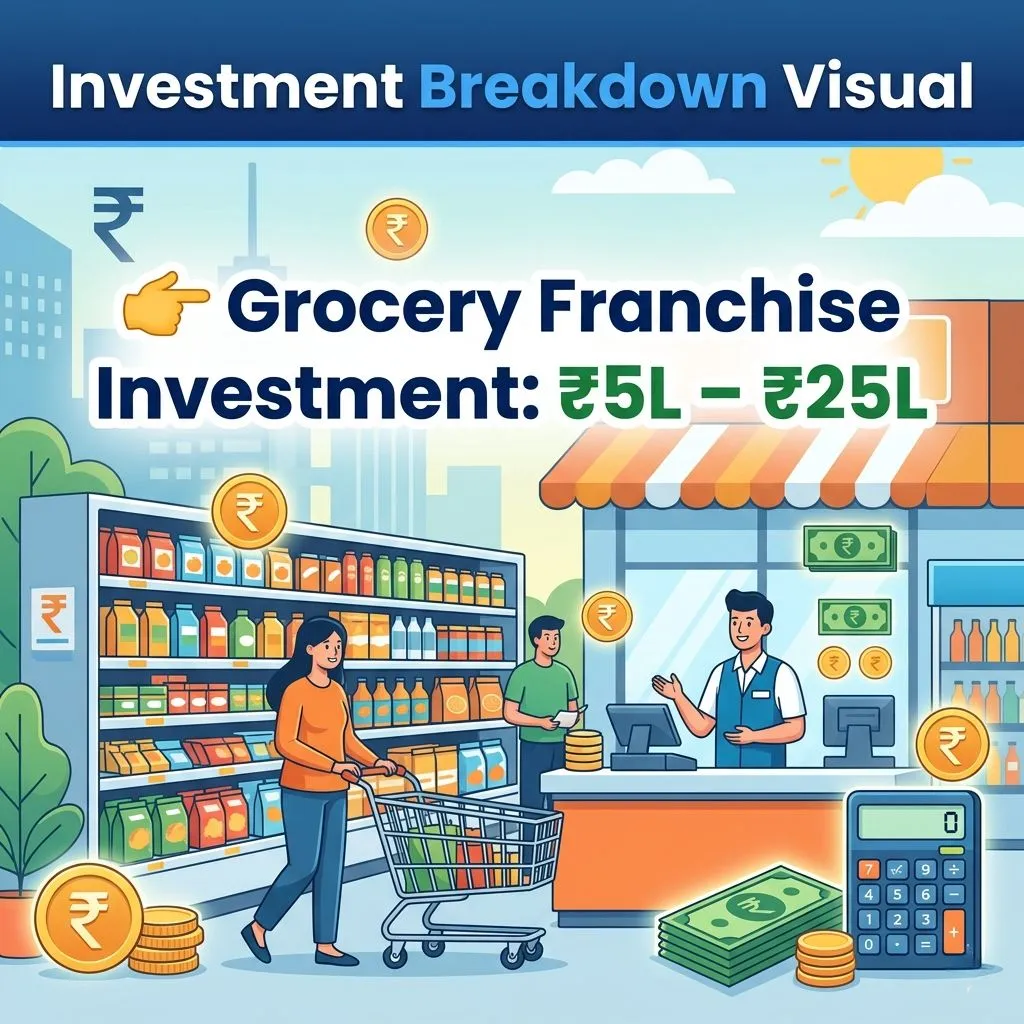
In India, starting a grocery franchise is one of today’s most profitable and practical business ideas. A grocery store will ensure a steady flow of customers and a consistent income, as the demand for everyday essentials is growing. Before you start, however, you must understand the complete investment breakdown to plan your budget.
This blog will help you to make an educated decision by explaining all of the hidden costs and major expenses.
What Is a Grocery Franchising and Why Would You Choose One?
A grocery franchise is a business that runs a store with branded products. You can start from the ground up with:
- Brand Recognition
- The Ready Business Model
- Support for vendors and the supply chain
- Help with marketing and promotion
It will reduce your risks and increase your odds of success.
The total investment required for a grocery franchise
Costs of opening a grocery franchise vary depending on location, size and value of the brand.
Investments: 5 Lakhs to 25 Lakhs
Break this into its different parts.
1. Franchise fee
It is an upfront fee that the brand charges to be able to use its name and model of business. Brands with a good reputation charge higher fees but also provide better service and are more trusted in the marketplace.
2. Monthly Store Rent
The location of your grocery franchise is crucial to its success. Stores in residential areas or those with high footfall will be more expensive, but they’ll also have higher sales.
This cost can be reduced significantly if you own your shop.
3. Interior Fixtures & Setup
You need the right setup to run a grocery franchise.
- Shelves and Racks
- Billing counter
- Branding and Lighting Boards
- Storage units
Well-designed stores improve customer satisfaction and increase sales.
Also Read: Start a Small Supermarket in India – Cost, Investment & Setup Guide
4. Inventory Cost
Stocks are one of the largest investments for a grocery franchise. Maintain a wide range of items, including:
- Daily essentials (atta, rice, pulses)
- Foods packaged into packages
- Personal care products
- Homewares
More variety is better for attracting clients.
5. Staff Salary
You may require 1-3 employees, depending on the size of your shop.
- Billing
- Stock handling
- Customer support
The hiring of trained personnel ensures that operations run smoothly and customers receive better service.
6. Equipment & Technology
The technology used in modern grocery franchise stores is aimed at efficiency. The following are some of the technologies that modern grocery stores use.
- Software for billing (POS System)
- Barcode scanner
- Tablet or computer
- CCTV cameras
This tool helps you manage inventory and track sales.
7. Licences and Registration
You will need the following to run a legal grocery franchise:
- GST Registration
- FSSAI License
- Shop & Establishment License
You must comply with these laws to ensure that your business runs smoothly and without any legal problems.
8. Marketing and Promotion
Local marketing is essential, even if you run a grocery franchise. You can make investments in:
- Open Offers
- Banners and pamphlets
- Promotion of social media
It is a great way to attract new customers.
The Hidden Costs of Your Purchase You Can’t Ignore
Most people do not consider the small costs that may have a significant impact on a grocery franchise.
- The cost of electricity
- Maintenance Costs
- Waste or expired products
- Delivery expenses (if offering home delivery)
Avoid financial strain by planning for these expenses.
What is the real-world outlook for a grocery store franchise?
If managed correctly, yes, a grocery franchise is highly profitable. On average:
- Profit margins from 10% to 25%
- Duration of breakeven: between 6 and 18 months
Location, product selection, pricing and customer service are all important factors in determining your success.
How to reduce the investment in a grocery store franchise
Here are some tips to help you stay within your budget:
- You can start with a small store
- Select a franchise with low costs
- Concentrate on products that move quickly
- Digital marketing is a better alternative to expensive advertising
Start your grocery franchise at a lower cost and with higher profits by planning.
The conclusion of the article is:
In India, starting a grocery franchise is an intelligent business decision with long-term benefits. You can start a profitable business with an investment of Rs 5 lakhs to Rs 25 lakhs.
Plan your investment well, select the best location and put a focus on customer service. Your grocery franchise will be profitable and successful if you take the right steps.
Questions and Answers about Grocery Franchise Investment
1. What is the investment required for a Grocery franchise in India?
Investments for a grocery franchise range from Rs5 lakhs up to Rs25 lakhs, depending on the size of your store, its location and its brand.
2. Does a grocery franchise make money in India?
A grocery franchise can be a lucrative business because of the daily demand. Profit margins range between 10% and 25%.
3. How much money do I need to start my own grocery franchise?
You can begin a small grocery franchise by investing between Rs 5 and Rs 8 lakhs. This is possible if you choose a space that’s smaller, with fewer products.
4. What are the license requirements for a Grocery Franchise business?
To run a Grocery franchise, you need to be GST registered, FSSAI licensed, and have a Shop & Establishment License.
5. What is the time it takes to breakeven in a grocery franchise?
Most Grocery franchise businesses break even within six to eighteen months, depending on the location and sales.
6. What is the best location for a grocery franchise?
The best locations to start a successful grocery franchise are residential areas near apartment buildings or markets with a lot of traffic.
7. Do franchise brands provide support?
Most Grocery franchise brands provide training, support for supply chains, and marketing to assist you in growing.