
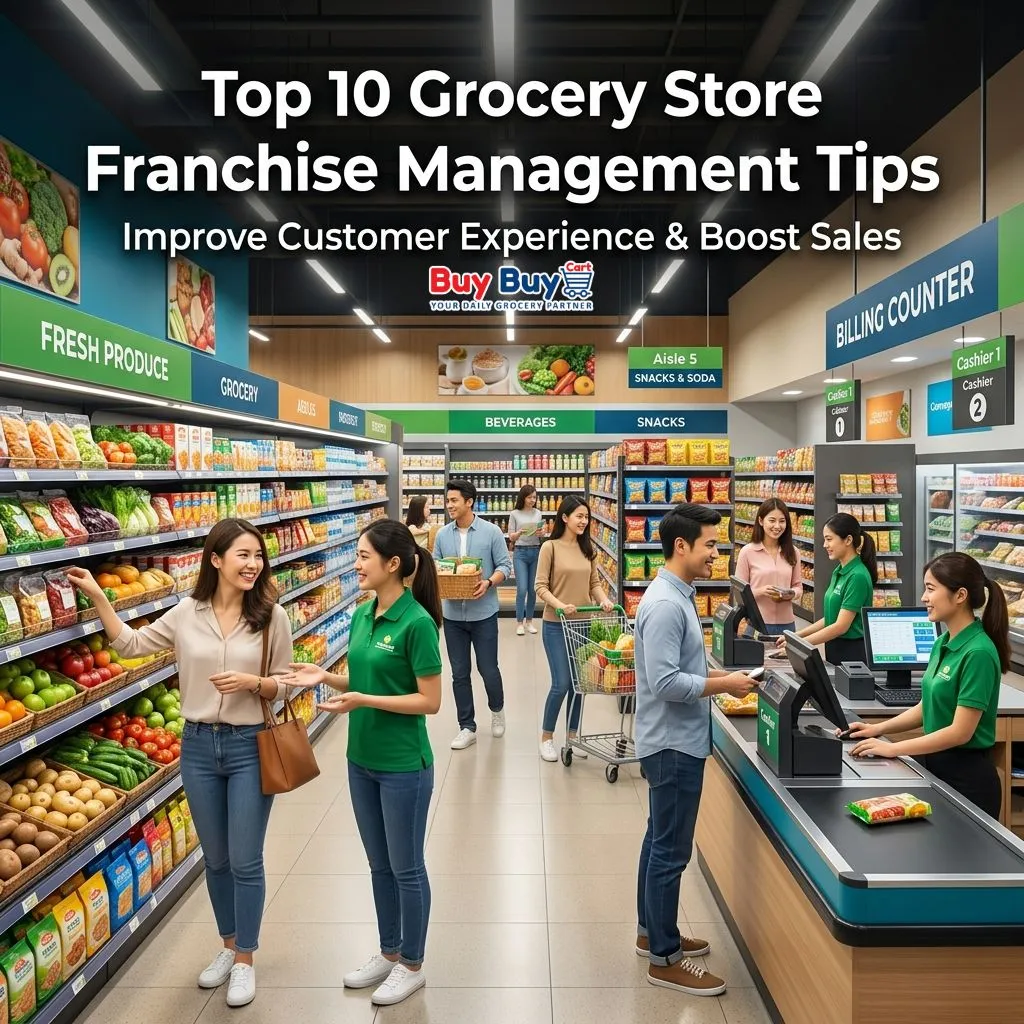
Top 10 Grocery Store Franchise Management Tips to Improve Customer Experience
It isn’t just about the products that you sell. Customers expect an easy, comfortable, and fast shopping experience. Every detail counts, from clean shelves to friendly staff and quick billing. Well-managed supermarkets attract repeat customers and increase sales. They also build trust with the local community. This blog will cover the Top 10 Grocery Store franchise management tips to help you improve your customers’ experience and successfully grow your business. What Customer Experience Means for a Grocery Store Franchise The customer experience is a key factor in any grocery store franchise. Customers who enjoy their shopping experience are more likely to return to your store and to recommend it to others. A good customer experience can: Even in a highly competitive market, a well-managed grocery store will stand out. Top 10 Grocery Store Franchise Management Strategies 1. Keep Your Grocery Store Organized and Clean Customers are attracted to clean, well-maintained stores. A clean and well-organized Grocery Store franchise makes a good impression. Tips: Shopping is more enjoyable and easier in a clean environment. Also Read: BuyBuyCart Grocery Offers – Save more with cashback, coupons & combos 2. Use smart inventory management Every Grocery store franchise must have a good inventory management system. When products are not in stock, customers become frustrated. The Best Practices Inventory management can reduce losses and increase customer satisfaction. 3. It is important to train your staff properly Direct interaction between your employees and customers. A friendly and helpful staff will improve your shopping experience. Employee Training: Staff that is well-trained make customers feel respected and valued. 4. Improve the layout of your store and product placement The layout of the store can help customers quickly find their products. Grocery Store Franchise Layout Ideas A good product placement will also boost impulse purchases. 5. Use Easy and Fast Billing Customers can be frustrated by long billing lines. Customer satisfaction is improved by a fast checkout in a grocery store franchise. How to improve billing: The digital billing system also helps maintain accurate records of sales. 6. Customers are the focus Customer service that is excellent builds trust and loyalty. Customers Service Tips Positive customer experiences encourage repeat business. 7. Special Offers and Loyalty Programmes Customers always appreciate savings and incentives. Promote your business with these ideas: The following strategies will increase the number of customers and new buyers. Also Read: How to organize your Grocery Store for an efficient shopping experience 8. Keep Product Quality The quality of the products you sell directly affects your grocery store franchise‘s reputation. Important Steps: Customers are more likely to trust you if the products they buy are fresh and of high quality. 9. Use technology to improve operations The use of technology can improve the efficiency of grocery store management. Useful Technology: Modern technology is time-saving and increases operational accuracy. 10. Understanding Customer Preferences Each customer’s shopping preferences are different. Understand customer preferences to help your grocery store franchise grow. Understanding Customers In competitive markets, stores that focus on the customer often do better. The Benefits of Proper Grocery Franchise Management Several business benefits can be derived from effective management: A well-managed grocery store franchise provides a pleasant shopping experience for customers. The conclusion of the article is: For a successful grocery store franchise, it is important to have a good plan, a focus on the customer, and an efficient operation. Cleaning, well-trained staff, intelligent inventory management and great customer service are all important factors in improving the customer experience. These top 10 tips for grocery store management will help owners increase their customer satisfaction and improve the performance of their stores. They can also grow successfully in the competitive market. Questions and Answers about Grocery Store Franchise 1. What is the importance of customer service in a grocery store franchise? The customer experience can increase sales, store reputation and repeat business by improving the overall customer experience. 2. What can you do to improve the performance of your grocery store? Inventory management is essential to preventing stock shortages and reducing waste. It also ensures that products are available at all times. 3. What is the best technology for a Grocery Franchise? Grocery stores can benefit from POS software, payment and inventory systems that are digital, as well as tools for customer feedback. 4. What can supermarkets do to improve their customer service? Customer satisfaction can be improved by having clean stores, friendly employees, quick billing, high-quality products and good service. 5. What are the advantages of loyalty programs at grocery stores? Loyalty programmes encourage customers to make repeat purchases and improve their retention. They also increase sales over the long term.
Top 10 Grocery Store Franchise Management Tips to Improve Customer Experience Read More »