
seagreen-bear-223044.hostingersite.com

Grocery

grocery store in india top 5 strategies to boost sales

Grocery Store In India: Top 5 Strategies to Boost Sales

The challenges of running a grocery shop in India are unique. The fundamentals for success are the same whether you run a supermarket in India or a neighborhood Kirana store. It is important to have a constant stream of customers and healthy margins. You also need strategies that are resilient in the face of regulatory or market changes. It\’s important to determine what is causing your sales decline. What\’s the good news? One simple phrase can change your business. Provide your customers with an unforgettable experience. They will not only return to your shop, but also tell friends and relatives about it. It creates repeat business, and it attracts customers to your store without spending money on advertising. But the experience you provide is just one part of it. It is also important to know the fundamentals of business that will drive your profitability. This blog will explore five strategies that have been proven to help increase your sales at the grocery store you own in India. 1. Shop Layout for a Grocery Store in India It\’s important to make a good first impression. Customers should be excited and comfortable when they enter your Indian grocery store. People will leave a store that is cluttered, disorganized, and poorly lit before even reaching the aisles. Organize your products in a logical order. Put items in high demand, such as rice, dal, and cooking oils, at easy-to-reach locations. Keep related items together – keep spices close to flours, drinks near snacks, and produce near well-lit sections. It makes the shopping process faster and easier. A good lighting system is vital. Your store will look more professional and hygienic with bright, clean lighting. Display products on shelves that are at the eye level of customers, so they can easily find what they want. Signage is important. Signage in Hindi and other regional languages, along with English, can help your customers find their way around the store. Shoppers are more likely to buy additional items if they can easily find the products in your store without having to ask for assistance. 2. Offering Competitive Pricing and Attractive Deals Indians are very price sensitive. Before making a purchase, most shoppers will compare the prices of different stores. Customers will prefer your Indian grocery store if you consistently offer competitive prices. Regularly monitor the pricing of your competition. Your prices don\’t have to be the lowest, but they should still be fair. Offer value, not just cheap prices. Bundle offers, bulk discounts, and combo deals are great. Offer discounts when purchasing more than one unit of the product, or make combo packs such as \”Buy 1 kg oil + 2 kg rice at a discounted price.\” Offers during holidays like Diwali or Holi attract more customers and increase sales. Also, loyalty programs can be very effective. Customers can earn points for repeated purchases. Shoppers become loyal customers when they know that they can save money by coming back to your shop. 3. Stock Up Quality Products Stale products or low-quality items can damage a store\’s image faster. Fresh fruits and vegetables are expected by customers. They also expect bakery products, dairy items, and dairy. They may never come back if they purchase spoiled products even just once. Establish relationships with suppliers that can regularly provide new inventory. To prevent expired items on the shelves, rotate stock using \”first in, first out\”. Remove expired products as soon as possible. Perishables are items that require special attention. Display vegetables and fruit in a way that is appealing and makes them look as if they are still fresh. Customers will not buy wilted leaves or bruised fruit. Locally grown, fresh produce is often of higher quality. It also supports local suppliers. Freshness is not the only thing that defines quality. Store trusted brands that customers know and trust. It is essential to offer budget-friendly options, but you should also ensure that every product meets the basic standards of quality. In Indian communities, word-of-mouth is very popular. A reputation of quality can bring you customers. 4. Use Technology to Improve Customer Service The technology is changing the way grocery stores operate in India. Even basic digital tools are able to streamline operations, increase customer service, and boost sales. A POS system is a good place to start. You can track your inventory and manage your billing more efficiently with a good POS. It also helps analyze the sales patterns. This will help you to know what products are most popular, whether they need to be restocked, and when the busiest shopping times are. These data help you to make better business decisions. Offer digital payment options. Customers prefer UPI or mobile wallets over cash. Accepting multiple payment options will make transactions easier and more convenient. Customers are happier and queues are shorter when checkouts move faster. Explore online shopping and home delivery if you are ready for more. Most customers prefer to order groceries online. Create your own WhatsApp ordering system or partner with delivery platforms. You can take orders with a WhatsApp Business account. It is also important to have a social media presence. Create an Instagram or Facebook page for your Indian grocery store. Update your Facebook or Instagram page with new arrivals and special deals. Stay in touch with your customers to ensure they remember you when it comes time for them to buy groceries. 5. Training Your Staff for Excellent Customer Service Your employees represent your brand. Employees who are friendly and helpful create an atmosphere of welcome that encourages customers to return. In contrast, a rude or uninterested staff member can destroy even the most well-stocked shop. Also Read: Grocery Supermarket Franchise in India: Best Layout Design for High Sales Your employees should be trained to handle customer complaints with professionalism, find products for them, and greet customers. They should be taught the basics of products so that they are able to answer questions. Your staff members should know how to answer questions about product knowledge. Give your staff the power to solve small problems on-site. Allow staff to provide solutions, such as replacements or refunds, if a damaged product or an unhappy customer occurs. This will avoid escalating the issue to management. Fast problem-solving builds loyalty and trust. Reward and recognize good performance. When employees feel appreciated, they

Grocery Store In India: Top 5 Strategies to Boost Sales Read More »

grocery supermarket franchise in india best layout design for high sales

Grocery Supermarket Franchise in India: Best Layout Design for High Sales

To run a successful Indian grocery franchise, you need more than simply stocking the shelves. The layout of your store can determine your business\’s success. A smart layout plan can increase your customers\’ satisfaction and boost sales. These proven strategies can help you design a store layout that will drive profits and keep customers returning. Understand Customer Flow at Your Supermarket In order to create a successful Indian grocery store franchise, it is important that the customer experience is smooth. Smart franchise owners take advantage of the unique Indian shopping habits. Entrance Strategy Your entrance creates the first impression. Fresh fruits and vegetables should be placed near the store entrance in order to give a sense of quality and freshness. It is particularly effective in Indian markets, where fresh fruit and vegetables are associated with high-quality stores. Main Walkways Create your pathways in a loop or circular pattern. It will ensure that customers are exposed to a wide variety of products by allowing them to walk around the entire grocery store franchise. Make sure the walkways are wide enough to allow for easy shopping. This is especially important during busy hours, when Indian shops tend to be crowded. Positional Checkout Place the checkout counter strategically close to exits, and make sure that customers are able to pass impulse-buying sections as they leave. The simple act of changing your checkout counters can boost the average value of a transaction by up to 15-20%. The Strategic Placement of Products in Your Supermarket Franchise The placement of your products directly affects the bottom line. How successful Indian grocery franchises optimize their shelves: Buy-Level is Eye-Level Put high-margin items at the level of customers\’ eyes. This strategy is particularly effective in Indian shops for spices, packaged goods, and other household products. Essential Items Location Store daily necessities like milk, rice, dal, and oil at the rear of your shop. It encourages customers to explore other areas, which increases the chances of making additional purchases. It has been proven that this technique works across all grocery franchises in India. Impulse Purchase Zones Small, inexpensive items such as chocolates, biscuits, and personal care products can be placed near the checkout area to encourage impulse purchases. The items will increase your customer spending. Indian Grocery Stores Experience Success with Cross-Merchandising In Indian supermarkets, cross-merchandising is a very effective strategy. Combine related items to promote multiple purchases. Place the tea biscuits close together Rice and dal should be kept in the same section Spices should be kept near oils, vegetables, and cooking spices Baby products should be kept together in a dedicated space The strategy will not only increase your bill by 25%-30%, but it will also improve the customer experience. Create attractive product displays In Indian supermarkets, visual merchandising is a key component. Create eye-catching displays using: Seasonal arrangements Highlight seasonal products like mangoes during summer or sweets during festivals. Indian consumers appreciate product displays that are in sync with their culture. Special Offer Zones Make sure to create a section for bulk and discounted offers. Bright signage and price labels will help you attract customers\’ attention. Focus on Local Products Give local and regional goods a prominent place in your store. Indian consumers often choose familiar brands or local products. Shoppers in India: Optimizing space for their shopping habits Understand Indian buying behavior to optimize the layout of your supermarket franchise Considerations for Family Shopping Indian families shop in groups, particularly on the weekends. Widen the aisles so that multiple families can shop comfortably. Sections for Bulk Purchase Make sure to create a separate area for the bulk purchase of essentials such as rice, oil, and wheat. Indians prefer to buy essentials in large quantities. Also Read: What is the importance of Community Engagement for your Grocery Store Franchise in India? Preferences by Region Your layout should reflect the regional preferences for food. South Indian shops might focus more on rice, while North Indians may be interested in wheat. Modern Grocery Stores: Technology-Integration for Modern Franchises Smart technology is a key component of modern grocery stores in India. Easy price changes with digital price displays Tracking customer flow systems Mobile payment integration Inventory Management Systems The technologies can help improve customer service and streamline business operations. Make your store layout work for maximum profits The layout of a well-designed supermarket should have three primary goals: ease of navigation, maximum exposure to products, and a pleasant shopping experience. Create clear sightlines in your shop to ensure customers are able to identify different sections easily. A regular assessment of your layout can help identify areas for improvement. You can adjust the layout of your store based on which areas generate more sales. The layouts of successful grocery franchise owners in India are constantly being refined based on feedback from customers and data. How to Build a Successful Grocery Store Franchise Understanding local shopping habits, product placement, and optimization are all important factors in designing an efficient layout for your Indian grocery store franchise. The right layout can boost your sales up to 40% and improve customer satisfaction. Implement these strategies slowly and test what works for you. The most profitable grocery store franchisees in India will adapt their layouts so that they can serve their local communities while maximizing profitability.

Grocery Supermarket Franchise in India: Best Layout Design for High Sales Read More »

what is the importance of community engagement for your grocery store franchise in india

What is the importance of Community Engagement for your Grocery Store Franchise in India?

India\’s grocery market is now more competitive than before. Low prices are no longer sufficient to attract customers. People today are looking for experiences in shopping that reflect their values and help them to feel closer to their community. Community engagement is a crucial strategy for all grocery stores in India. Participating in your local community can help you build strong relationships with clients, increase brand loyalty and ensure long-term business success. You want to become more than a grocery store; you want to be a neighbourhood cornerstone. Increase Customer Loyalty by Boosting Your Brand\’s Reputation In India, a grocery franchise that\’s active in the community creates a deeper bond with its customers. The emotional connection leads to loyalty and repeated business. Customers are more inclined to select your shop over other stores if they see you as an active member of the community. It creates the feeling that \”we\’re all in it together\” and enhances customer satisfaction. Your franchise, for example, could arrange cooking demonstrations featuring local chefs using seasonal products from the region. It not only provides valuable tips for cooking, but it also strengthens the connection between your customers and your store. How to Build a Positive Word-of-Mouth Reputation Participating in local events and donating to organisations shows your commitment to corporate social responsibility. You can build your brand\’s reputation organically by partnering with schools, food banks, or community gardens. Partnering with local schools to promote healthy food is a great idea. You could have your Indian grocery franchise offer students discounts on fruits and vegetables while you volunteer to educate them about healthy eating. The initiative will not only benefit the local community, but it will also create positive word-of-mouth marketing that is more effective than traditional advertising. Support local farmers and suppliers By partnering with local producers and farmers, you can strengthen your supply chain while also showing your support for the local economy. Stock local products, hold \”meet-the-farmer\” events, and highlight local suppliers on your marketing material. Also Read: What are the Market Trends and Demands for a Supermarket Franchise in India? The events enable customers to interact directly with the producers of their food. This builds trust and transparency. Customers will be more likely to shop at your store if they know that their purchases are helping local families. Encourage Employee Volunteerism It is important to encourage your staff to get involved in the community. This will also help to improve your business\’s reputation. In India, a grocery franchise can provide paid time off to employees who volunteer or host team-based events. Your franchise, for example, could work with local shelters to organise food drives or provide meals at festivals. The employees can donate their time to preparing and serving these meals. It fosters teamwork, a sense of purpose, and collaboration amongst your employees. Their positive experiences can be shared via social media to enhance the positive impact of your brand further. How to Measure Your Impact You should measure your engagement with the community to know what\’s working and how you can make improvements. Track Metrics: Watch metrics such as sales trends, before and after events in the community. A rise in the sales of local products after an \”Meet the Farmer\’ event is clear proof of success. Track Customer Engagement. Please pay attention to social media mentions and feedback from customers, as well as website traffic, to determine how they are responding to your initiatives. Measure Brand Awareness: Surveys and listening tools on social media can be used to measure how the community\’s engagement affects your brand perception. You can track these metrics to demonstrate your return on investment and improve your strategy. Becoming a Community Pioneer Community engagement for a grocery franchise in India is more than a tactic. It\’s also a strategy to sustain growth. You can build strong relationships with your community and benefit both you and your customers by investing. Find ways to engage with your local community. The possibilities are limitless, and it\’s well worth the time.

What is the importance of Community Engagement for your Grocery Store Franchise in India? Read More »

what are the market trends and demands for a supermarket franchise in india

What are the Market Trends and Demands for a Supermarket Franchise in India?

In India, running a successful franchise supermarket requires much more than simply stocking the shelves and opening the doors. Indian markets are different from Western ones, with their unique cultural and seasonal celebrations as well as consumer behaviour that has a direct impact on retail success. Due to India\’s cultural diversity, your franchise will face constant changes in customer demand throughout the year. Each celebration has its own purchasing habits, from Diwali\’s sweets cravings to Holi\’s vibrant festivities. It\’s not just useful to understand these trends, but it\’s also essential for building loyalty and maximising profit. It is important to know when and how these changes occur so that you can prepare your stock accordingly. We will explore strategies that can be used to determine market trends and demand, which gives your Indian supermarket franchise a competitive advantage. Understand India\’s Seasonal Market Patterns Festivals Driven Purchase Cycles Indians follow predictable patterns of buying around the major holidays. Diwali is a time when sales of gifts, decorations, and sweets are at an all-time high. Holi increases the demand for cleaning products, colours and special foods. To optimise your inventory, you must monitor these cycles in order to run your supermarket in India. Create a calendar of regional festivals that are specific to where you live. The intensity of each state\’s celebrations varies, which affects local demand. For example, Durga Puja dominates West Bengal markets, while Onam drives Kerala\’s retail landscape. The Regional Differences Matter India\’s diverse culture extends far beyond its festivals and regional shopping habits. Mumbai\’s supermarkets stock different items from those in Chennai and Delhi. Knowing your local markets\’ specific preferences will help you to cater to real customer needs. Investigate local food habits and patterns, including preferred brands and seasons. The monsoon season brings a demand for certain spices and preservation food, while the summer months bring a rise in sales of cool products and beverages. How to track customer demand using practical methods Analyze Sales Data Patterns You can gain valuable insight into customer buying trends by using your point of sale system. Examine your monthly and annual sales figures to find patterns. Find products that are consistently at their best during certain months or seasons. Make simple charts that show which products sell the best at different times. These data will help you plan your future inventories and keep your Indian supermarket ahead of the demand curves. Engagement Directly With Customers Conversations with customers can reveal insights which data cannot. Ask your employees to talk with customers about shopping and celebrations. Informal discussions can reveal new trends that are not reflected in the sales numbers. Ask customers about their festival preparations, seasonal preferences and product suggestions. You can ask customers for their opinions on seasonal trends, festival planning, or product suggestions. Direct feedback from customers helps you to understand \”why\” people make purchases. Monitor Local Community Events Keep up with the local event calendar. Shopping patterns are affected by school festivals, religious events, and cultural activities. You can plan your inventory for the future when you are aware of upcoming events. Develop relationships with event planners, cultural leaders and community leaders. You can often get a warning about events that may impact your business. Technology as a Trend Analysis Tool Also Read: Different Types of Packaging Machines Used in Supermarkets and Kirana Stores Take advantage of Social Media Insights. The social media platform reveals emerging trends as well as customer preferences. Watch local Facebook groups and Instagram posts to learn what customers are planning to purchase. Be aware of the food, festivals, and activities that are popular in your region. These conversations can predict the future buying behaviour that may affect your Indian supermarket franchise. Simple inventory tracking Modern inventory management doesn\’t require expensive systems. Simple spreadsheets allow you to track the products that sell faster in certain periods. Note any spikes in sales or unusual drops. You can identify trends that you might otherwise not have noticed. You might find that some vegetables are more popular before religious fasting days. Build Effective Response Strategies Flexibility in Inventory Management Your supermarket in India will need flexible systems that can respond rapidly once you have identified trends. You should establish relationships with suppliers that can provide products quickly. You can take advantage of sudden spikes in demand by establishing relationships with multiple suppliers. Avoid overstocking of perishable items. You need to strike a balance between meeting customer demands and avoiding waste. The Strategic Placement of Products Understand trends to optimise your store layout and product placement. During celebrations, place festival-related products prominently. Theme sections to make shopping easier for your customers. Your store display should be updated regularly to reflect the latest trends and seasonal changes. This approach is dynamic and keeps your franchise relevant to customers. Maximising seasonal opportunities for growth Understanding market trends and demands transforms a supermarket franchise from an inactive business to a retail destination that is proactive. Understanding your customers\’ seasonal requirements will help you create marketing campaigns that are targeted, maximise inventory investment, and strengthen relationships with customers. India\’s diverse market offers both opportunities and challenges. Stay close to the local community and analyse your sales data on a regular basis. Be flexible with your approach. Understanding when and why customers buy your products is key to success. Implement these strategies for trend identification today. Start with simple data collection, then engage your customers more and see how seasonal patterns can transform your franchise\’s performance during different holidays and seasons.

What are the Market Trends and Demands for a Supermarket Franchise in India? Read More »

different types of packaging machines used in supermarkets and kirana stores

Different Types of Packaging Machines Used in Supermarkets and Kirana Stores

A product\’s packaging is usually the first thing that a client notices. Packaging that is attractive and protects products keeps them fresh. How products are displayed in a busy Kirana or supermarket can have a big impact on sales, increasing them by as much as 30%. Packaging machines are a great solution for supermarkets. These machines are vital tools for streamlining operations, improving efficiency, and reducing costs. The right packaging machine for supermarkets can also increase productivity. Automating your packaging will allow you to handle more goods in less time. This ensures that the shelves of your store are always well-stocked. The guide below will help you understand the benefits of these machines. Essential Packaging Machines for Supermarkets The right packaging machine in your Kirana or supermarket can help make work easier. These machines are an excellent investment and can increase your revenue. There are many different types of supermarket packaging machines, but we have compiled the list of eight essentials for your business. 1. Heat Sealing Machines Thermoplastics or plastic bags are sealed using heat-sealing machines. Heat sealing machines work by sending a high-current impulse to the heater ribbon that is on their surface. This causes it to melt together all of the layers to form a seal. Usages: This machine is perfect for sealing snacks, bakery products, and fresh fruits to prevent them from rotting. Advantages: These seals lock in the freshness of your product, increasing its shelf life. 2. Shrink Wrap Machines The shrink wrap machine works by wrapping the product with a plastic film. After wrapping the item, it is passed through a heated tunnel, which shrinks the plastic film around the product. The process produces a protective, secure layer. Uses: This machine is great for bundling products, such as a package of water bottles. It can also be used to protect individual items against dust and damage. Advantages: The shrink wrap provides a tamper-evident seal. It also improves product appearance and protection. 3. Vacuum Packaging Machines Before sealing a package, vacuum packaging machines remove all of the air. In a vacuum-sealed bag, the product is placed, then the air is removed and sealed. The process slows the rate of spoilage. Usage: These are used to preserve perishable foods like cheese and meat. Advantages: This machine extends the shelf life of foods while maintaining their flavor and texture. 4. Labeling Machines Labeling machines are designed to apply labels with speed and precision. Labeling machines ensure labels are placed securely and correctly, giving products a professional appearance. Usage: They are used to brand bottles, jars, boxes, and for barcodes. Benefits: Labeling Machines ensure consistency in branding and inventory management. They are also essential to marketing and compliance. 5. Filling Machines The filling machine is designed to accurately and consistently fill containers. The machines work by applying pressure in order to fill the product automatically into bottles or containers, making sure that each has the same amount. Usages: This machine is essential to packaging liquid products such as dairy, juices, and sauces. Benefits: These products provide consistency of product quantities, which helps build customer trust and reduce product waste. 6. Weighing machines Check weighers and other weighing machines are essential for making sure that each package complies with weight standards. These machines accurately measure product weight, which is crucial for legal compliance as well as customer satisfaction. Usage: This machine is used to check the weights of packaged goods such as grains, fruits, vegetables, and bulk products. Advantages: Helps you to comply with weight regulation, avoid fines, and make sure customers receive what they paid for. Also Read: Grocery Store Franchise: 6 Smart Ways to Beat E-Commerce Competition 7. Carton Sealers & Case Erectors Automating the packaging end of line is done by carton sealers and case erectors. Carton sealers and case erectors automate the end-of-line packaging process. Uses: This machine is used to make boxes to ship products or to store them in your warehouse. Advantages: These boxes improve packaging speed, and they ensure better protection for the box during transit. What to Look for When Choosing the Best Machines It can be difficult to choose the best packaging machine for your grocery store, but by focusing on some key factors, you can simplify the selection process. First, consider what you are selling. You will need a different type of packaging machine depending on the product you\’re selling. Are you packaging liquids, solids, or fresh produce? Then, consider your volume of sales. An establishment with a high footfall will require a more powerful and faster machine than one that is smaller. Budget is also important. Search for a brand with a good reputation that is within your budget. Measure the area in your shop to make sure the machine fits comfortably. Don\’t forget to check the customer reviews and to seek professional advice in order to assess the reliability of the seller as well as the quality of the machine. You can improve your efficiency, your product display, and your overall business by choosing the best packaging machine for your store.

Different Types of Packaging Machines Used in Supermarkets and Kirana Stores Read More »

grocery store franchise 6 smart ways to beat e commerce competition

Grocery Store Franchise: 6 Smart Ways to Beat E-Commerce Competition

E-commerce has revolutionized the way Indians buy groceries. What began as a convenient shopping option during the pandemic is now a favorite for millions. This shift is both a challenge and an opportunity for grocery franchise owners. India\’s online grocery market has increased by 40 percent and is showing no sign of stopping. E-commerce platforms are popular because they offer customers a wide range of products, competitive pricing, and home delivery. Here\’s the truth: your grocery franchise does not have to suffer because of online competition. Online platforms cannot replicate the advantages of traditional stores. It\’s important to know how to adapt to the digital trend while utilizing these advantages. Explore six strategies to help you and your franchisee grocery store not only survive but also thrive in the current competitive environment. Understand the E-Commerce Challenge to Your Grocery Franchise It\’s crucial to know what customers find so attractive about online shopping for groceries before you jump into solutions. By 2025, the Indian online grocery industry is predicted to grow by $1.2 trillion. More product options. Online stores offer a wider range of products. Pricing: Online shopping sites offer better discounts and deals than traditional supermarket franchises. Transparency: Customers can compare prices online, read customer reviews, and make informed choices. Personalization: Data is used to personalize deals and recommendations on online platforms. By understanding these benefits, you can identify the areas in which your supermarket franchise will be able to compete and succeed. Improve Your Customer Experience The physical store experience is something that online shopping platforms cannot offer. Before buying, customers can examine, touch, and smell products. You can enhance this buying experience with clever upgrades. Begin by training staff in excellent customer service. Customers should be welcomed into your shop and feel valued. You should have a team that is knowledgeable and willing to assist customers in finding the right product. Add interactive screens or displays that display product information, special offers, and recipes. Make sure you have Instagrammable spots where your customers can snap photos. Shopping becomes more enjoyable when the environment is well-designed and pleasant. Even simple technological improvements can improve customer satisfaction. You can offer mobile payments, digital receipts, and even an app for a loyalty program. Create Your Online Presence Join e-commerce, not fight it. It\’s not necessary to compete directly with Amazon and BigBasket when you create an online presence for a grocery franchise. Focus on your local community instead. Create a mobile application or a website where your customers can easily browse and order products. It should be mobile-friendly, since the majority of Indians shop online using smartphones. Offering services to big platforms that struggle: Delivery within 24 hours of your location Customers can order online and then pick it up at a store. Shopping assistance for elderly and busy clients Your trained staff will help you select the best fresh produce. A grocery franchise offers a personal touch that large e-commerce platforms cannot. Also Read: Why Food Safety is a Key in Grocery Store Franchise in India Dominating local markets with digital marketing Your grocery franchise can take advantage of targeted digital marketing to dominate your local market while the big ecommerce platforms are focused on reaching a national audience. Optimize the Google My Business page so that you are found when customers search \”grocery shops near me.\” Update your listing regularly with photos of new products and customer feedback. Connect with your local clients using social media. WhatsApp and Instagram are great options. Share pictures of new arrivals, offers, and recipes using your products. Local keywords are important to include in online content. Instead of ranking for \”grocery stores,\” try phrases such as \”fresh vegetables in your location\” or even \”grocery delivery in your locality\”. Omnichannel experience: Create a multichannel experience Online and offline are not separate channels for the most successful franchise grocery stores today. They integrate both. Customers can start and finish their journeys in different channels. You can allow customers to browse your products online, then add them to their shopping cart. They will complete the transaction when they come into your store. Make sure your inventory system connects across channels, so that customers can get the most accurate information about product availability, whether they are shopping in-store or online. Provide flexible options for fulfillment, such as online purchase, in-store pickup, and home delivery. Create Customer Loyalty through Rewards Any grocery franchise can benefit from loyalty programs. Loyalty programs are more effective than one-time discounts because they encourage people to return. Create a points-based program whereby customers can earn points with every purchase. Be sure that the rewards you offer are worthwhile–discounts, freebies, or access to exclusive sales. Offer personalized offers based on customer information from your loyalty programme. Send notifications to customers who regularly purchase organic products. Partner with local businesses to offer cross-promotional deals. You could get discounts on nearby services or restaurants with your grocery franchise card. You can win a grocery store franchise The growth of e-commerce doesn\’t necessarily spell the end for your franchise. Focusing on your strengths–personal customer service, local expertise, and fresh, high-quality products–and embracing digital technology can help you create a winning formula. It\’s not about competing on terms with large e-commerce platforms. Instead, it is all about offering something that they cannot: a community-focused, personalized shopping experience, backed up by digital services. Begin with one or two strategies based on your capabilities and budget. Once you start seeing results, expand your online presence and service. The goal of your grocery franchise is not to become Amazon, but to be the best in the neighborhood.

Grocery Store Franchise: 6 Smart Ways to Beat E-Commerce Competition Read More »

food safety is a key

Why Food Safety is a Key in Grocery Store Franchise in India

In India, the world of grocery store franchises is very competitive. The reputation of a brand is based on its quality, consistency, and customer trust. Food safety and quality are, therefore, the foundations of any successful business. You should be confident when you pick up an item at your favorite store. It is guaranteed to meet high standards of quality and safety. The franchise\’s food safety practices and strict quality controls are directly responsible for this confidence. These practices build trust and protect the customers. The blog addresses the importance of these practices for grocery stores in India. This blog will explain the basics, regulatory compliance, and how safety standards can lead to improved customer service. Food Safety for a Grocery Store Franchise Mastering the fundamentals is key to a strong program for food quality and control. This means that any grocery store in India can be successful by focusing on certain areas. Handling and Storage The first line of defense against foodborne illness is proper handling and storage. Every step counts, from the time products are delivered to your shop until a customer purchases them. Included in this are: Control of Temperature: Meat, dairy, and frozen products must be maintained at specified temperatures in order to avoid bacteria growth. It is important to check the temperature of your refrigerator and freezer regularly. How to prevent cross-contamination: It is important that raw meats and fresh produce are kept apart in order to reduce the risk of bacteria spreading. It is easy to keep bacteria at bay by using different cutting boards and utensils. Rotating stock properly: Using a \”First In, First Out\” (FIFO), older items are sold first. It reduces the amount of waste and ensures that customers get only fresh products. Supplier Management Your suppliers are the first to influence your product\’s quality. The process of selecting and managing suppliers in a reputable Indian grocery franchise must be strict. It involves: Checking Suppliers: Make sure your suppliers are following all food safety laws and regulations, as well as possessing the necessary certifications. Checking for Quality: Inspect deliveries regularly to ensure they are up to the quality standards of your franchise. Reject products that are damaged, spoiled, or poorly packaged. Building strong relationships: Working with trusted suppliers ensures a constant supply of products. Employee Training Food safety is a priority for your staff. Even the most sophisticated systems may fail without proper training. Comprehensive training programs should include: Hygiene Personale: Employees must understand how to wash their hands and wear clean uniforms. Food Safety: Train staff on the proper procedures to follow when handling food. Procedures for an emergency: Make sure everyone is aware of what to do in the event of a safety concern, like a recall on a product or a complaint from a client. Also Read: Why Market Research is Important Before Opening your Grocery Franchise? The importance of Regulatory Compliance The Food Safety and Standards Authority of India is responsible for regulating the Indian food industry. FSSAI compliance is more than just a requirement. It\’s also a sign of trustworthiness and quality for your franchise grocery store. The compliance of your grocery store franchise will increase customer trust and help protect you from fines. For long-term success, it is important to conduct regular audits and stay updated with any changes made in the food safety laws. Building Brand Loyalty and Trust with Customers In the end, it\’s all about your customer. Customers are more loyal to your brand when they trust the safety and quality of your products. The trust you gain will translate directly to a solid brand and a steadily growing business. Prioritizing these practices will help your Indian grocery franchise stand out in a competitive market and create a long-lasting customer base. The Next Step of Your Franchise Journey Prioritising food security is not just an option for a franchised grocery store in India. It\’s the foundation of their business. You can build trust with your customers by focusing on the proper handling of food, intelligent supplier management, and thorough employee education. Your franchise will be successful if you maintain a commitment to high quality.

Why Food Safety is a Key in Grocery Store Franchise in India Read More »

market research is important

Why Market Research is Important Before Opening your Grocery Franchise?

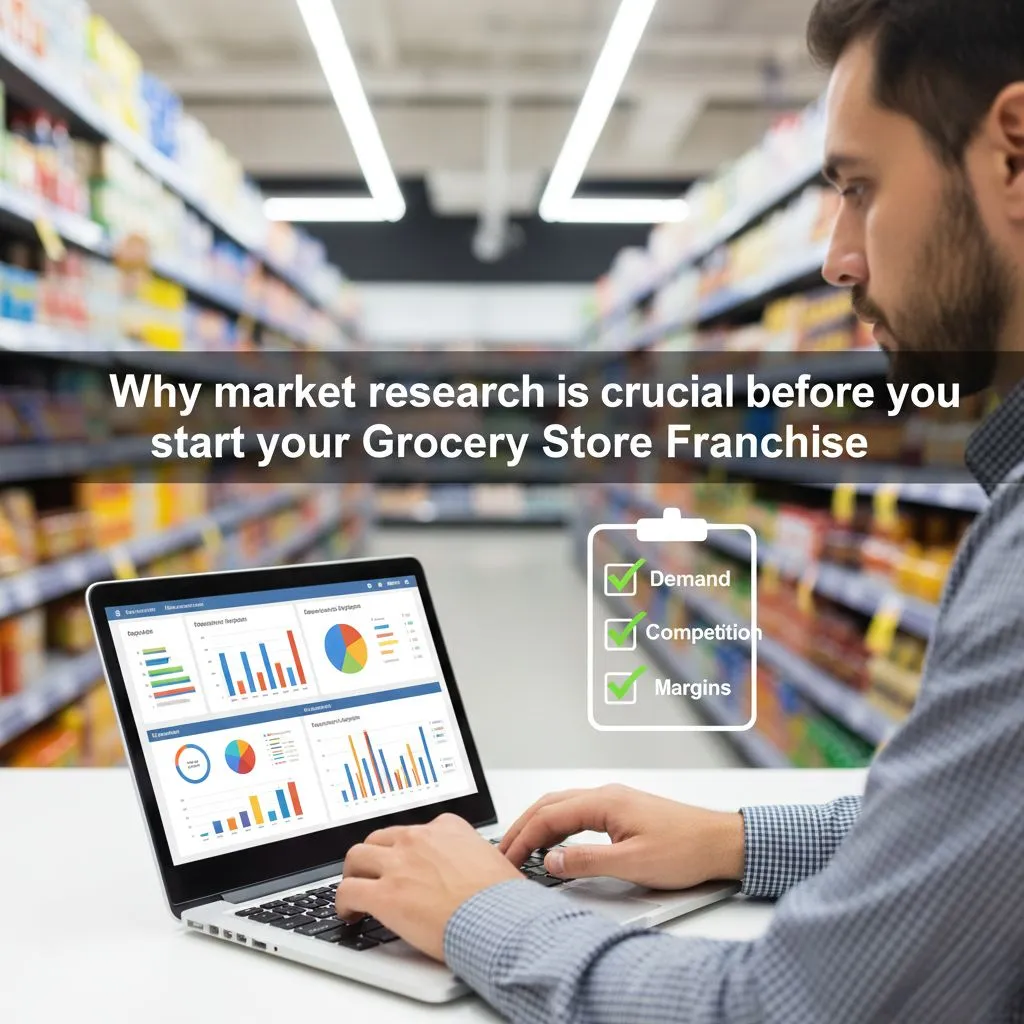
Are you considering opening a supermarket franchise? This is a good business opportunity with high profit potential. Success is not guaranteed. The first thing you need to do is conduct a thorough market study. You can use market research to better understand your customers, your competitors, and your overall economic environment. You can use this knowledge to make smarter decisions and avoid costly mistakes. This guide will tell you why it is important to conduct market research before opening a franchise for a food store in India. It also explains what to do to start a business that succeeds. Why Market Research is Important for Grocery Franchise You should gather information and research the market before investing in a franchise. It is the best way to build a profitable business. This is how it works: Know the Competition. Market research will show you just how many grocery stores there are in your area. You can then determine if your market has too many competitors or whether there is room for you to differentiate yourself. Trend Identifier: This tool helps you identify the newest trends in the food industry. For example, the increasing demand for plant-based or organic products. You can stock products that your customers want. Please get to know your customers: By knowing what they need and want, you can better serve them. You can use this information to offer your customers the best products and services. This will lead to increased sales and loyalty. Better Decisions: By having the correct information, you will be able to make better decisions in regards to everything from pricing and location. The Key Factors to Consider When Researching a Grocery Franchise Focus your research to build a strong foundation for your supermarket franchise. 1. Understanding Your Target Market Knowing your target market is the most crucial part of any research. Demographics of your customers: Take a look at the people in your region. How much do they earn? What is their income level? Analysis of Shopping Behavior: Identify what, where, and when people shop for groceries. Are they more likely to make quick shopping trips, or do you prefer big weekly purchases? Do they have a preference for certain items, such as gluten-free products or vegan alternatives? Stocking the correct products is easier when you understand their habits. 2. Analysis of your competitors You won\’t have the only grocery store in your town. It\’s important to understand your competition. Identify competitors: List direct competitors, such as other grocery stores (and local markets), and indirect competitors. Assess Strengths and Weaknesses: Learn what your competitors are doing well, and how they can improve. It can help you identify gaps in the marketplace that your franchise could fill. This will give you an advantage. 3. Selecting the Best Location Location is a major factor in the success of a grocery franchise. Analysis of Location: Analyze potential locations by examining foot traffic, parking, and accessibility. Customers will be more likely to buy from a location that is visible and accessible. Regulations Locales: Understand the local regulations before signing a contract. This includes health and safety laws and requirements for business licenses. You will avoid any legal problems down the line. Also Read: How to Handle Supply Chain Issues In Supermarket Franchise 4. Set Your Pricing Strategy Your business\’s success or failure can be determined by your pricing. Know Market Prices: Check what other companies charge for products similar to yours. You can then set prices that are competitive and still leave a profit. Price Sensitivity of Consumers: What is the average price that customers are willing to pay in your region? You should be able to tell from your research whether consumers are more concerned with low prices or if they prefer quality and convenience. 5. Choose Your Product It is important to choose the best products for your business in order to attract and retain customers. Select the right product mix: The products you choose should be in line with your market\’s needs. Mix essentials with specialty products to attract a wider customer base. Locate Reliable Suppliers. Look for suppliers that can consistently deliver high-quality goods at an affordable price. A key to long-term business success is building strong relationships with trusted suppliers. 6. Plan Your Marketing You need to have a marketing plan in place for your new franchise. Marketing channels that work: Your research will show you the most effective ways to reach out to your target audience. You can reach your audience through local newspapers, social media, or events in the community. Develop a unique value proposition: Why is your supermarket franchise different? Make sure you clearly communicate what makes your grocery franchise different from others. Building Your Success through Research A grocery franchise can be a lucrative venture. But its success begins with thorough market research. Understanding your market, customers, and competitors will help you build a sustainable and profitable business. What is your opinion of the most crucial factor that should be researched before starting up a new business? Comment below and share your ideas!

Why Market Research is Important Before Opening your Grocery Franchise? Read More »

how to handle supply chain issues in supermarket franchise

How to Handle Supply Chain Issues In Supermarket Franchise

A supermarket franchise can be a rewarding but complex venture. The supply chain is one of many factors that affect success. It is important that the supply chain works smoothly so products can flow from your suppliers directly to your shelves. This keeps customers satisfied. This flow can be disrupted by issues such as material shortages and port congestion. The article explores common challenges that a franchised supermarket faces in the supply chain and offers practical solutions to these problems. Understanding these challenges and finding effective solutions will help you reduce costs and boost efficiency while providing a positive shopping experience to your customers. Understand the Supply Chain of Supermarkets It\’s crucial to know how a franchised supermarket works before you can fix any problems. The supply chain is a complex network of resources and people that gets products from the source to a customer\’s cart. Key players include: Sources of raw materials: These are the people or businesses that provide products with their raw materials, such as farmers who grow produce and companies that make packaging. Producers/Manufacturers: They take the raw materials and create the finished goods you sell, like a company that bakes bread or bottles milk. Distribution: This is the team of logistics professionals who deliver products to franchise stores or warehouses from their manufacturers. Franchisees (Your Franchise): As the last link of the chain, you are responsible for storing, displaying, and selling products to the customers. Customer: End-users, who are the ones driving demand throughout the supply chain. Your supermarket\’s franchise could be seriously affected if there is a breakdown in any part of the chain. The Impact of Common Supply Chain Problems Each supermarket will have to deal with supply chain challenges. The first step to finding solutions is to recognize them. Materials and labor Shortages Raw materials are sometimes in short supply. It could be because of a poor harvest, natural disasters, or an increased demand. A shortage of employees at factories, farms, or distribution centers could also slow the process. This results in an empty shelf and unhappy customers for your franchise supermarket. High Rates of Return Returns are made when products arrive damaged or do not meet the quality standard. Return rates are high, which means lost revenues and extra logistical tasks to deal with the goods. This can also indicate a problem that may exist with the supplier or distributor. Transport and Logistical Constraints Transport delays are an everyday problem. A shortage of drivers and port congestion could mean that your products are sitting in a warehouse for several weeks. The delays can create confusion and hinder the management of inventory. Strategies for Managing Supply Chain Issues Supply chain management, if done well, can assist your franchise in navigating these difficulties. Consider these strategies. Also Read: Grocery Store Franchise: A Complete Guide to Daily Operations 1. Diversify Your Suppliers It is dangerous to rely on one supplier for an important product. Your supply will be cut off if that supplier is having problems. Build relationships with several suppliers of your key products. You\’ll have a backup option in case one of your suppliers is unable to deliver. This will make your supply chain resilient. To create a network that is balanced, look for national and local vendors. 2. Enhance Communication and Collaboration It is important to maintain a constant and clear communication with your partners in the supply chain. Regularly meet with suppliers and distributors in order to review forecasts, challenges, and performances. Shared technology platforms provide you with real-time insight into your inventory and shipping status, so that you can react to disruptions quickly. 3. Improve Inventory Management The technology can be an ally. Inventory management software can help you track data on sales and better forecast demand. You can avoid both overstocking and understocking, which will lead to loss of sales. A good system will ensure that you always have enough product on hand at the correct time. 4. Transport and Logistics Optimization Working closely with your logistics partners, find the best routes for transportation. Consider comparing different transport options, such as a combination of rail and trucking, to determine which is the most reliable and cost-effective. The cost of transportation and carbon footprint can be reduced by consolidating your shipments. Making your Supermarket Franchise Stronger The supply chain is an inevitable part of operating a franchise supermarket, but it doesn\’t need to be the main focus. Understanding the parts of your supply chain, identifying problems, and using smart strategies will help you build an efficient and robust operation. Strong supply chains lead to reduced costs, happy customers, and an improved bottom line. This will help your franchise achieve long-term success and growth.

How to Handle Supply Chain Issues In Supermarket Franchise Read More »

grocery store franchise a complete guide to daily operations

Grocery Store Franchise: A Complete Guide to Daily Operations

In India, opening a franchise for a supermarket requires much more than paperwork and investment. Once you start serving customers, the real challenges begin. Your success depends on your ability to manage the daily operations of your business, including inventory management and customer service. To run a successful grocery franchise, you must master eight areas that have a direct impact on your bottom line. These operations can create happy customers, lower costs, and help you build your brand in the community when managed well. This guide outlines the daily activities that make a grocery store successful or not. These strategies can help maximise your profitability and satisfy customers, whether you are considering or operating a grocery franchise in India. How to manage your grocery store inventory: the foundation of success Successful grocery stores are built on effective inventory management. Inventory control problems can lead to empty shelves and spoiled goods, as well as frustrated customers. Inventory tasks for daily inventory include tracking items that move quickly, identifying products that are slow-moving, and checking expiration dates. To maintain accurate inventory levels, smart grocery store owners combine manual counting, barcode scanning, and newer systems such as RFID technology. First-in, first-out (FIFO) is a method that\’s crucial for perishables. Rotate your stock to ensure older items sell first, and newer products are sold last. The simple act of rotating stock will reduce spoilage and increase your profits. Modern inventory management systems can alert you in real time if your stock is low and produce reports that show sales trends. These data help you to make better purchasing decisions and prevent both overordering and stockouts. Build Your Grocery Store Staff with Effective Staff Management Employees directly impact customer satisfaction and efficiency. Staff who are well-trained and motivated can manage busy times smoothly, while teams with poor management create chaos. Training should include product information, skills in customer service, and correct procedures. Workshops help employees stay up to date on the latest products and policies, while also building cohesion. Make sure you have a clear plan to ensure that there is adequate staffing during the peak times. Insufficient staffing is a major problem for many grocery stores during peak morning and evening hours. Recognise and reward outstanding performance. Employees who are happy provide better service to customers and remain longer. This reduces costly turnover. Also Read: Grocery Store Franchises in India: Hypermarket or Supermarket? Billing and Technology Operations in Your Grocery Store Modern Point of Sale systems (POS) streamline business transactions while providing valuable insights. They can handle the multiple payment options that customers today expect, including cards, cash and digital wallets. The scanning of barcodes speeds checkout while updating the inventory automatically. This integration reduces errors by eliminating manual input and displays accurate information about stock levels in real time. You should be able to generate reports that show sales trends and the most popular items. This data can be used to adjust staffing levels, plan promotions, and adjust inventory. Regular system maintenance prevents technical issues during busy periods. To avoid checkout delays, train multiple staff on common issues. Customer Service Excellence at Grocery Stores Your grocery store\’s exceptional customer service will set it apart from the competition. The convenience of the store, knowledge about products, and quick resolution to problems are what customers value most. Staff should be trained to help new customers find products and remember their preferences. Customers return to businesses that offer competitive prices because they receive personal attention. Use customer loyalty programs to offer birthday discounts, reward points, and special offers. The programs provide information about the shopping habits of customers and increase their lifetime value. Handle complaints professionally and quickly. An issue that is resolved well can create more loyalty from a client than one who has never had a problem. Clean and maintain your grocery store Cleaning directly affects customer perceptions and safety. Cleanliness is important to attract customers. A dirty grocery store will drive them away, regardless of price or choice. Set up daily cleaning schedules in high traffic areas, such as aisles, entryways, counters and checkouts. Shop cart handles and other surfaces that customers frequently touch should be given special attention. Equipment maintenance is essential to ensure food safety and prevent costly failures. To identify problems as early as possible, check refrigeration systems, air conditioners, and checkout systems every day. Customers expect improved sanitisation procedures after a pandemic. Hand sanitisers are a must, as is maintaining clean bathrooms and ensuring visible cleaning throughout the day. Grocery Store Success: Financial Reporting and Tracking Financial tracking gives you a clear picture of your store\’s performance and can help identify areas for improvement. Important business decisions are guided by daily sales reports, tracking expenses, and profit analyses. Keep track of key metrics, such as daily sales, transaction values and turnover rates. Comparing these figures to the previous period will help you identify seasonal trends. Keep detailed records for all expenditures, including utility bills, employee wages and payments to suppliers. These records are essential to ensuring tax compliance as well as identifying opportunities for cost reduction. Identify your best-selling products and optimise pricing using financial data. Prioritise high-margin products for marketing and shelf space. Smooth Grocery Store Operations: Vendor coordination A strong vendor relationship ensures timely deliveries of high-quality products at affordable prices. Stockouts, poor quality, and customer dissatisfaction of customers are all the result of bad vendor management. Dedicate staff to receive deliveries, inspect invoices and check product quality. Standardise the procedures used for receiving and reporting damaged items. Avoid disruptions by building relationships with several suppliers of critical products. When your primary supplier is unable to deliver, having backup suppliers will protect you. Maintain good relations with suppliers by negotiating payment terms to support your cash flow. Most suppliers will offer you discounts for paying promptly or ordering in bulk. Market Your Grocery Shop with Marketing Activities Marketing that works attracts and retains customers effective. Marketing for grocery stores that is successful combines both traditional and digital marketing strategies. Spending increases around holidays like Diwali and Holi, as well as Christmas and Eid, can be used to plan special promotions. Promote these events with eye-catching banners on social media. Use loyalty

Grocery Store Franchise: A Complete Guide to Daily Operations Read More »