
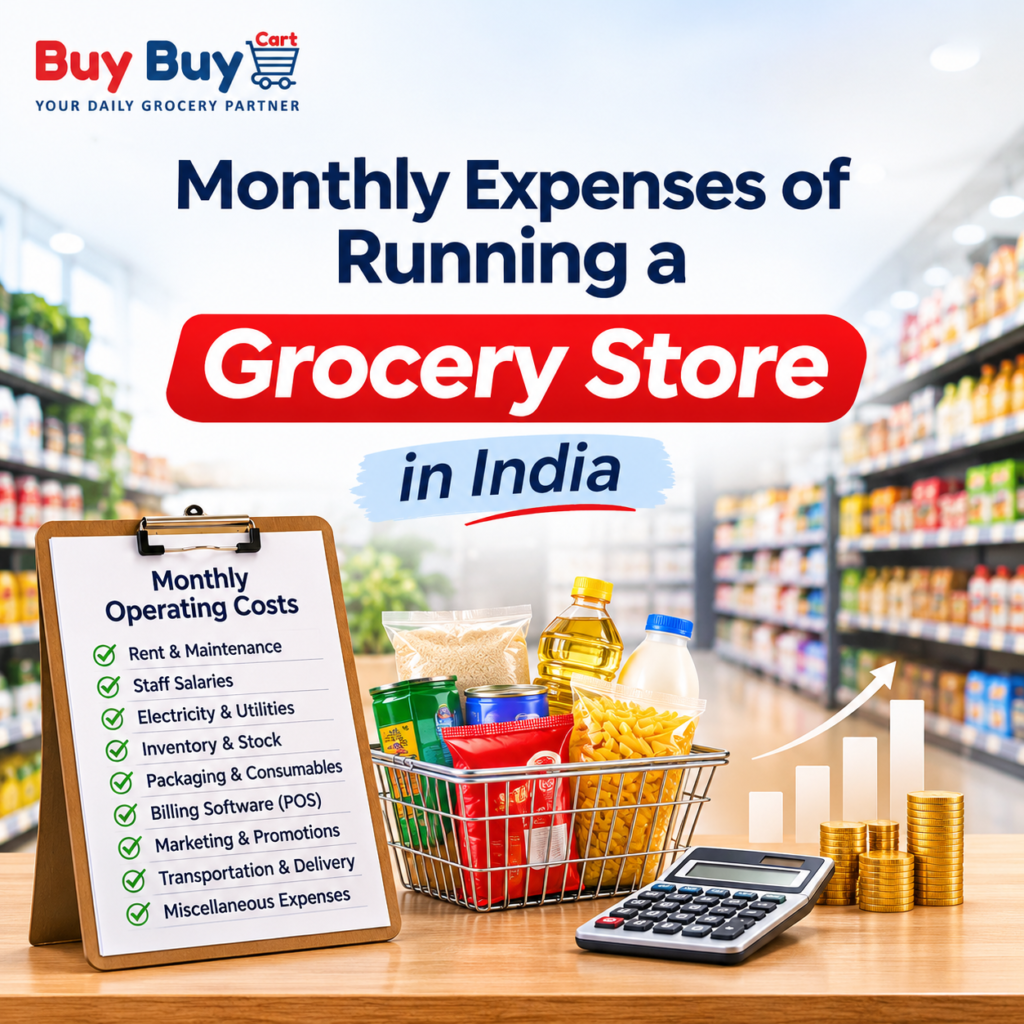
Starting a grocery store in India comes with its own share of challenges, but knowing your overhead costs is just as crucial to your industry success. Make sure to familiarize yourself with almost all the costs that run into your business operation, as this knowledge is fundamental to ensuring your business remains solvent through these growing processes to come.
Other than the licensing/initial investment fees necessary for starting any grocery retail business, there are also several running costs that come into play. Itemized operating costs include rent, staff salaries, utility bills, product purchasing and warehousing, packaging costs, IT infrastructure costs, marketing, and transportation. Always keep in mind the fact that once these small expenses are added together, they can prove to be exceptionally damaging concerning the overall profitability of your grocery start-up.
The precise monthly expenses associated with running such a store are highly dependent on multiple factors, including the size, location, assortment of goods offered for sale, number of employees, and customer demand for products being sold. For example, a small store located in a quiet neighborhood will face other operational pressures as compared with the ones burdens exceeding cost structure of a normal supermarket.
Entrepreneurs wanting to establish their own grocery store in India should create a feasible monthly budget, have enough funds, and keep track of costs. This guide will examine different operating expenditures incurred by grocery store owners and how to handle expenses efficiently.
What Are the Main Monthly Expenses of Running a Grocery Store in India?
The grocery business has expenses in different areas of operation. Knowing what these costs entail helps retailers manage their costs effectively and guarantee minimum profitability.
Renting and maintenance costs: Rent is among the main fixed costs in this case; however, a grocery store located in a high-demand area can be quite expensive. Moreover, there tend to be additional costs for cleaning and other expenses related to renting the store.
Electricity and Utilities: Electricity is consumed through refrigerators, freezers, lighting, air conditioners, and billing systems. The expenses of other utilities must also be taken into account, such as water bills and internet charges.
Inventory Purchasing and Stock Replenishment: The purchase of grocery products, FMCG goods, dairy products, snacks, and household goods requires a continuous supply of working capital. The largest part of working capital might be in demand, which might depend on sales volume and stock turnover as well.
Packaging and Consumables: Items such as carry bags, paper bags, billing rolls, labels, and cleaning supplies fall under this category, requiring continual expense.
Technologies and Billing Software: Technologies such as POS systems, barcode scanners, stock management software, and billing software are used by retailers to operate their business. Costs might vary according to the providers of those tools.
Marketing, Transportation, and Other Costs: Printing flyers, running promotions including discounts and advertising of product in the social media is essential. Extra expenses can be spent on equipment failure, damaged goods, and unpredictable expenses.
Employee salaries: The cost incurred in employing staff will depend on the size of the store and the number of employee hours worked. One or more cashiers, salespeople, store managers, assistants, and delivery workers may be needed. Retailers should take into account any attendance-related costs and others connected with employee benefits.
Also Read: How to Start a Grocery Store Franchise With Low Investment in India
Estimated Monthly Cost of Running a Grocery Store in India
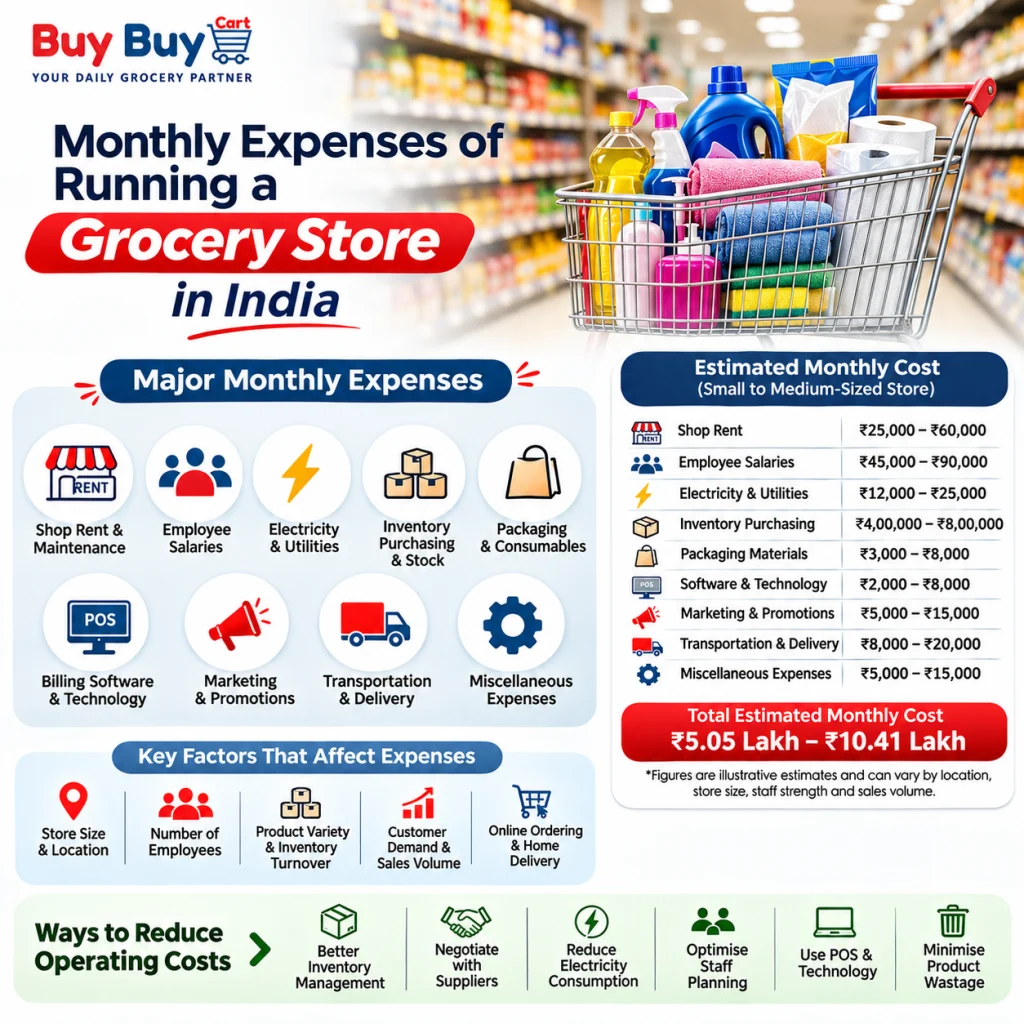
Broadly speaking, the monthly rental charges range between ₹25,000 and ₹60,000, along with employee salary in the range of ₹45,000 to ₹90,000 and monthly electricity expenses estimated to be between ₹12,000 and ₹25,000.
As for the inventory, this can cost between ₹4 lakhs to ₹8 lakhs. In addition to this, the cost of packaging, billing software, and technology should amount to about ₹5,000 – ₹16,000.
Furthermore, the marketing budget is estimated to be between ₹5,000 to ₹15,000. The cost of delivery and transport is normally in the range of ₹8,000 to ₹20,000, while miscellaneous expenses account for ₹5,000 to ₹15,000.
The numbers mentioned above are only an approximate estimate, and actual expenses incurred can vary depending on location, size of the business, workers, inventory, and sales of the Grocery Store.
The given estimates are indicative in nature, and they should not be regarded as competitive rates among rivals. The actual grocery shop expenses depend on several factors such as the size of the shop, the city, the number of employees, the variety of goods sold, the order frequency, and monthly sales volume.
Purchasing of inventories should not be associated with fixed running costs because inventory acquisition can be directly connected with sales. Therefore, such cash outflow can never be confused with running costs and therefore, the calculation of net profit must be made not including purchases of inventory.
Factors That Affect the Monthly Expenses of a Grocery Store
Various criteria impact the monthly grocery shop operation costs. Rental costs and electricity bills depend on the shop location and size. In general, a bigger supermarket should employ more people, acquire more machines and stock more goods than a small retail store.
The number of employees is another factor influencing monthly spending. Meanwhile, if the grocery store has a larger range of products, there will also be a need for larger working capital and better stock management.
Sales and customers’ needs determine stock restocking, and related packaging and logistics needs. If the grocery store provides home delivery or online ordering options, it will have to engage extra delivery people and arrange for logistics and packaging. Nonetheless, such services can enlarge the customer base.
Ways to Manage Monthly Grocery Expenses
Retailers can optimize expenditures without sacrificing product quality or customer satisfaction with the help of practical management techniques.
Enhance inventory management: Watch out for fast- and slow-moving items to prevent overstocking and waste.
Negotiate better supplier deals: Compare supplier pricing and take advantage of bulk order options.
Save on electrical costs: Invest in energy-efficient lighting systems and keep refrigeration units well-maintained.
Optimize staffing: Schedule staff based on customer turnout and operating hours.
Utilize billing technology: Implement point-of-sale and inventory management systems in order to keep track of sales, inventory, and expenses.
By routinely analyzing monthly expenditures, retailers can identify inefficient spending habits, which in turn leads to improved efficiency.
Is It Profitable to Open a Grocery Store in India?
Starting a grocery store in India can definitely be a good business idea, but it all depends on the profits earned through the sales volume, gross margin, and the costs incurred.
For example, say a grocery store has total monthly sales of ₹10 lakh and its gross margin is 18%, then the gross profit of the store will be ₹1.8 lakh. If the total expenses include rent, salary, power, marketing, etc., and are ₹1.2 lakh, then the gross profit of the store becomes ₹60,000, which excludes tax, depreciation, and interest.
This example shows that profit is not guaranteed by sales; grocery owners also need to take care of the gross margin, stock turnover rates, waste management, ongoing expenses, etc., so that their grocery store runs smoothly.
Conclusion
Opening a successful grocery store in India is not only about investment, but it also demands the necessary financial planning, effective inventory control, and adequate cost accounting. Being aware of the operating costs on a monthly basis allows retailers to understand how to control cash flow, generate profits, and build a successful business.
When planning to open a grocery store or renovate a kirana store, one must choose the right technology and business model. With the help of the grocery franchises offered by BuyBuyCart, investors will get FOCO and FOFO models, inventory, operational, and technological support.
Frequently Asked Questions (FAQs)
- What is the monthly expense of running a grocery shop in India?
A small or medium-sized grocery shop needs to spend somewhat from ₹1,00,000 to ₹2,50,000 on various factors such as rent, wages, and electricity to maintain its operational costs.
- What is the largest expense for a grocery store?
The inventory might be the largest expense of the grocery store, but there are other costs involved as well, such as rent, salaries of the employees, and electricity, which have to be monitored regularly.
- What measures can I take to reduce costs for a grocery store?
You can minimize costs in the following ways: making the best use of inventory, negotiating with suppliers, installing energy-efficient equipment, scheduling your employees properly, optimizing billing systems, and minimizing wastage of goods.