buybuycart.com

BuyBuyCart Admin

Digital Tools Transform Business Operations In Supermarket Franchise Success

Since the COVID-19 pandemic, grocery retailers have experienced a significant shift. The traditional Indian kirana store once dominated the retail industry in India. However, today, there is fierce competition among supermarket franchises that are tech-enabled and offer better inventory management, faster service, and online delivery. Sophisticated software, cloud dashboards, and barcode scanners now power business processes that used to rely on paper ledgers and cash registers. The technological change in the industry presents opportunities as well as challenges to entrepreneurs. The prospect of investing in IoT and advanced software for new businesses can be overwhelming. However, has developed a franchise model to bridge this gap. It makes supermarket ownership accessible, efficient, and profitable for those who are tech-curious. Digital Revolution Transforming Supermarket Franchise Operation The modern supermarket business relies on digital ecosystems integrated into its daily operations. The systems reduce human error, operational costs, and time-consuming manual processes. The use of digital tools allows for automatic inventory management, which prevents stockout situations from occurring. This can be frustrating to customers and lead to a loss in sales. Software monitors and predicts fluctuations in demand, as well as monitors product movements. It also generates alerts for automatic reorders if inventory drops below certain thresholds. Dashboards on the cloud provide real-time insight into metrics such as sales, profitability, and efficiency. The data-driven method allows for quick decisions and helps to identify improvement areas without having to rely solely on observations by staff or manual calculations. Technology Support for Supermarket Franchises Improves Performance BuyBuy Technologies\’ model for a supermarket franchise combines proven retail technology and comprehensive business support to create a system that simplifies operations while maximizing profitability. The platform analyses the performance of the digital ecosystem and gives actionable insights to franchise owners. This technology suite also includes inventory management software that tracks product movements from the point of delivery until sale. The barcode scanning system ensures accuracy in stock counts, reduces checkout time and improves customer satisfaction. Intelligent analytics tools can identify seasonal and purchasing trends. This allows franchise owners to make more informed decisions regarding product selection, pricing, and marketing campaigns. This data-driven strategy helps franchise supermarket businesses remain competitive while still maintaining healthy margins. Also Read: Top Grocery Store Franchise in India: Costs, Profits The benefits of technology integration for supermarket franchise owners The digital transformation brings measurable benefits to multiple areas of business. Automation reduces the need for large teams of staff, reducing labour costs and maintaining service standards. Inventory management is more accurate, which reduces waste and ensures popular products remain in stock. The customer experience is improved significantly by faster checkouts, customised offers based on purchase histories, and easy online ordering. The enhanced services offered by supermarket franchises help them build loyalty with customers and compete more effectively with larger retail chains. Franchise owners can monitor their business remotely with real-time reports, allowing them to keep track of important metrics such as daily sales, turnover in inventory, and profit margins. Smart Technology for Scalable Supermarkets Digital platform allows for the expansion of supermarket franchises by creating standardised processes that can be duplicated in multiple locations. Owners can manage multiple stores with ease while still maintaining uniform standards of operation. The integration of technology also enhances relationships with suppliers through digital payment systems, automated order processing, and automation. This streamlined process strengthens vendor relationships and can often lead to better pricing due to increased order accuracy and payment reliability. As supermarket franchises grow, the scalable nature of digital systems ensures that technology costs are relatively stable and operational efficiency is continually improving. It creates an economic model for long-term success. Make smart investments in supermarket franchises to benefit the future. In order to survive in the competitive retail market, supermarket franchises must embrace technology. Partnering with platforms reduces financial risks and eliminates guesswork. The franchise owner can access proven software without having to create custom software or go through complex integration processes. The focus is on the customer and the growth of the business rather than on technical issues. This comprehensive model of support ensures supermarket franchisees receive ongoing training and technical assistance to make technology adoption easy and sustainable. The support structure can be especially valuable to business owners with limited technical knowledge. Digital Solutions to Transform Retail Businesses It\’s more than a mere trend; the shift to technology-enabled franchise supermarket operations is essential for survival and business growth. BuyBuyTechnologies\’ integrated approach offers the training and support needed to create a successful retail business. Customers today expect convenient options, low prices, and efficient service. These expectations can be met by supermarket franchises that use digital tools to maintain the margins needed for sustained growth. Are you ready to discover how technology can change your franchise supermarket opportunity? BuyBuy Technologies will share its business model with you and demonstrate how digitalization of operations can boost profitability.

Digital Tools Transform Business Operations In Supermarket Franchise Success Read More »

Top Grocery Store Franchise in India: Costs, Profits & Step‑by‑Step Process

Grocery Store Franchise in India: Discover the full cost, support, pros & cons—find clarity and confidence before launching your supermarket franchise journey. Deciding whether to invest in a Grocery Store Franchise in India can feel overwhelming, especially when you’re worried about high setup costs, uncertain returns, location challenges, or franchise terms. This blog aims to clear those doubts and help you make an informed choice. Read on for real insights into investment ranges, top brands, operational support, and frequently asked questions—all to help you feel confident before committing. Why Choose a Grocery Store Franchise in India India’s food & grocery retail market is worth around US $719 billion approx and is projected to grow about 4% annually through 2030. It remains the largest retail segment in the country. Franchising opens the door to an organized retail model backed by established brands. Opening your freelance grocery shop alone can be risky and resource-intensive. A franchise provides a proven brand, standardized operations, and supplier access, which reduces the learning curve and operational hassles. Step‑by‑Step Process to Open a Franchise Selecting the Brand & Format Evaluate your budget, location size, target consumer profile, brand presence, and support model. For tight budgets, G‑Fresh or SuperK may suit; for higher ambition, consider More or 7Heven. Site Evaluation & Location Choice Choose high pedestrian areas or neighborhoods with unmet demand. Requirements can be 500 sq ft mini formats or up to 10,000 sq ft for a full-scale supermarket. Signing Agreements & Training You’ll enter into a 3–5‑year franchise agreement with the brand. Training programs typically cover operations, inventory ordering, billing software, merchandising, and marketing launch support. Support & Operations from Franchisors Training, Marketing & Supply‑chain Support Most franchisors offer end‑to‑end offerings: central procurement, branded merchandise, marketing campaigns, regular audit visits, and software systems. Ongoing Royalty & Fees Structure Royalty ranges from 1‑5% of gross turnover or a fixed fee—be clear about this before signing the agreement. Benefits for Entrepreneurs Considering the Franchise Route Brand Recognition & Proven Model Established brand value delivers customers from day one, helping build trust and loyalty quickly. Bulk Purchase Power & Savings Franchisees tap into centralized supplier deals, yielding lower purchase prices and higher margins. Reduced Business Risk versus Independent Store With training, standardization, and ongoing support, franchisees face lower setup learning curves and operational errors. Common Concerns & How They Can Be Overcome High Upfront Costs vs. ROI While initial setup may feel high, veteran franchisees often report breakeven within 12–24 months if footfall and margins are well‑managed. Lease & Location Challenges Prime location rental can eat your margins. Negotiate lease terms and factor rent into your feasibility study. Royalty Burden & Margins If royalty is percentage‑based, optimize inventory and minimize shrinkage to maintain profitability. Real‑World Success Stories from Franchisees G‑Fresh Mart’s Low‑Investment Entry Multiple first-time investors have launched profitable mini‑mart outlets for under ₹10 lakh, leveraging local demand and lean operations. Hearty Mart’s Rural‑Urban Model By focusing on smaller towns and villages, Hearty Mart empowers franchisees with ₹5–10 lakh setup and strong local loyalty—proving profitable even outside metro clusters FAQs about Grocery Store Franchise in India 1. What is the minimum investment needed? You can start with ₹5 lakh for compact formats like G‑Fresh or Hearty Mart; full‑scale supermarket models often require ₹40‑70 lakh or more. 2. How long does it take to break even? Most franchisees reach break‑even in 12–24 months if standard operations are followed, and the location is well‑chosen. 3. Do I need prior experience in retail? Not necessarily. Franchisors provide training and support even for first‑time owners 4. What licenses are required? You need a Shop & Establishment license, municipal trade license, FSSAI (if food), and GST registration—costs range up to ₹2 lakh depending on the state. 5. What are typical royalty/fees? Royalty can be 1–5% of turnover or fixed monthly payments. Software and marketing fees may be extra. 6. How do franchise costs vary by brand? Budget formats like G‑Fresh or SuperK: ₹5–20 lakh. Mid-tier chains like 7Heven, Street24: ₹10–30 lakh. Large chains like More, Spencer’s, DMart: ₹40–70 lakh or more. Conclusion: Is a Grocery Store Franchise in India Right for You? If you’re keen to avoid the high risk of starting an independent store and appreciate structured support, a Grocery Store Franchise in India can be a smart entry point into retail. You’ll benefit from trusted branding, supply chain efficiency, and hands‑on guidance. Still, ensure you perform thorough location analysis, budget realistically, and read your franchise agreement carefully. With a franchise, you\’re not just starting a store—you’re joining a proven retail ecosystem. That clarity and support often make the difference between doubt and confident entrepreneurship.

Top Grocery Store Franchise in India: Costs, Profits & Step‑by‑Step Process Read More »

Smart Inventory Management for Franchise Supermarkets

To run a successful franchise, you must balance thousands of items while maintaining profitability. Effective inventory management is essential for a supermarket franchise with over 20,000 products in multiple categories. Inventory control issues can lead to empty shelves and frustrated customers. They also cause significant financial loss due to expired goods. Franchisees can boost their profits by implementing smart inventory strategies. They will help them maintain the optimal level of stock, cut down on waste, and reduce costs. Implementing systems that allow you to see your inventory in real time and support data-driven decisions is key. How Inventory Management Drives Franchise Success Franchisees of supermarkets have unique challenges, which independent shops do not. While your customers demand that products be available at all stores, corporate policies require specific stock practices. Three critical aspects of your business are directly affected by effective management. Retention of Customers and Customer Satisfaction Customers will go to the competitors if your shelves are empty. Shoppers lose trust in the reliability of your store when they can\’t locate essentials like bread or milk. Stock availability that is consistent builds customer loyalty and trust, encouraging repeat business. Maximizing Profit Stockouts and excessive inventory for slow-moving items are two scenarios that can be costly. Stockouts result in lost sales, while excess inventory increases costs and ties up your capital. Find the balance that maximizes return on your investment. Operational efficiency Inventory management that is well-managed streamlines the daily operation. The staff spends less time dealing with emergency orders and expired products. The result is lower labor costs and smoother operations in the store, which benefits both customers and employees. The Core Strategies of Supermarket Inventory Management Implement automated reordering systems. Modern point of sale systems monitor sales in real time and generate automatic purchase orders once stock levels exceed pre-determined thresholds. This technology ensures that fast-moving products are always available. Reorder points can be set based on seasonality, sales volume, and lead time. Sort products by performance Not all products deserve equal attention. ABC classification is based on profitability and sales volume. The most profitable items are in category A and need to be monitored frequently. The products in Category B require moderate monitoring, while those in Category C can be handled with simple systems. This helps you to allocate resources and time effectively. The Expiration Dates Monitor The operation of grocery stores requires paying special attention to perishable products. Use inventory management software to track expiration dates and implement first-in-first-out rotation. Monitoring regularly reduces the risk of spoilage, and can have a significant impact on profitability. Trends in sales and patterns The historical sales data can reveal important trends that influence purchasing decisions. Discover seasonal patterns, the impact of promotions, and local customer preferences. This helps you to adjust your inventory levels in a proactive manner rather than reacting reactively when stockouts occur or overstocks are present. Also Read: The Hidden Costs of Poor Inventory Management in Grocery Franchises Applying Technology for Better Results Inventory Management System POS systems can be integrated with specialised grocery store software to track inventory. They offer such features as automated ordering, expiration date monitoring, and detailed reports. Software designed for supermarkets is better than generic solutions. Mobile Inventory Tools Equip your staff with tablets or mobile devices to update inventory in real time. The employees can use mobile devices to scan items, check inventory levels, and update quantities. The mobility of the system improves accuracy and gives instant access to inventory levels across departments. Reporting and Data Analysis Reporting regularly helps to identify trends and areas for improvement. Keep track of key metrics such as inventory turnover rate, frequency of stockouts, and waste percents. These insights can be used to improve your inventory strategy and inform business decisions. Managing Supplier Relationships Diversify Your Supplier Base If you rely on a single supplier, there is a risk. To ensure a consistent supply, develop relationships with several vendors to provide critical products. Diversification can also provide negotiating power and backup options for peak demand times. Negotiate Favorable Terms Negotiate with your suppliers on terms that will support the goals you have for inventory. Negotiate reduced lead times, order quantities that are flexible, and return policies on unsold seasonal products. Supplier relationships can provide a competitive advantage in terms of pricing and availability. Take Action for Inventory Optimization Inventory management is not a once-off process for successful supermarket franchises. It\’s a continuous, ongoing procedure. Audit your existing practices to identify the most painful areas. Focus on the areas that have the greatest impact first. Consider training your staff members in the area of inventory management. They must understand and accept the practices. Your inventory strategy will remain effective as you grow and the market changes. Inventory management can transform your franchise supermarket from reactive to proactive and give you control to maximise profitability, while better serving your customers.

Smart Inventory Management for Franchise Supermarkets Read More »

The Best Model for a Supermarket Franchise: Retail or Wholesale

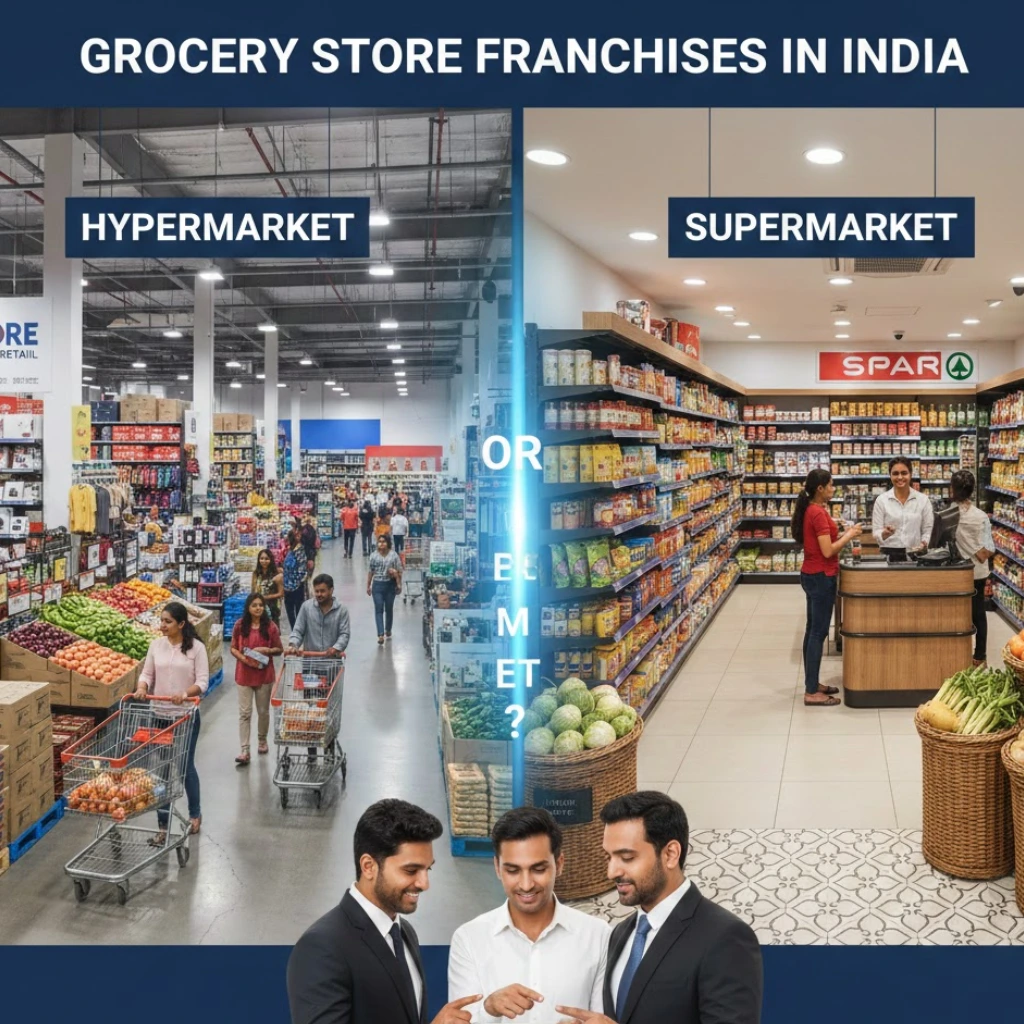
Supermarket franchises are becoming more attractive for entrepreneurs as the grocery market continues to grow. You\’ll need to make a decision if you want to enter this profitable market: wholesale or retail supermarkets? The choice you make will impact everything, from the way your business operates to how much profit it makes. The two models have distinct benefits and challenges, which can determine your success in business. Before investing your time or capital in a franchise, it is important to understand the differences. Explore both options to determine the best model for your supermarket franchise based on your goals and available resources. Understand Retail Supermarket Franchises Franchises that operate retail supermarkets sell products to consumers directly. The grocery stores are focused on providing a great shopping experience to families, individuals, and households purchasing household essentials, daily necessities, fresh produce and other items. Retail franchises usually have organised aisles with attractive displays and counters for customer service. Owners of retail stores prioritise accessibility and convenience, staying open longer hours in order to meet the needs of their community. Retail grocery chains that are successful build their brand on a variety of products, low prices, and strong relationships with customers. The stores stock everything, from cleaning products to fresh produce. They cater to a wide range of shopping tastes. Wholesale Supermarkets Franchise Approach Wholesale supermarkets are different because they buy large quantities of products from distributors and manufacturers, before selling them in bulk to businesses. They sell to small supermarkets, restaurants, hotels and commercial customers. Franchise operations need larger facilities for storage and are more focused on inventory control than on the customer\’s experience. Wholesale supermarkets prioritise reliable supply chains and competitive bulk prices over aesthetic appeal. Wholesale requires strong relationships between businesses and a thorough understanding of their purchasing habits. The success of the wholesale model depends on offering competitive pricing and maintaining constant stock levels. The advantages of retail grocery franchises More Profits Per Unit Wholesale operations typically have better margins for individual items than retail supermarkets. You can use standard retail markups on products since you are selling to the consumer directly. Building Customer Loyalty The retail grocery store excels at building lasting relationships with the local families. Customers develop habits and preferences over time, which leads to a steady stream of revenue and marketing through word-of-mouth. Flexible Pricing Strategies Owners of retail franchises can use dynamic pricing, targeted discounts, and seasonal promotions. You can respond to local and competitor market conditions quickly with this flexibility. Reduced Initial Investment Required Retail supermarkets require less capital up front than wholesale businesses. The storage space requirements are smaller, and you can start with a moderate level of inventory. Wholesale Grocery Stores: Benefits and Opportunities The Volume-Based Revenue Potential Large-scale transactions can bring in substantial revenues for wholesale supermarkets. One commercial customer could buy what dozens or even hundreds of retail clients would. Expectable business relationships In contrast to consumer sales, B2B clients often have regular order patterns. This allows for a more stable cash flow. Contracts with small businesses or restaurants that last a long time can create steady revenue. Reduction in Marketing Costs Franchises that sell wholesale groceries spend less money on marketing to consumers and improving the store\’s aesthetics. You shift your focus to building business relationships rather than trying to attract foot traffic. Operating Efficiency Bulk handling, reduced checkout procedures, and simplified inventory management can help wholesale operations achieve higher efficiency. Also Read: How Profitable Is a Grocery Store Franchise in India? Challenges Each Model Faces Franchises in retail supermarkets have to navigate local competition and changing consumer tastes, as well as higher operating costs. Maintaining attractive displays, managing perishable inventories, and staffing roles in customer service require constant attention. Wholesale grocery chains face a variety of obstacles. These include longer payment cycles by business clients, increased storage and logistic costs, as well as reliance on smaller but more important customers. The purchasing power of commercial clients can be significantly affected by economic downturns. The Right Franchise for You Choose between the retail or wholesale model of supermarket franchising based on your capital available, market conditions and strengths. Wholesale is best suited to locations that have good access to transportation and are commercially active. Retail, on the other hand, works better in areas where there\’s a lot of foot traffic. Assess your level of comfort with business-to-business versus customer service. Retail requires daily interaction with diverse customers, while wholesale demands relationship-building with professional buyers. What are your next steps in supermarket franchising? The retail supermarket and the wholesale supermarket models are both viable options for business success. Your specific situation, your market research and your long-term business goals will determine the best choice. Analyse the local demand for your product, locations available, and levels of competition. To learn more about the support system, investment needs, and operational requirements of established franchises in these categories, contact them. Be aware that a successful franchise requires dedication, planning and an understanding of the unique needs of each model. Do thorough research prior to making such a crucial business decision.

The Best Model for a Supermarket Franchise: Retail or Wholesale Read More »

What Assistance Do You Obtain From a Supermarket Franchisor?

Starting a supermarket franchise can feel overwhelming. Between managing inventory, hiring staff, and competing with established grocery chains, new franchisees face numerous challenges. However, partnering with the right franchisor provides a comprehensive support system that transforms these obstacles into manageable tasks. Understanding what support you can expect from a supermarket franchisor helps you make informed decisions about your investment. This breakdown covers the essential areas where franchisors provide guidance, training, and ongoing assistance to ensure your grocery store franchisee success. Initial Training and Setup Support Most supermarket franchisors begin with comprehensive training programs that cover every aspect of running a grocery store. These programs typically last several weeks and include both classroom instruction and hands-on experience at existing locations. Training covers essential topics like inventory management systems, customer service standards, food safety protocols, and staff scheduling. You\’ll learn how to use point-of-sale systems, manage supplier relationships, and implement loss prevention strategies. The setup phase includes assistance with store layout design, equipment procurement, and initial inventory selection. Franchisors often have established relationships with suppliers, allowing you to benefit from bulk purchasing power and preferred pricing on everything from refrigeration units to shopping carts. Ongoing Operational Guidance Day-to-day operations support distinguishes successful franchises from struggling independent stores. Your franchisor provides detailed operations manuals, standard procedures, and regular updates on best practices developed across the entire franchise network. This support includes guidance on staff management, from hiring protocols to performance evaluation systems. Many franchisors offer human resources support, helping you navigate employment law compliance and develop effective training programs for your team. Inventory management represents another critical area where franchisors provide ongoing assistance. They help optimize product mix based on local demographics, seasonal trends, and proven performance data from similar locations. Marketing and Brand Development Marketing support goes beyond providing logos and signage. Supermarket franchisors typically develop comprehensive marketing strategies that include local advertising templates, promotional campaigns, and digital marketing resources. Your franchisor handles brand consistency across all locations while providing flexibility for local market adaptation. This includes everything from store layout standards to promotional materials that reflect community preferences. Many franchisors also provide co-op advertising programs where marketing costs are shared between the franchisor and franchisees, maximising your advertising budget\’s effectiveness. Also Read: Running a Supermarket Franchise Modern supermarket operations rely heavily on technology for everything from inventory tracking to customer loyalty programs. Franchisors provide integrated technology solutions that streamline operations and improve customer experience. This includes point-of-sale systems, inventory management software, and customer relationship management tools. Technical support ensures these systems run smoothly, with regular updates and troubleshooting assistance available when needed. Many franchisors also provide data analytics support, helping you understand sales patterns, customer preferences, and operational efficiency metrics that drive profitability improvements. Financial and Business Planning Assistance Franchisors often provide financial planning resources, including budgeting templates, cash flow projections, and key performance indicators specific to grocery store operations. This support helps you track profitability and identify areas for improvement. Some franchisors offer financing assistance or can connect you with preferred lenders familiar with their business model. This can significantly streamline the funding process for your initial investment and ongoing operations. Quality Assurance and Compliance Support Food safety and regulatory compliance represent critical areas where franchisor support proves invaluable. Regular inspections, compliance checklists, and updated procedures ensure your store meets all health department requirements and industry standards. Franchisors provide training on food handling protocols, equipment maintenance schedules, and documentation requirements that protect both customers and your business from liability issues. Why Franchisor Support Matters for Your Success The grocery store industry operates on thin margins where small improvements in efficiency or customer satisfaction can significantly impact profitability. Franchisor support provides access to proven strategies and systems that independent operators spend years developing through trial and error. This comprehensive support system reduces your learning curve, minimizes costly mistakes, and provides ongoing resources for growth and adaptation as market conditions change. Ready to explore supermarket franchise opportunities? Research franchisors thoroughly, ask detailed questions about their support programs, and speak with existing franchisees about their experiences. The right partnership can transform your entrepreneurial vision into a thriving grocery store business.

What Assistance Do You Obtain From a Supermarket Franchisor? Read More »

Running a Supermarket Franchise: Essential Daily Operations and Management

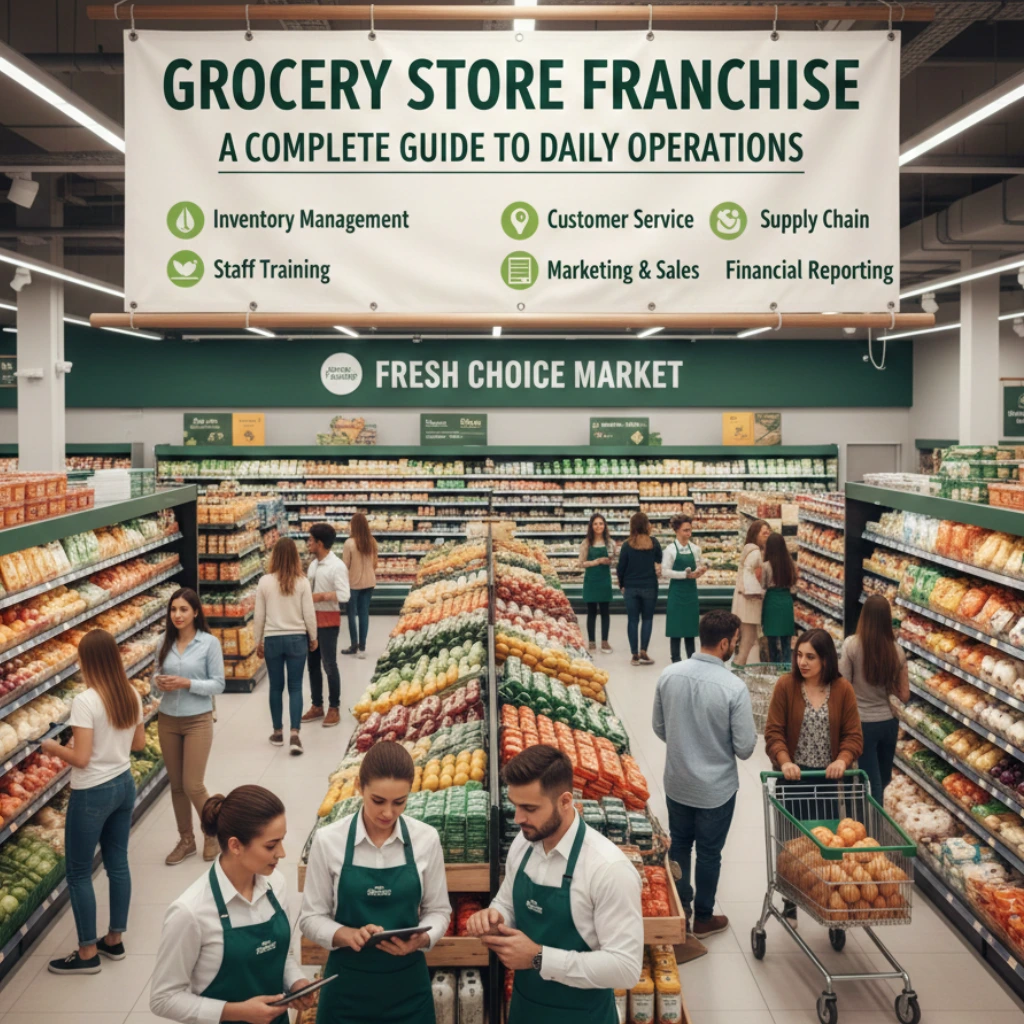
Starting a grocery franchise takes considerable investment in terms of paperwork and investments, but the actual challenge is when you open your doors each day. The success of your business depends on a mastery of three crucial areas in everyday operations: inventory control as well as team management, and effective checkout processes. Every single operational component directly impacts your business\’s bottom line and customer satisfaction. When done properly, the daily routines transform the humble grocery store into a thriving hub of community, which customers will choose to shop at repeatedly. Master Your Inventory Control Systems A well-organised inventory management system is the basis of profit-making retail operations. Every day, success depends on the availability of items when customers require they need them. You also have to reduce loss from damaged or expired items. Track Products Using Multiple Methods Smart supermarkets employ a variety of tracking tools to keep track of their inventory levels with precision. Manual counting allows for hands-on control, and barcode scanners provide rapid verification when the process of restocking. Modern operations can benefit from RFID technology as well as digital shelf labelling that instantly changes prices and inventory. Regular inventory checks can help you determine items with a rapid rate that require regular replenishment, as well as slow-moving items which may need promotional pricing to free up shelf space. Implement First-In, First-Out Practices Instructing your staff to observe FIFO guidelines ensures that older inventory is moved before the new stock arrives. This method significantly decreases the chance of the risk of spoilage, which is especially important when it comes to perishable goods such as dairy items, freshly picked fruits and vegetables and baked items. The staff should rotate items during the restocking process, placing items that are new in front of stock that is already available and examining expiration dates in order to prioritise items that are nearing their date of expiry for sales or sales on clearance items. Build a Strong Team Foundation Your employees are your brand\’s spokesperson and directly impact the level of customer satisfaction. Making sure that your employees are trained properly will create a pleasant shopping experience, which encourages customers to return. Focus on Comprehensive Training Programs All new employees must undergo a comprehensive training on the standard of service to customers, along with product knowledge as well as operational processes. Workshops regularly reinforce the best practices and introduce the latest techniques and technology. A well-trained and knowledgeable staff can manage high-shopping times with greater efficiency as well as resolve complaints of customers professionally as well and contribute to the efficient daily operation that keeps your shop running smoothly. Create Positive Work Environment Organising events for team building and rewarding the best performers boosts morale of employees and decreases the rate of turnover. Employees who are happy provide superior customer service and are proud of maintaining the store\’s cleanliness and order. A proper schedule ensures sufficient service during peak times, as well as allowing staff adequate breaks as well as time off to keep them from burning out and to maintain high-quality service. Also Read: 10 Grocery Supermarket Trends That Will Transform Retail Streamline Checkout and Technology Operations Modern consumers want speed and convenience in their shopping experiences. The long lines at checkout and the issues with payments can send shoppers away from competitors, making the use of efficient systems for billing essential to keeping customers. Install Advanced POS Systems Point-of-sale technology makes transaction processing easier as well as providing business-related insights. Modern systems can handle a variety of payments, such as credit cards, cash and electronic wallets that accommodate a variety of customers\’ preferences. Barcode scanning can speed down checkout time while making updates to inventory level, which reduces mistakes in tracking manually as well as providing current stock information to make purchasing decisions. Using Data for Business Decisions The POS system produces a detailed report on trends in sales along with popular merchandise and patterns of customer purchase. This data aids in planning promotions along with inventory orders and seasonal adjustment of stock. Identifying the best times to shop can help optimize scheduling for staff by identifying the most popular items. It also will ensure adequate inventory level and effective shelf positioning in order to maximize sales opportunities. Building Long-Term Success Through Daily Excellence The consistent execution of these operating basics creates a store that people trust and like. Good inventory management will ensure product quality and availability, as well as trained staff will offer personalised service that increases customer satisfaction. The integration of technology simplifies your operations and offers insights for continual improvement. It also helps your franchise adjust to the changing needs of customers and market trends. Implement these techniques slowly, working on only one thing at a given moment to make sure that the practice is fully adopted before moving on to more operations improvements.

Running a Supermarket Franchise: Essential Daily Operations and Management Read More »

10 Grocery Supermarket Trends That Will Transform Retail

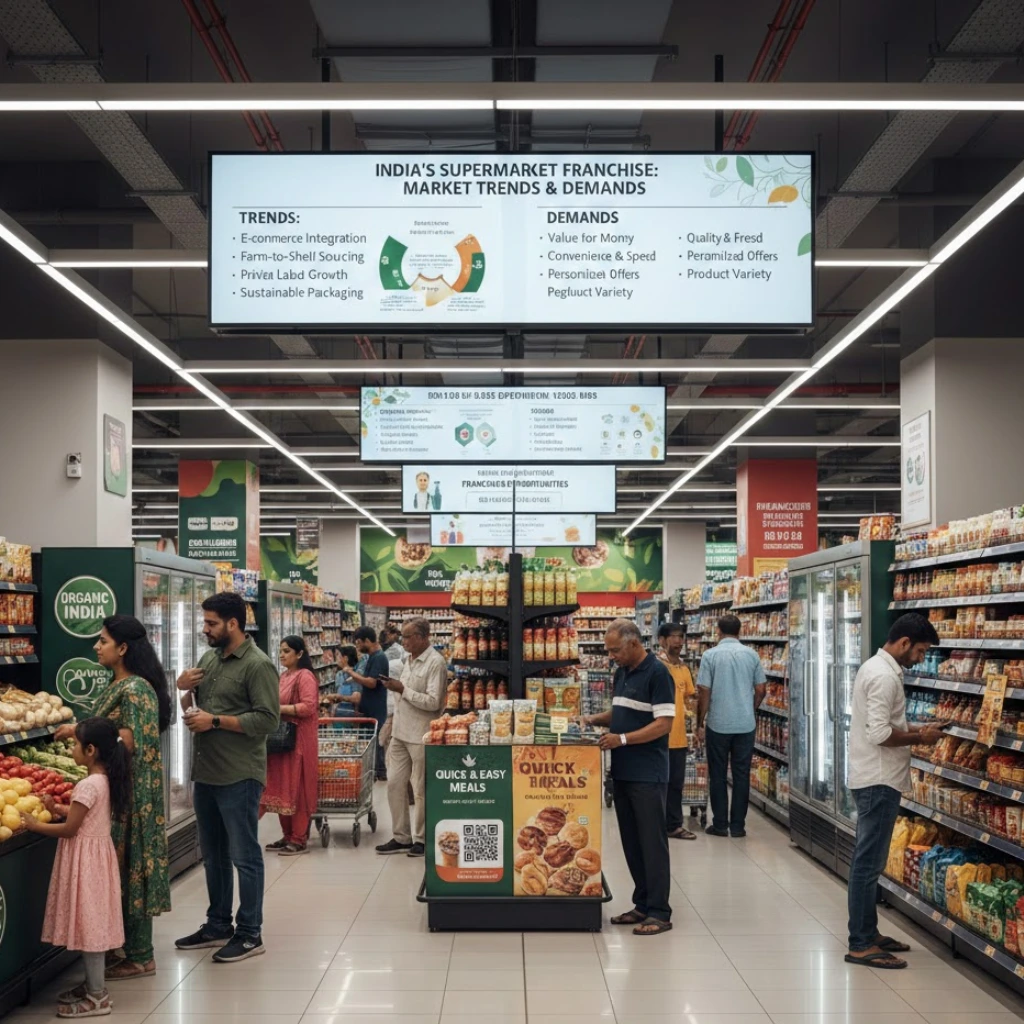
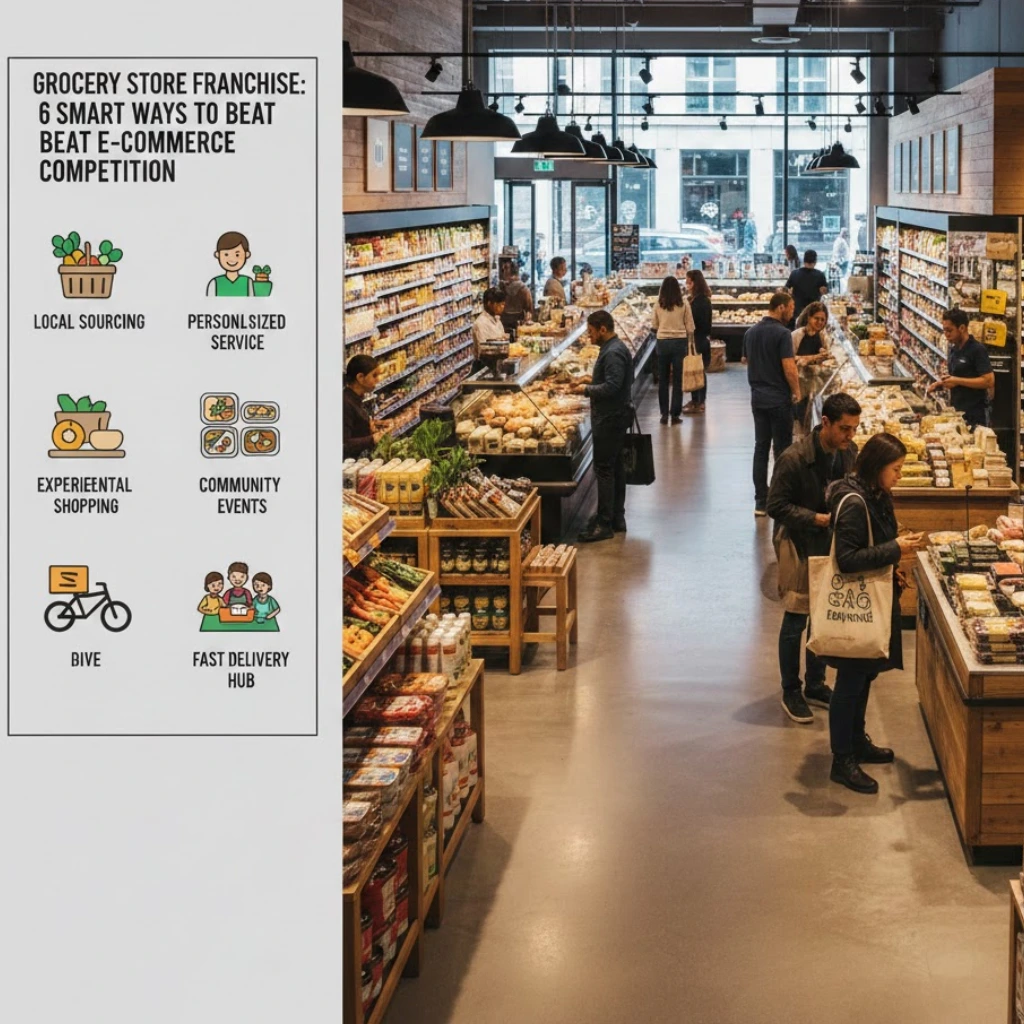
The world of supermarkets is undergoing a radical change. With 2025 approaching, the retailers are faced with a complex set of possibilities and issues that will determine the sector\’s future. From the latest technological advances to the evolving behavior of consumers, knowing these changes is vital for those who want to be successful in this highly competitive industry. The Indian supermarket market offers promising prospects, with estimates showing it could be worth USD 352.8 billion by 2029. It is expected to grow at an astounding 8.5 percent annually. It\’s not just about the numbers, but it is a significant shift in the way that people buy, the items they prefer, and how companies must adjust to survive. The Digital Revolution in Grocery Shopping The digital revolution continues to transform the shopping experience. Automated check-out and mobile payment methods, as well as contactless shopping, have evolved from novelty to essential. Shopping carts that are equipped with sensors as well as digital displays are becoming more widespread, which allows customers to scan products as they shop and also receive individual suggestions. Artificial Intelligence is driving the inventory management systems, which can identify demand patterns with an incredible degree of accuracy. They help retailers cut down on consumption while also ensuring that the most popular items are in stock. Machine learning algorithms analyse purchase information to improve the layout of stores and their products and create a more enjoyable shopping experience. Sustainability Takes Center Stage A growing concern for the environment has prompted significant shifts in the retail of groceries. The consumer is increasingly concerned about packaging materials, energy consumption, and waste management strategies. Supermarkets have responded with extensive sustainable initiatives that include recyclable packaging options, energy-efficient refrigeration systems, and initiatives to reduce food waste. Local sourcing has taken on a huge importance as retail stores have joined directly with farmers in the region and other producers. This reduces costs for transportation and supports local economies, and is appealing to eco-conscious buyers who favor a smaller supply chain. Health and Wellness Focus The pandemic has changed consumers\’ expectations, with health and well-being as the main focus. Stores are expanding their organic sections of produce, including more alternatives made of plants, as well as committing significant space to functional foods as well as supplements. Transparency in nutrition has become a necessity. The precise labeling of ingredients, the sourcing information, and a health-conscious product categorizing help shoppers make informed decisions. Certain retailers have even joined with nutrition experts to provide individual dietary guidelines as well as meal-planning assistance. Personalization and Customer Experience Today\’s shoppers want personalized shopping experiences that are tailored to their needs and buying routines. Programs for loyalty now use advanced analytics to deliver personalized promotional offers, suggestions for products, as well as exclusive access to the latest merchandise. Mobile apps have advanced beyond basic shopping lists and have transform into comprehensive platforms for retail. The features include inventory checks in real time, as well as aisle navigation and recipe recommendations based on ingredients readily available, and effortless integration into delivery companies. Omnichannel Integration The boundaries between offline and online purchases are continuing to blur. Successful retailers have created seamless experiences across all channels that let shoppers shop online, shop in stores, buy online, or organize convenient delivery and pickup choices. These services are now the norm, and retailers are exploring hybrid options that blend traditional and digital shopping. This approach caters to a variety of consumers\’ preferences and maximizes the efficiency of operations. Private Label Evolution Brands that sell at stores are seeing a significant increase in sales as retailers design high-end private label items that directly compete with the national brand names. They typically offer higher prices while also offering customers options that are priced competitively. Private label brands with premium quality are appearing in categories such as organic products, artisanal foods, as well as specialty products. This allows companies to stand out from the crowd and build stronger customer loyalty and increase profitability. Navigating Industry Challenges Despite the promise of growth, supermarkets face considerable obstacles. The rising cost of food continues to strain both businesses and consumers, which requires an optimum balance of competitive pricing and margins that are sustainable. In the supply chain, disruptions to supply chain operations remain unavoidable, and make a solid logistics plan essential. The competition from online platforms grows each day, forcing traditional retail stores to innovate constantly. Fast commerce platforms that promise quick delivery in a matter of hours have raised the expectations of consumers for ease of use as well as speed. The consumer\’s preferences change rapidly, and retailers must be flexible and adaptable. The shift to health-conscious buying, increased demand for transparency, as well as the demand for personalised experiences, brings both possibilities and operational issues. Also Read: 10 Effective Strategies to Resolve Supply Chain Problems in Your Supermarket Franchise Future-Proofing Your Grocery Business The ability to succeed in the ever-changing landscape is dependent on strategic thinking and flexibility. Retailers should invest in the latest technology infrastructure and maintain the human interaction that a lot of consumers enjoy. Knowing the local market\’s dynamics is essential as preferences of consumers vary dramatically across different regions. The development of strong supplier relationships and implementing flexible inventory management systems, as well as establishing strong online capabilities, isn\’t an option for businesses to make investments. They are essential for their survival. The most successful retailers for groceries are those who can effortlessly blend their traditional expertise in retail and innovative strategies to satisfy the changing needs of consumers. The industry of grocery store industry is at an interesting crossroads. Although the challenges are real and crucial, the potential for innovation and growth has never been more exciting. Retailers that embrace these changes and remain true to their mission to serve their customers are well placed to succeed in the current market.

10 Grocery Supermarket Trends That Will Transform Retail Read More »

10 Effective Strategies to Resolve Supply Chain Problems in Your Supermarket Franchise

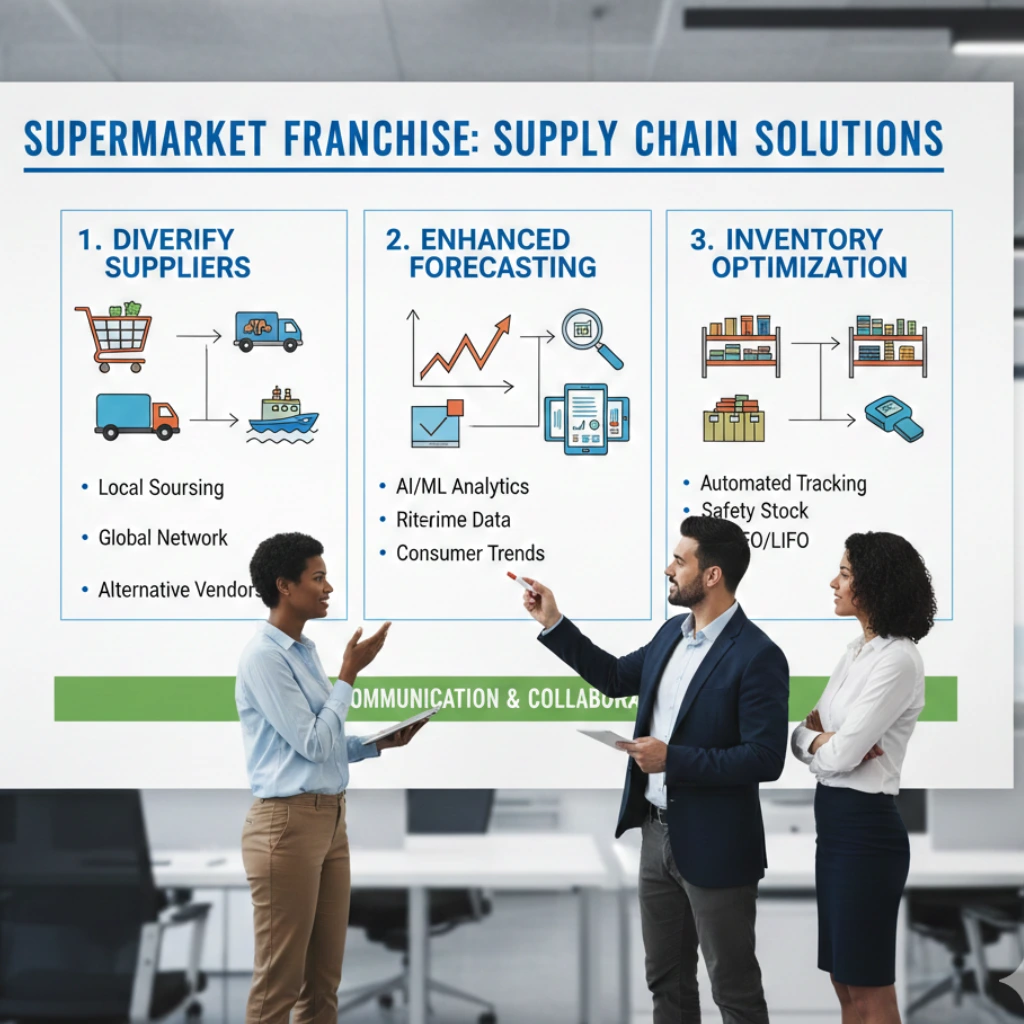
Introduction: Why Supply Chain Issues Matter in Supermarkets The supply chain issues can be a the end of your grocery franchise. From empty shelves, to unhappy customers, the consequences are evident immediately. In a world which margins are a tight squeeze and competition fierce an effective and dependable supply chain not a luxury anymore -it\’s an absolute necessity. This article will provide efficient strategies for resolving issues with your supply chain for your franchise supermarket and ensure that you are on top of your game. Understanding the Root Causes of Supply Chain Problems Before you are able to repair the problem it is important to determine exactly where the issue began. Global Disruptions and Their Local Impact War, pandemics or natural catastrophes could cause disruption to international commerce and transport and make it impossible for your goods to get on shelves. Vendor Reliability and Inventory Shortages Relying solely on a one-off vendor could result in shortages and impact the reputation of your business. Transportation and Logistics Challenges In the event of delays, higher fuel prices insufficient logistics planning could slow delivery times and increase prices. The Cost of Ignoring Supply Chain Problems Lost Revenue and Customer Trust Customers aren\’t patient. If they can\’t find the product they require in your shop then they\’ll look elsewhere or they might never come to you again. Increased Operational Costs The supply chain is a source of inefficiency. could reduce your profit through inefficient use of resources, orders that are not completed as well as sanctions. Strategy #1: Negotiating Better Terms Establish trust with suppliers and negotiate lower prices as well as flexible terms and prioritization during shortfalls. Building Long-Term Partnerships The long-term commitment is often the cause of higher service quality and greater dependability. Strategy #2: Implement Inventory Management Software Real-Time Tracking and Forecasting Modern software offers real-time insight of inventory levels, which means you are able to respond swiftly to any changes. Reducing Stockouts and Overstock The use of data-driven decision making can help you avoid the two pitfalls of stocking up and being short of. Strategy #3: Diversify Your Supplier Base Local vs Global Sourcing The ability to balance global and local suppliers helps you avoid exposure to global interruptions. Reducing Risk Through Supplier Diversity With multiple suppliers, your not being dependent on a single provider for essential items. Strategy #4: Optimise Logistics and Transportation Leveraging Third-Party Logistics Providers The outsourcing of logistics to professionals will increase efficiency and cut expenses. Route Optimization Techniques Effective route planning can help save both time and fuel time while also ensuring prompt delivery. Strategy #5: Invest in Staff Training and Awareness Teaching Employees to Recognise Early Warning Signs Your employees can spot possible issues before they become serious when they are aware of what they should look out for. Creating a Culture of Accountability Let your employees become involved in their supply chain\’s efficiency. Strategy #6: Utilise Data Analytics for Better Decision Making Predictive Analytics in Demand Forecasting Tools that predict demand help you to anticipate the changes in demand and prepare in advance. Monitoring Supplier Performance Metrics Monitor KPIs of vendors to make sure they\’re able to meet their obligations. Strategy #7: Adopt Sustainable Practices in the Supply Chain Reducing Waste and Improving Efficiency Streamlining process reduces pollution and also helps protect the environment. Appealing to Eco-Conscious Consumers Green practices are also an attractive selling point to those who are interested in environmentally friendly initiatives. Strategy #8: Plan for Contingencies and Build Resilience Scenario Planning and Risk Assessment Plan out \”what-if\” scenarios to prepare for disruptions that could occur unexpectedly. Building a Safety Stock Buffer A buffer stock will help keep shelves full during the short-term supply issues. Strategist #9 Work in conjunction with Industry Peers and Associations Sharing Best Practices In joining industry associations, you are able to gain knowledge from other\’s knowledge and experiences. Joint Purchasing Power Collaboration with other people can increase your negotiation skills when dealing with suppliers. Strategy #10: Regularly Review and Update Your Supply Chain Strategy Continuous Improvement Approach Continuously evaluate and tweak your methods to make sure they remain effective. Adapting to Market Trends Be aware of the demands of customers and market changes by regularly making sure you update your plan regularly. FAQs About Resolving Supply Chain Problems in Supermarket Franchises Q1: What is the most frequent problems that supermarkets encounter in their supply chain?The reason for stockouts is insufficient forecasting of demand, or unreliability of vendors can be among the most frequently encountered concerns. Q2: What can lower the costs of my supply chain without losing the quality?Streamline logistics; renegotiate vendor contracts and employ predictive analytics to improve stock levels. Q3: Should it be preferable to source locally or worldwide?Combination of both is usually ideal local providers for quality and dependability, as well as global providers in order to reduce costs. Q4: In what way can technology help improve the efficiency of supply chains?This technology allows for the tracking of real-time data, more accurate forecasting, as well as data-driven choices to reduce the amount of the amount of waste. Q5: What is the reason staff training is essential in managing supply chain?The knowledge of employees will help them identify issues early and help in proactive solutions. Q6: When frequently do I need to review my supply chain plan?Minimum every year or at any time there are major operations or market changes. Conclusion: Taking Proactive Steps Toward Supply Chain Excellence Implementing these efficient strategies for resolving issues with your supply chain for your franchise supermarket it is possible to turn problems into opportunities. A robust, durable supply chain doesn\’t just keep your shelves filled but ensures your customers are satisfied and profits rising. Don\’t wait for the next crisis Start making improvements to your supply chain right now!

10 Effective Strategies to Resolve Supply Chain Problems in Your Supermarket Franchise Read More »

Best Strategies to Create a Supermarket Layout for Higher Sales

Introduction to Supermarket Layout Design The design of a supermarket layout isn’t just about arranging shelves and products — it’s a science that combines psychology, marketing, and operational efficiency. The best strategies to create a supermarket layout for higher sales ensure customers stay longer, see more, and spend more. In this article, we’ll explore actionable techniques backed by research and real-world success stories, helping you design or revamp your supermarket to boost profits and customer satisfaction. Why Supermarket Layout Matters for Sales A well-thought-out supermarket layout guides customers seamlessly while subtly encouraging impulse purchases and higher spending. Impact of Customer Psychology Humans are creatures of habit. Supermarket layouts that cater to subconscious shopping behaviors — like placing essentials at the back to expose customers to more products — can dramatically increase sales. Case Studies of Successful Supermarket Layouts Major chains like Tesco and Walmart consistently test and optimize layouts. Tesco, for example, increased bakery sales by moving ovens closer to the entrance to release the aroma of fresh bread. Key Principles of an Effective Supermarket Layout Understanding Customer Flow Customers usually turn right upon entering and navigate counterclockwise. Designing aisles and displays to complement this natural flow keeps traffic moving and reduces congestion. Maximizing Product Visibility High-profit and impulse-buy products should be placed at eye level. End caps (the ends of aisles) are prime real estate for promotions. Enhancing Shopping Comfort Wide aisles, proper lighting, and clear signage make the experience pleasant, encouraging shoppers to linger and buy more. Best Strategies to Create a Supermarket Layout for Higher Sales Here are the most effective strategies you can implement right now: Designing the Entrance Area to Attract Shoppers The entrance sets the tone. Fresh flowers, produce, or baked goods create a welcoming, sensory-rich first impression. Creating a Natural Pathway through the Store Use floor patterns, lighting, and displays to subtly direct customers through the store without confusion. Strategic Placement of High-Margin Products Place premium products in high-traffic areas and essentials further back, ensuring customers walk past other tempting items. Optimizing Checkout Zones Checkout areas are perfect for small, impulse-buy items like candy, magazines, or batteries. Ensure queues are managed well to avoid frustration. Advanced Techniques for Boosting Sales through Layout Using Colour and Lighting Effectively Warm colours (red, orange) can stimulate appetite, while bright lighting enhances product appeal. Incorporating Digital Signage and Technology Interactive displays and digital price tags can engage customers and offer dynamic promotions. Seasonal and Promotional Adjustments Rotate displays to highlight seasonal products or ongoing deals, keeping the store fresh and exciting. Common Mistakes to Avoid in Supermarket Layout Design Overcrowding aisles with products Poor signage that confuses customers Ignoring customer flow and creating bottlenecks Not updating layouts periodically Measuring the Success of Your Layout Key Performance Indicators (KPIs) to Track Average transaction value Dwell time per customer Sales per square foot Customer Feedback and Iterative Improvements Regular surveys and observation can reveal pain points and opportunities for enhancement. FAQs 1. What is the best layout for a small supermarket? A racetrack layout works well, guiding customers through a loop while maximizing product exposure. 2. How often should I change my supermarket layout? Minor tweaks every quarter and major redesigns every 3–5 years help keep the store fresh. 3. Does music affect supermarket sales? Yes, soft and slow-paced music can encourage customers to shop longer and buy more. 4. Should I place high-demand items at the front? No — putting essentials at the back ensures customers walk past more products. 5. How wide should supermarket aisles be? Aisles should typically be 4–6 feet wide, balancing product space with customer comfort. 6. Can technology improve supermarket layout effectiveness? Absolutely — heat maps, digital signage, and smart shelves can optimize layouts in real time. Conclusion Designing a supermarket layout with strategy and intent is one of the most powerful ways to increase sales and enhance customer satisfaction. By applying the best strategies to create a supermarket layout for higher sales — from understanding customer psychology to leveraging technology — you can turn your store into a profitable, customer-friendly space. Remember: your layout is never “finished.” Keep observing, testing, and improving.

Best Strategies to Create a Supermarket Layout for Higher Sales Read More »

Most Common Errors People Make When Opening a Grocery Store Franchise

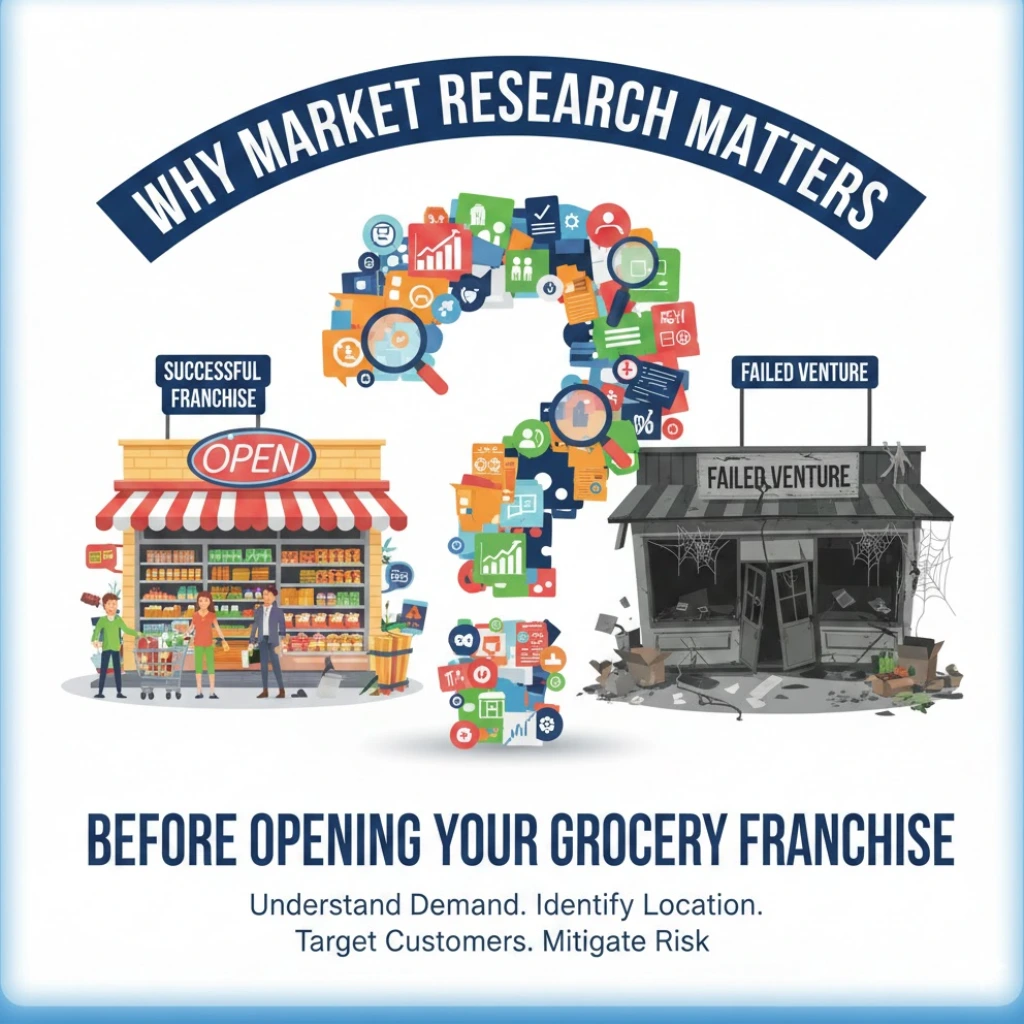
Introduction: Why Avoiding Errors Matters Opening a Grocery Store Franchise In India is not as simple as unlocking the doors and waiting for customers to come in. It requires careful planning, market understanding, and good management. Avoiding the common errors that many others make will save you from unnecessary stress and financial loss. Understanding the Grocery Store Franchise Business A grocery franchise provides a tested business model and brand recognition. But running it successfully still depends on how well you handle operations, staff, finances, and customer service. Let’s go through the most frequent errors and how to prevent them. Underestimating Initial Investment How much does it really cost? One big error is thinking the franchise fee and rent are all you’ll need. In reality, you’ll also pay for equipment, staff training, inventory, licenses, and operating costs before profits start rolling in. Suggestion: Create a detailed budget with help from the franchisor and an advisor, including a cushion for unexpected expenses. Choosing the Wrong Location What makes a good location? A poor location can hurt even the strongest brands. Look for high visibility, easy access, good parking, and steady foot traffic. Suggestion: Work with a real estate professional who understands the needs of a grocery store business. Ignoring Market Research Understanding your target customers Many owners forget to check if their products fit local needs. Your neighbourhood may need organic, ethnic, budget, or premium options — or a mix. Suggestion: Study your local demographic and adjust your offerings to match what your customers actually want. Poor Inventory Management Over-ordering and under-ordering stock Too much inventory leads to waste, while too little disappoints customers. Suggestion: Use reliable inventory software and watch sales patterns to keep stock balanced and fresh. Not Following Franchise Guidelines Why rules matter in a franchise Franchise brands succeed because of consistency. Failing to follow their guidelines on branding, products, or operations can lead to penalties or even losing the franchise. Suggestion: Stay in regular contact with your franchisor and follow their playbook closely. Hiring the Wrong Team The importance of good staff Your team is your biggest asset. Unfriendly, untrained, or unmotivated staff can drive away customers and hurt sales. Suggestion: Take time to hire carefully, train thoroughly, and create a positive workplace culture. Overlooking Marketing Efforts Building your brand locally Even with a big-name franchise, you still need to attract and retain customers in your area. Suggestion: Invest in local advertising, social media, events, and promotions to keep your store top of mind. Failing to Manage Cash Flow Keeping your finances healthy Running out of money is one of the top reasons businesses fail. Suggestion: Monitor your income and expenses carefully, and keep a reserve for unexpected slow periods. Neglecting Customer Service Why happy customers come back Even if your prices are great and your shelves are full, poor service can turn customers away. Suggestion: Train your staff to be helpful and friendly, and handle complaints quickly and professionally. Not Planning for Competition Staying ahead in a crowded market Competitors — from other stores to online grocery services — are always nearby. Suggestion: Watch what competitors are doing and offer something better, whether it’s superior service, unique products, or loyalty rewards. Frequently Asked Questions Q1: How much money do I need to start a grocery store franchise? A: It varies by brand and location, but plan for the franchise fee, rent, inventory, equipment, staff, and at least 6 months of operating costs. Q2: How soon can I expect profits? A: Most stores take 1–2 years to turn a profit, though it depends on your location, management, and market conditions. Q3: Do I need prior experience in retail? A: Not always, but retail or management experience makes a big difference in how smoothly things run. Q4: What’s the hardest part about running a grocery store franchise? A: Keeping costs under control while keeping customers happy is a common challenge. Q5: How can I bring more customers to my store? A: Focus on great service, local promotions, and products that fit your community’s needs. Q6: Can I customize my store’s layout or inventory? A: Usually, you must follow franchise standards, but some franchisors allow flexibility depending on the agreement. Conclusion: Set Yourself Up for Success Opening a grocery store franchise is a great way to own your own business, but it comes with challenges. By understanding and avoiding these common errors, you give yourself the best chance at building a profitable, respected store in your community. With smart planning and a focus on customers, you can grow your franchise into a lasting success.

Most Common Errors People Make When Opening a Grocery Store Franchise Read More »