
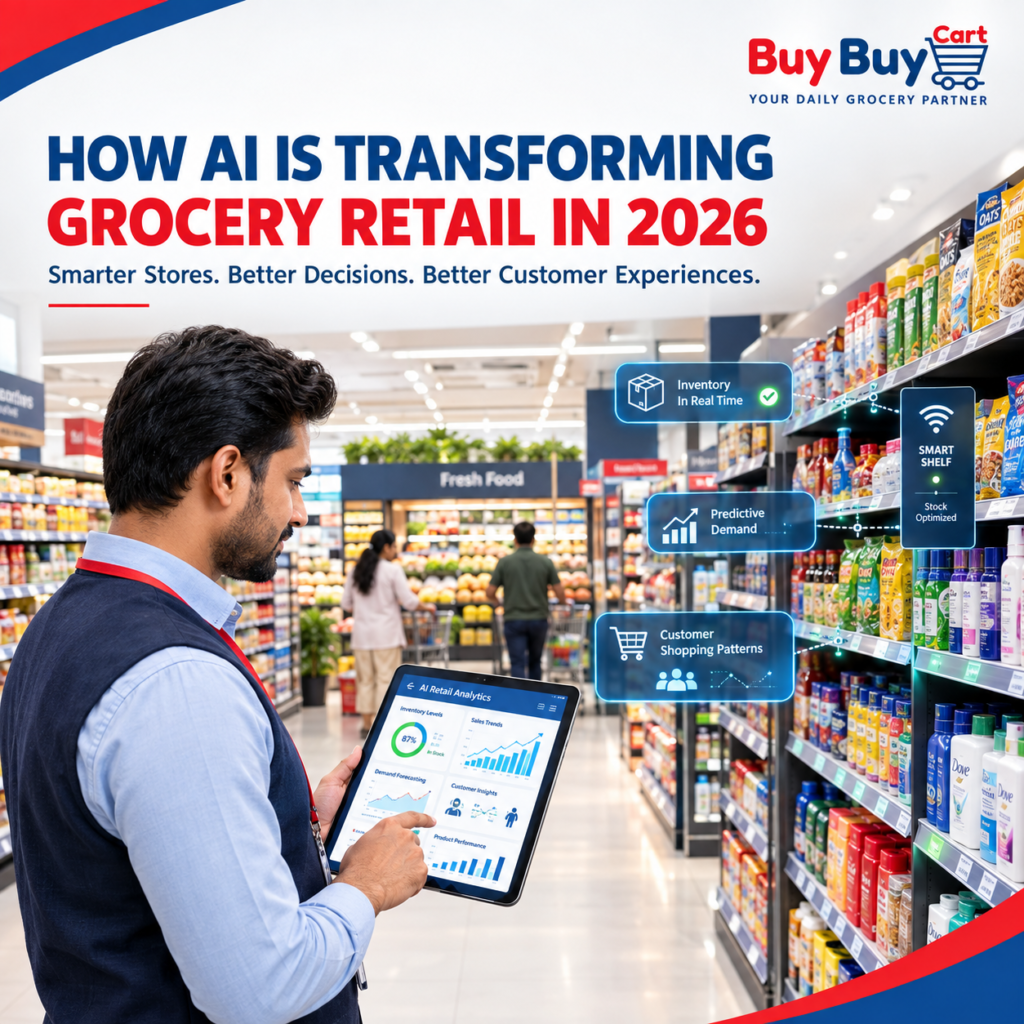
The grocery sector is entering a new stage when technology is making a big impact on business operations. In 2026, grocery retail is not just about having filled shelves and bill counters. Grocery owners utilise technology for comprehending consumer needs, effective inventory management, forecasting demand, better promotions, and easy shopping experience. Among the technologies driving it, artificial intelligence seems to be advantageous for businesses willing to make quick and informed decisions.
For grocery store owners and supermarket operators one of the biggest challenges is to control hundreds or thousands of goods while making sure that the right product is available at the right time. A fast-selling product can bring losses to the owners if it runs out of stock while slow-moving goods can occupy precious shelf space and block funds. Utilizing AI-driven technologies, it is possible to analyse sales, product movement, seasonality, and buying tendencies.
How AI is Changing Grocery Retail in 2026
Artificial intelligence is transforming grocery business by enabling firms to make use of sale data and consumer information intelligently. While an old-style shop might understand what gets sold better on a certain day or period of time, an AI-powered system goes further. It uses data to establish the interdependencies of purchase behavior, factors influencing sales in the different seasons, and relies on sales data to evaluate how well the product performs overall.
For instance, a grocery store might detect some regularities in snacks’ sales on weekends or see that certain household products are more in demand before holidays. AI systems do this analysis much more efficiently. Thus, grocery retailers can do a stock management, plan sales promotions, and make purchase-related decisions significantly more confidently.
However, the main benefit of AI in grocery retail is not just automation but improved decision-making process. Knowledge on some issues obtained at the right moment can minimize the number of doubtful things that need to be decided.
Inventory Management Systems Powered by Artificial Intelligence(AI)
The field of grocery store technology with artificial intelligence capabilities is very important for inventory management. The drawbacks of maintaining a low inventory level are stockouts and loss of sales. AI supports retailers in finding the right balance when it comes to inventory management.
AI technology can provide retailers with data on product movements and sales history and help them identify popular items, slow-moving goods, and fast-selling items. With this information in mind, retailers will be able to plan their re-orders better.
Let’s take for example a grocery store that has many different products like packaged food, different personal care products, dairy items, and cleaning materials. Thanks to AI-technology retailers will not use the same strategies for all products. They will differentiate between goods that require constant monitoring and ones that can be ordered less often.
Moreover, the use of AI enables to reduce waste. Hotel and restaurant owners will be able to sell expired or nearly expired food products before it becomes impossible to sell them.
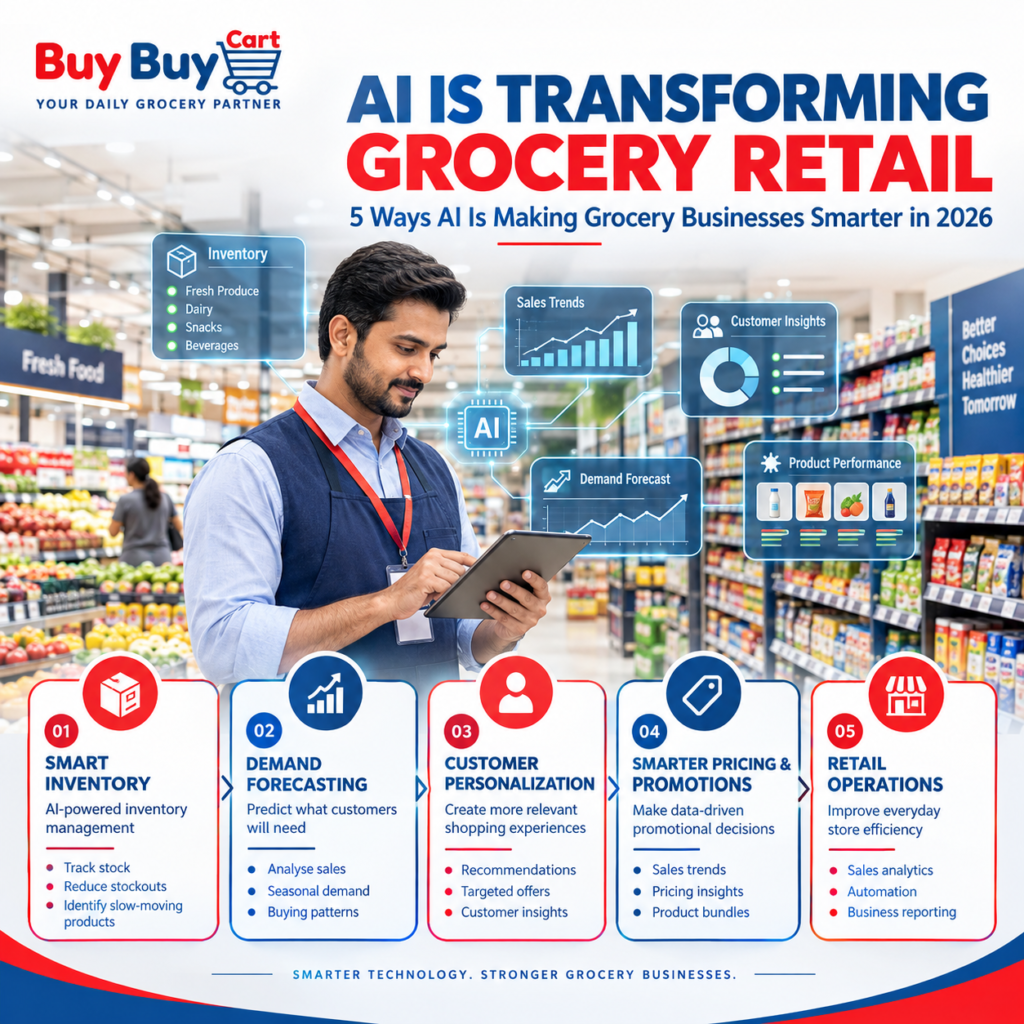
Improved Demand Prediction
Another vital use of AI in the field of retail is demand prediction. The demand for groceries can fluctuate depending on the seasons, celebrations, weather conditions, community events, customer choices, and marketing actions.
AI can be used to analyse historical sales data against various trends to assess demand in the future. For example, a retailer who is preparing for the Diwali celebrations can review sales data from previous years to identify product categories for which they will need to boost their stock.
The aim is not to achieve 100% precision in predicting the future. In this case, forecasting assists retailers in making better purchasing and planning decisions. This is particularly relevant for stores that deal with multiple products from many categories.
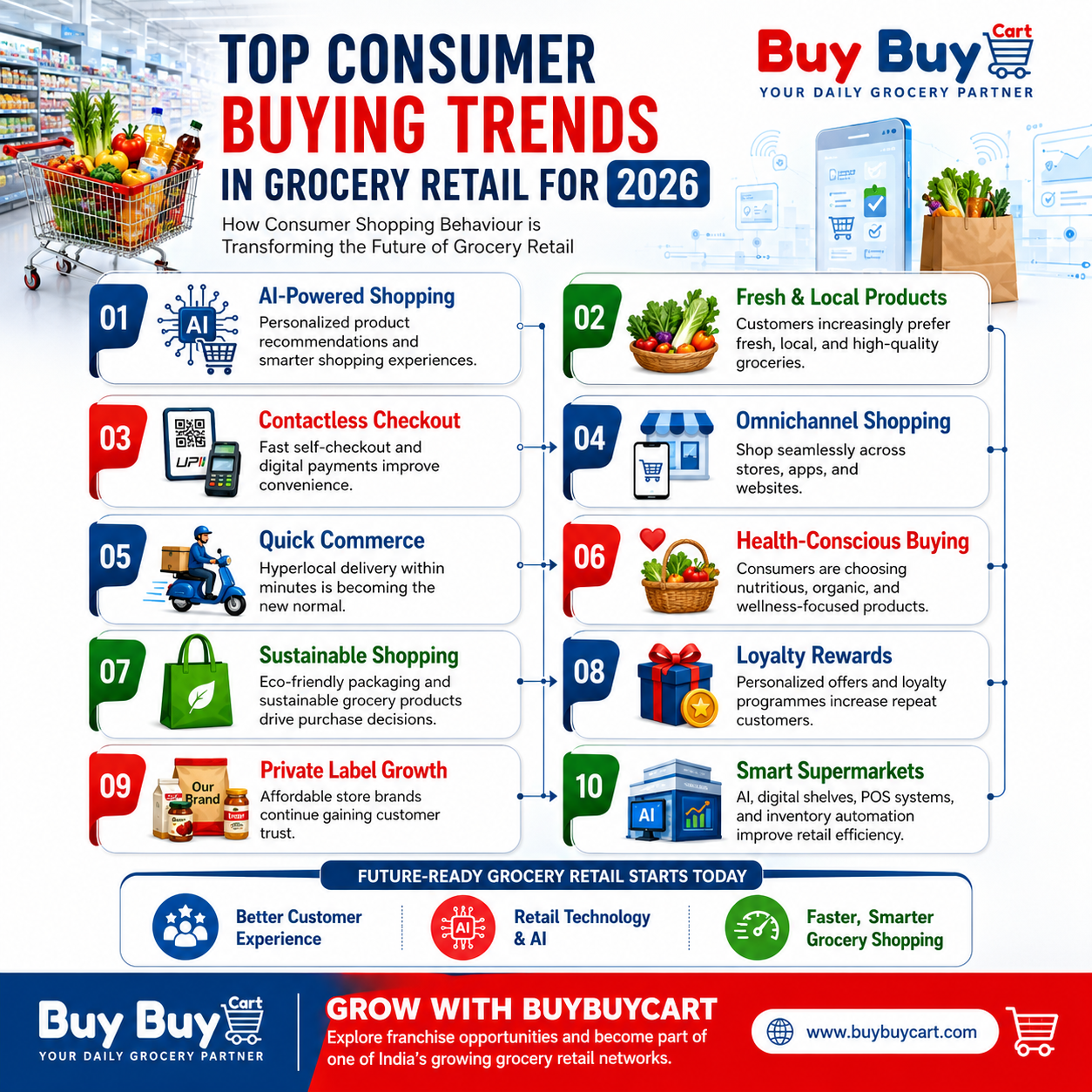
Also Read: Top Consumer Buying Trends in Grocery Retail
Experiences in Customer Personalization
More and more consumers demand shopping experiences that are easy and effective. Grocery stores may use AI to recognize shopping habits and adjust their customers’ experience accordingly.
For example, a customer who usually buys specific items from the same type of household products can be offered a range of relevant items. Retailers may also analyze buyers’ data in order to understand which categories provoke repeat purchases and which offers work better.
Personalization doesn’t necessarily mean complex technology. Pretty simple marketing solutions based on segmentation can help make marketing efforts more effective. Instead of applying the same offer to all the consumers, retailers may send their offers to relevant customers taking into account their shopping preferences.
More Intelligent Pricing and Promotions
Pricing is yet another way in which retail analytics can help to improve sound decision-making. Grocery stores frequently face changing supplier prices, competition, seasonality in demand, and promotional offers.
AI can evaluate complete sales and promotional data to help retailers understand product performances with various pricing strategies. Rather than a relying on a mixture of guesswork and other methods, store proprietors can utilize historical information to assess whether discounting is genuinely generating purchases or just decreasing margins.
AI can help retailers to determine products where cross-selling opportunities may exist. For example, buyers of pasta may wish to buy pasta sauce or other related cooking products. These insights are ideal to improve product placement and promotional techniques.
Ultimately, this is not about automatic pricing changes without proper oversight. Retail professionals are still required to assess supplier contracts, margins, customer expectations, and local competition when determining pricing.
Artificial Intelligence in Grocery Store Management
Artificial Intelligence can help in many tasks that do not involve inventory or price management. Smart grocery technology can be applied to sales data analysis, providing customer service, marketing solutions, billing tasks, labor management and business reporting.
Store owners will not spend much time analyzing volumes of information, as a dashboard will indicate any significant changes, e.g. the sales drop in the category or the raise in demand for a certain item.
Some practical implementations of AI and retail automation in grocery business include:
- Sales and product performance analytics
- Customer behaviour and purchasing study
- Automated marketing proposals
- Inventory notification and ordering planning
- Reporting and business monitoring
However, the human touch is crucial. AI should assist supermarket owners and staff rather than replace them completely.
What AI Means for the Future of Grocery Retail
It will be difficult for grocers to develop their retail operations because of customer expectations regarding technological efficiency. A local grocery store can utilize smart technologies while ensuring that its customers remain comfortable relying on it.
Retail grocers will combine cutting-edge technology with traditional retailing. As the use of technology in grocery commerce becomes commonplace, the market players will adopt new solutions over time. The retailer can install just a few systems, including those focused on stock replenishment, sales analysis, and customer interaction.
The key change is that retailers start relying on big data. Retailers will understand what their customers buy when they purchase goods and how the store’s products perform.
How Grocery Entrepreneurs Can Get Ready for the Future
To properly consider AI as part of a greater technological plan, grocery and supermarket entrepreneurs have to understand its role. The first thing to do is keep in check the quality of their sales, inventory, and consumer data. Without that, even the most sophisticated technology will yield poor results.
Retailers have to select technologies based on real business requirements. Before buying any new product, companies need to evaluate its efficiency in terms of specific problems it can solve, the time the company can save, and the ways in which it can improve customer experience.
For startup entrepreneurs or those entrepreneurs who want to create a new grocery business, possessing access to sophisticated systems, retail technology, and operational assistance will make the process easier. Companies like BuyBuyCart provide modern grocery retail forms for entrepreneurs with ideas on organized grocery business. Interested persons can check the reference link and ask how to join the company.
It is essential to create a tech-enabled business while adhering to the essentials of business practice, which may include product availability, pricing, in-store experiences, service, and customer trust.
Conclusion
In 2026, the integration of AI in grocery retail is becoming more efficient as it relies on data and focuses on the customer. This covers the use of AI in areas such as inventory management, demand forecasting, consumer personalization, pricing, and retail analytics.
Grocery entrepreneurs have to capitalize on the use of technology not to only embrace it, but also ensure that it is applied carefully in order to build a business that serves the customers, uses its resources optimally, and adjusts to the market changes.
Common Questions Relating to AI in Grocery Retail
- How is AI changing grocery retail?
AI assists grocery retailers in making better decisions through the analysis of sales data, customer behavior, inventory flow, and patterns of demand. It can enable inventory management, demand forecasting, personalized marketing, pricing solutions, and daily store management.
- Is AI applicable for small grocery shops and kirana shops?
Yes. AI is not limited to big chain retailers and supermarket chains. Small grocery shops and kirana businesses can slowly adapt the technology for functions like sales analysis, maintaining inventory, engaging customers, and forecasting demand. The best option is starting from some tools that solve a particular issue.
- What role does AI play in inventory management in grocery retail?
AI in inventory management can analyze product sale and product movement data and determine fast-moving products and slow-moving products. It can enable retailers to know when they need to replenish the stocks, minimize overstocking of items, and avoid stock unavailability.