
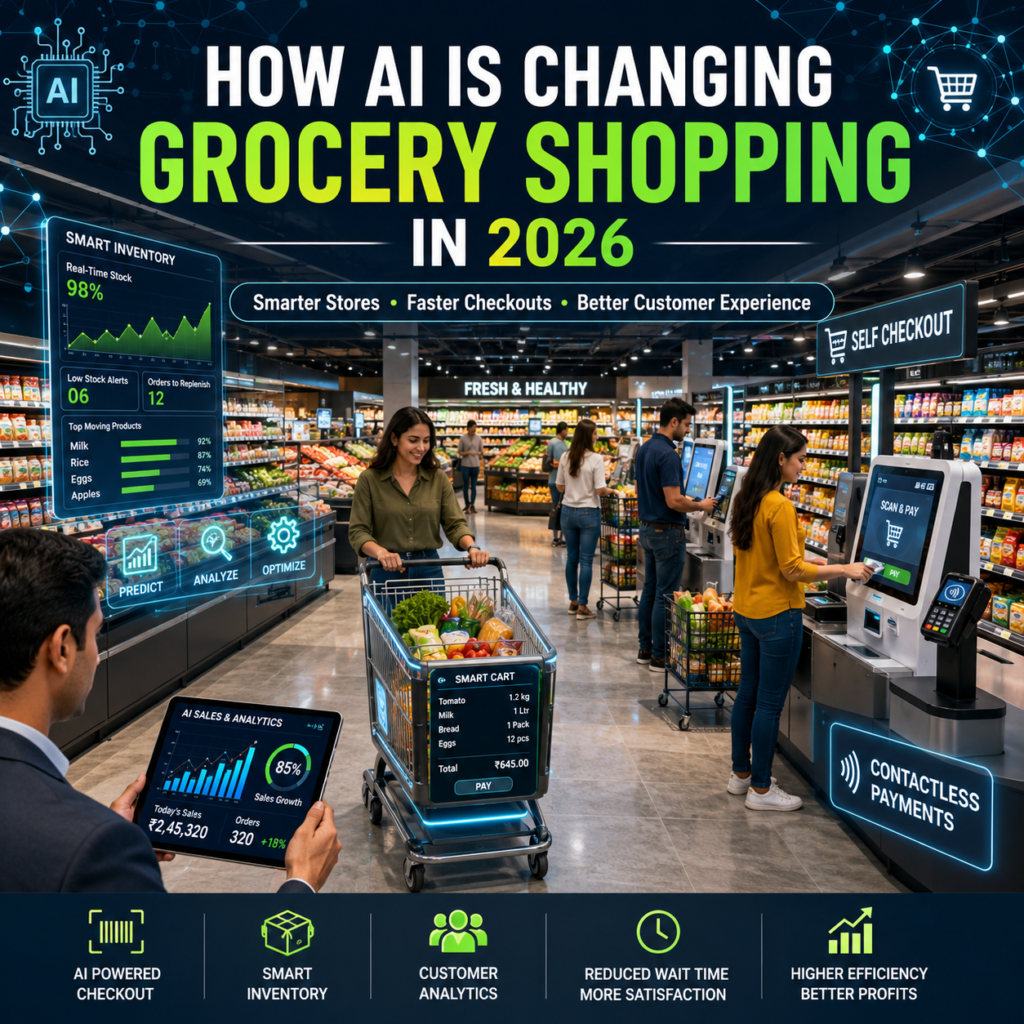
How AI in Grocery Retail Is Transforming Shopping Experience
AI in Grocery Retail: A while back, people used to go grocery shopping at their local store, pick what they needed, join a very long queue, check out, and go home—all within a reasonably short amount of time. In this day and age, when shoppers go grocery shopping, customer expectations are different. Shoppers expect to get through checkout faster, get personalised offers, and have their product availability requirements met accurately, as well as have an easy digital payment transaction, to give them a hassle-free experience when they go to purchase groceries. If it takes a customer 15 minutes to wait in line at a store to pay for groceries, customers are more likely to choose to shop at another store the next time they need groceries. Because of these changes, grocery providers are looking to technology to help them, and one of the tech-related innovations that is driving the transformation of grocery shopping is grocery retailers’ use of AI. AI is being used for many grocery retail operations and processes such as store inventory management (with the help of computers), office and store automation processes, application of customer analytics, and grocery retailers using machine learning or AI for customer checkout (when customers pay for the groceries that they purchased). Regardless of whether you operate a kirana store, run a grocery supermarket, or you’re looking to open a grocery franchise in the future, you must understand how AI is changing grocery shopping for consumers by 2026 to compete effectively in the rapidly changing retail grocery marketplace. What is AI in Grocery Retail? AI in Grocery Retail refers to the use of artificial intelligence technologies to improve grocery store operations, inventory management, customer analytics, demand forecasting, and checkout efficiency. The grocery industry uses AI to assist retailers with: Grocery retailers are now relying much less on manual processes to make smarter, data-based decisions about their customers in real time. Why Are Grocery Retailers Investing in AI in Grocery Retail Solutions in 2026? Within the grocery retailer space, the average profit margin is such that small inefficiencies have large impacts on the overall level of profitability. As an example, a worker who frequents a grocery store between their work hours visits the store after work to grab a few items, makes their selections quickly, but has to wait for several minutes in a checkout line because of the length of that line. In that situation, their frustration levels have built up. As a result, that worker now thinks to themselves: “I like the groceries I purchased, but shopping there just took too long.” That one experience might make that worker avoid shopping at that grocery retailer in the future. Today’s grocery retailers see the connection between how convenient customer visits to their store are and the degree of customer retention the retailer experiences. AI can also assist grocery retailers with these operational issues by enhancing overall speed, accuracy, and efficient operations within stores. Reduces Waiting with AI-Powered Checkout Systems Checkout counters are seeing one of the largest transformations within grocery shopping. Why You Should Care About Your Checkout Experience The last touchpoint that a customer has with your store is at checkout, and the experience during this last interaction is one way in which a customer determines their perception of your business. If your customer has a poor billing experience and is waiting for long periods of time, this can negatively impact their impression of all the great products and pricing that they’ve purchased. Customers typically expect: AI-Powered Checkout Systems will support retailers in meeting these customer expectations. How Checkout AI Works Modern Checkout AI systems do the following: As a result, stores can service more customers during high traffic times and not significantly increase their labour costs. How AI in Grocery Retail Improves Inventory Management and Prevents Lost Sales Inventory management has always been a challenge for grocery retailers. One problem that occurs is when a customer specifically goes to your store for a product and finds that it is sold out. There is a tendency that, if this customer has to deal with multiple stock-outs, they would stop coming in to your store altogether. How AI Solves Inventory Challenges in Grocery Retail Smart AI inventory systems analyse: Previous Sales Trends by Time of YearAverages – How Much a Product SellsWhen to Buy Festive Items (i.e. Easter Products)Purchasing Trends Due to WeatherHow Quick a Product Moves (i.e. Week-End vs Week Day) Example If a grocery store observes during every summer weekend an increase in the number of cold drinks sold. A normal way to forecast purchasing is by using historical data, which might miss this kind of purchasing behaviour. AI inventory management can automatically identify these trends, thereby ensuring that there will be enough stock available to satisfy demand for cold drinks. When you have more products available to sell, your sales and satisfaction are likely to both increase. Customer Analytics: The Growing Role of AI in Grocery Retail Every transaction tells a story. AI-powered Customer Analytics allow retailers to understand: Example of how this type of data can help a supermarket make better business decisions. If a supermarket learns that customers who purchase breakfast cereal often buy milk in the same transaction, they may create targeted promotions or reorganise their products to enhance total basket size. Customer analytics can provide retailers with insights so they don’t have to rely on guesswork when determining which products to stock and how to price them. The Rise of Automation in the Retail Sector In 2026, retail automation will be a growing competitive edge in the industry. Today, the retail industry makes up approximately $5.1 trillion in revenue, and many grocery store owners can spend countless hours on repetitive tasks. Some frequent tasks that nearly all owners have to perform include: Counting inventoryManaging ordersReconciliation of billingUpdating inventory Through automation using Artificial Intelligence (AI), routine manual tasks can be accomplished faster and with increased accuracy. With these types of systems, grocery store owners can spend
How AI in Grocery Retail Is Transforming Shopping Experience Read More »