
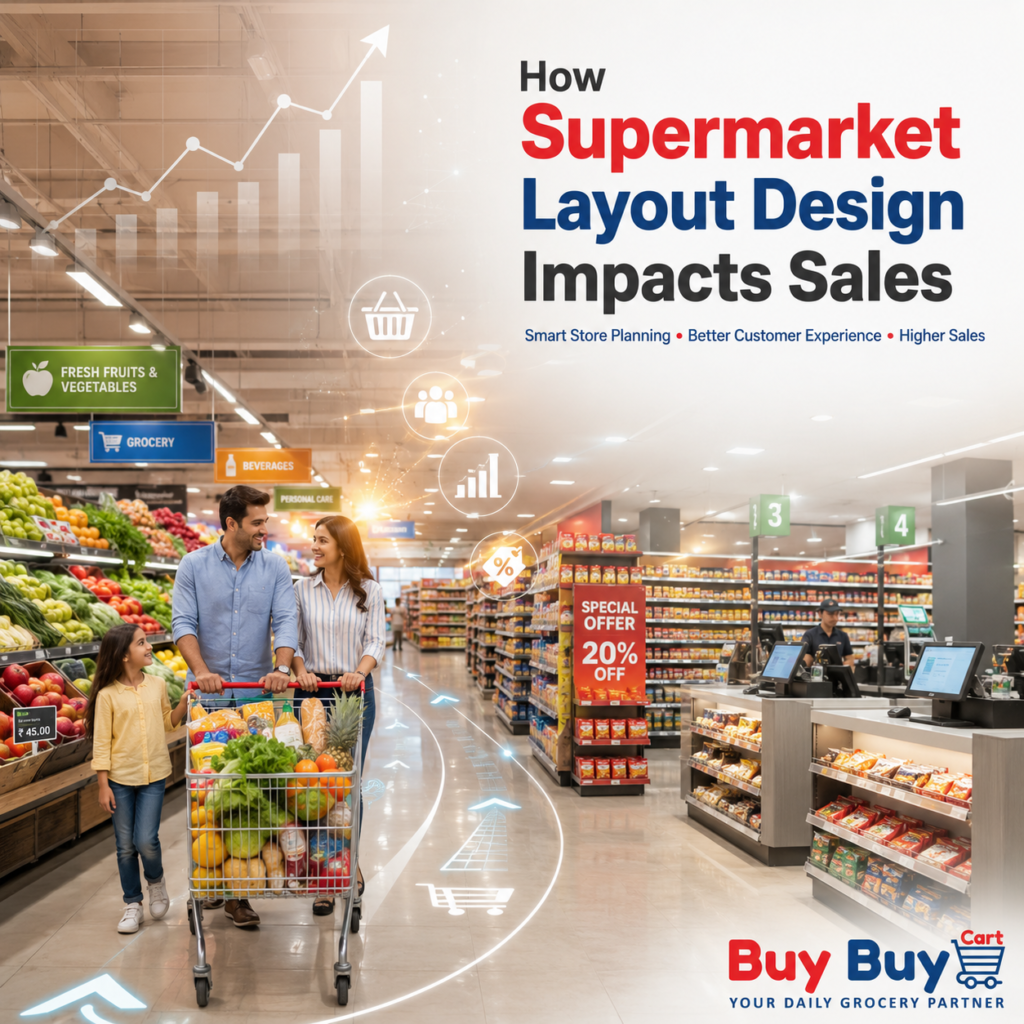
Once customers enter a supermarket, their purchasing decisions will already be happening long before they reach the cash register. The way the products are organized, the space in the aisles, the positioning of fresh vegetables and fruits, and even the cash register area impact the quantity of purchases. For this reason, supermarket layout is considered one of the key aspects of operational success for retail and grocery stores.
Well-designed supermarkets help customers explore more spaces, give them more time to do the shopping, and allow them to discover the products that they initially had no plan to buy.
Whether you are an owner of your first grocery shop or whether you are modernizing an already existing one, investing your time and money into a proper design of the store is likely to help you improve customer satisfaction and generate more income. All successful supermarkets rely upon strategic planning and not on haphazard placement of goods.
What Is Supermarket Layout Design?
Supermarket layout design can be defined as the implementation of different strategies in terms of the physical design of a supermarket to provide a proper shopping experience to customers and increase sales volume. Among the various aspects of layout design are positioning of departments, customer movement, product placement, aisle preparation, checkout points, signs, lighting, and advertising equipment.
A thoughtfully developed supermarket layout is not only a means of organizing product placement. It helps manage people movement, improves product visibility, and prevents congestion while giving customers a chance to come across additional products when shopping in the supermarket.
Significance of Store Layout
Even though most store owners spend lots of time and effort on product pricing and discounts, they fail to understand the vital role of a good layout in the retail process. In fact, shoppers’ behavior is directly affected by the store.
Once a customer enters a store with a good design, everything from wide aisles and signs to enticing displays and logical arrangement makes shopping pleasant, so customers can easily go through the store and make unplanned purchases.
Another essential aspect is retail psychology. For example, placing fresh fruits and vegetables at the entrance creates a positive impression of the store. The shelves placed at customers’ eye levels are more noticeable than products placed lower. The endcap displays stimulate impulse buying and help customers buy what they did not think of when coming to shop.
How Effective Supermarket Layout Design Boosts Sales
Well-planned supermarket layout design helps increase sales by enabling effective interaction between shoppers and the supermarket. While factors like pricing and quality of goods are vital, the shopping experience is crucial for the overall value of the shopping trip.
Some of the advantages of an effective supermarket layout design include:
- Better movement of customers around the supermarket, thus limiting heavy traffic and letting them inspect more shelves
- Higher impulsive buying rate due to promotional layouts, end-cap merchandising, and cross-selling opportunities
- Higher availability of goods since fast-moving and premium goods are displayed at eye level
- Improved shopping experience due to better navigation and organized product categories
- Higher speed of checkout process since billing counters are well-placed and minimize waiting time
- Better arrangement of categories as customers can find necessary goods and learn about related products
Also Read: 10 Common Mistakes That Fail Grocery Business
Key Points of a Great Supermarket Design
Smart store layout combines usefulness with comfort for customers. Each of the store’s areas has to be well planned instead of designed spontaneously.
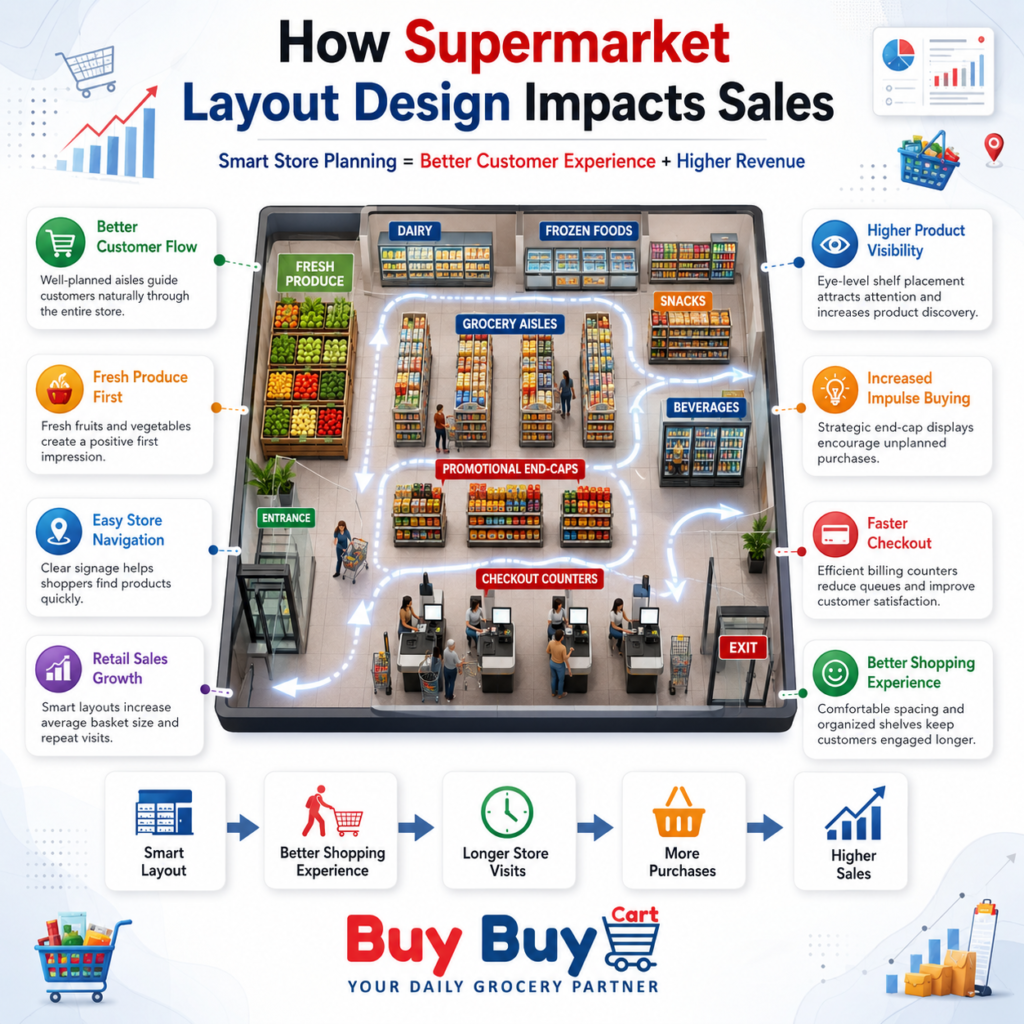
Entrance Plan
The entrance is responsible for the first impression a customer makes of a store. A good entrance should be inviting with display cases and seasonal offers that make customers step into the store without hesitation.
Grocery Location
Fresh fruits and vegetables are usually placed right at the entrance to give the impression of freshness and quality. This helps customers develop positive feelings which impact their purchase decisions.
Aisle Width and Flow
A wide aisle allows shoppers to bring their carts through the store. An easy-to-follow layout allows customers to move through the space freely.
Placement of Goods
Popular goods have to be spread across the entire supermarket instead of placed right at the entrance. This way, it will force customers to walk through different areas of the store to find the things they need.
End-Cap Displays
The end-cap displays play an important role in visual marketing strategy. The promotional deals, seasonal merchandise, and new product launches can be easily noticed in these popular and busy spots.
Promotional Zones
Special areas used for promotion draw shoppers’ attention and encourage them to buy more products. It is important to change the promotions on a regular basis to keep the shopping process interesting.
Checkout Counter Placement
Positioning the checkout counters in the right place allows for the efficient movement of customers and provides them with the opportunity to make some additional purchases, like small products, chocolates, and beverages.
Lighting and Signage
The bright lighting enhances the look of the merchandise, while the appropriate signage helps customers find certain categories quickly. Together, these two factors give customers a better shopping experience.
Common Supermarket Layout Mistakes to Avoid
Even a perfectly stocked supermarket may lose sales due to bad planning. One of the most common mistakes is having too narrow aisles, especially during peak shopping times when many shoppers crowd the stores. Customers don’t feel comfortable in the overcrowded areas and don’t explore the store.
One more issue that supermarkets often have is using the wrong shelf placement. Some popular items may not be visible or easy to find because of improper location. In addition, if the categories are spread in different parts of the store, customers will find it difficult to complete their purchases.
It is surprising how many shops underestimate the role of check-out counter placement. Long lines, a low number of check-out counters, or a poorly organized exit can bring a negative shopping experience to customers and reduce their chances of returning.
Bad lighting, absence of good signage, and chaotic promotional materials reduce the efficiency of even the best product mix in the store. Regular analysis of customer behavior and layout improvement can help avoid these problems.
How BuyBuyCart Helps Entrepreneurs Build High-Performing Supermarkets
Creating a thriving supermarket is not simply about choosing a great location. Success comes from proper planning, efficient functioning, and a shopping-oriented experience for customers. That is exactly what BuyBuyCart does to support entrepreneurs by providing complete solutions for the retail sector.
BuyBuyCart goes from supermarket design and store planning to branding and technology. Their professionals collaborate with entrepreneurs to optimize store layouts, establish effective product assortment, create efficient merchandising plans, and improve the efficiency of operations.
In addition, BuyBuyCart gives advice about inventory management, offers marketing assistance, and deals with business processes and modern technology in retail to ensure positive competition for supermarkets in the current market.
If you consider starting a grocery store business, seeking advice from experienced specialists helps to prevent expensive planning mistakes and accelerate business growth.
Interested in opening your own supermarket? Visit our “Partner With Us” section and go to the Franchise Page at buybuycart.com to see how our franchise model provides entrepreneurs with the assistance they require to successfully develop supermarkets, from the planning of the store layout to branding, technology, and an entire business support system.
Conclusion
A well-thought-out supermarket layout design is one of the best investments any retailer can have. The correct layout helps increase customer flow, display goods most visibly, encourage impulse sales, minimize waiting at the checkout, and create a great shopping experience.
As customers change their expectations, supermarkets that employ professional supermarket planning and advanced store construction methods will benefit from greater customer loyalty and continuous advancement in business. Whatever type of market you choose – a new grocery store or an upgraded old one – investing in the necessary plan can provide you with great profits.
If you want to open a successful supermarket with the help of proper planning, the right branding, and effective technology, you could take a look at the possibilities offered by BuyBuyCart.
Frequently Asked Questions (FAQs)
- What does supermarket layout design mean?
Supermarket layout design involves planning the supermarket within the store in terms of how to arrange aisles, where to place products, the location of checkout counters, signage, and customer movement across the premises. A properly planned layout brings improvement to the shopping experience in the store, thus contributing to higher sales.
- In what way does supermarket layout design increase sales?
A successfully designed supermarket layout motivates customers to walk around the store much more actively, therefore raising the level of visibility of the products. It also improves conditions for impulse buying, thus enhancing the shopping experience and increasing the average size of customers’ baskets.
- Which type of supermarket layout works best for grocery stores?
The preferable supermarket layout depends on the size of the store and its target customers’ characteristics. The majority of supermarkets go for the grid layout since it ensures organized aisles, easy navigation, and effective use of space. Implementing strategies that combine grid layout with eye-catching promotional displays reinforces the efficiency of the superstore.
- What is the importance of product placement in the supermarket?
The importance of effective product placement lies in the fact that it simply directs consumers towards the desired products while persuading them to make extra purchases.