buybuycart.com

Grocery

grocery store franchise in india

What is the best way to market your Grocery Store Franchise in India?

A grocery franchise is an excellent investment in India, as you will be able to tap into a market with a value of over Rs 31 trillion. Owning a franchise is just the beginning. You need to have a marketing strategy that will attract loyal customers if you want your business to succeed. This guide provides simple but effective marketing strategies that will help you grow your Indian grocery franchise. Building a strong foundation with your brand You need to know what makes your shop unique before you market it. Branding is about more than a logo. It\’s an experience. Humanize Your Brand Faceless corporations are not as appealing to people. Tell the tale of your business. Share your employees\’ dedication to service on social media. By showing the human face of your company, you can build trust with your customers and create a connection. Customers will feel as if they\’re shopping with their friends. Concentrate on Expertise and Trust Demonstrate to your clients that you can be trusted for all their needs. Make sure your shop is well organized, clean, and filled with quality products. Your staff should be well-versed in the products that you sell. Customers will prefer your store if they trust you. It is important to market your Indian grocery franchise effectively. The Customer Experience is Prioritized Your most effective marketing tool is a great customer experience in your store. Happy customers will return and refer their friends. Create a Welcoming Environment Make your shop easy to find. Keep the aisles wide and the signs clear. Also, ensure that the store layout is logical. Shopping in a clean, bright, and well-lit store is more enjoyable. Urban families are likely to spend the majority of their earnings on food, and they prefer convenient shopping. Service Exceptional A helpful and friendly staff can make a normal shopping experience into an enjoyable one. Encourage staff to smile, greet, assist, and answer questions with a friendly attitude. It is easy but very effective to build your customer base and market your Indian grocery franchise by providing excellent service. Increase your Reach with Digital Marketing Digital marketing is important for any business. You can connect to new clients and keep in touch with your existing customers. Target Relevant Keywords You want to be found when people look up \”grocery stores near me\” and \”best deals on groceries in town\”. Your website, Google Business Profile, and other online content should include local keywords. Use phrases such as \”grocery franchise in delhi\”, for example, to draw local search traffic. Encourage Engagement on Social Media Engage your audience on social media sites like Facebook or Instagram. Update your community with new product updates, store events, and special offers. Ask questions or run contests to get people talking and sharing. The interaction will keep your store at the forefront of your customers\’ minds and build a brand community. Also Read: Grocery Store Franchises in India: Local Sourcing Builds Trust Connect with Your Community Joining your community in India can help your franchise grow. Encourage customer interaction You can ask for feedback by using surveys or comment cards. React to online reviews, positive or negative. It is important to show that you care about customer feedback. Customers are more likely to become brand advocates when they feel that their opinions have been heard. Get Local Mentions and Backlinks Join forces with bloggers in your area, local community groups, or businesses. By linking to your site or mentioning your business, they boost your online authority. They also introduce your franchise to new audiences. Sponsoring an event in your area can result in positive media coverage and backlinks. The Path to Success in Marketing It\’s not difficult to market your Indian grocery franchise effectively. You can retain customers by focusing on building your brand and providing a great customer experience. This cycle will bring more customers to your grocery store as happy clients spread the news. Implement these tips now to make sure your grocery franchise survives and thrives.

What is the best way to market your Grocery Store Franchise in India? Read More »

local sourcing builds trust

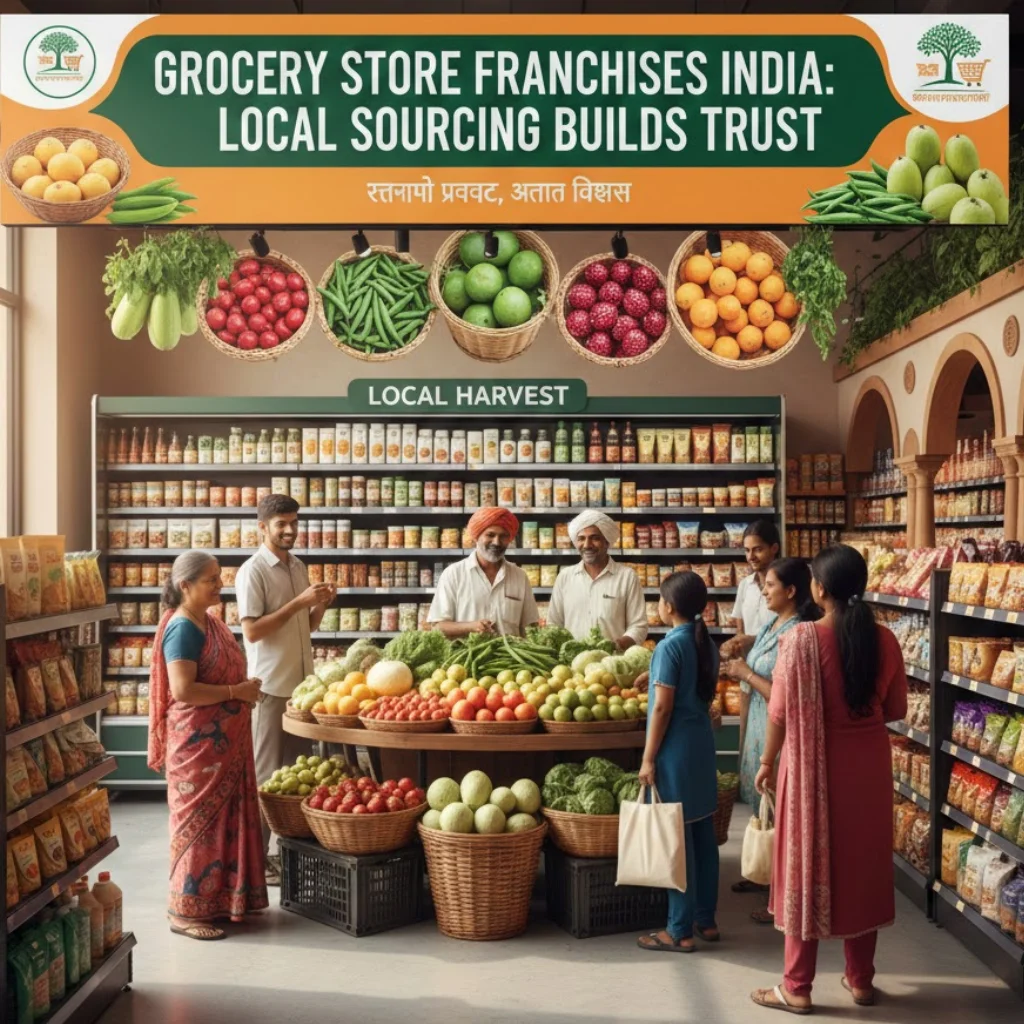
Grocery Store Franchises in India: Local Sourcing Builds Trust

When they shop at supermarkets, modern shoppers are looking for more than just convenience. Fresh produce, reasonable prices, and a sense of belonging to the local community are what they seek. Local sourcing is a winning strategy for grocery franchise owners in India. It meets all of their expectations and boosts profitability. Local sourcing is a partnership with local farmers, producers, and suppliers instead of solely relying on distribution centres located far away. The grocery franchise model is transformed by this approach, which has benefits far beyond their shelves. Why Grocery Store Owners Select Local Sourcing New Products Customers Will Notice Customers are constantly looking for new essentials, exciting products and other items that will make life easier. The grocery aisles constantly change, from eco-friendly cleaners and healthier flours to ready-to cook mixes and healthy cooking oils. The shoppers love finding new varieties of essentials such as rice, lentils and spices. They also enjoy value packs that include household staples including tea, coffee and snacks. By highlighting these products, you not only improve the customer experience but build loyalty as well by demonstrating that your shop is up-to-date with current needs and trends. Transport Costs Reduced Transporting products between states is expensive. Transport delays, fuel costs, and handling charges add up fast. These logistics costs can be significantly reduced by sourcing locally. Even if a grocery franchise purchases rice locally instead of from distant suppliers, it can save hundreds of thousands of rupees per month on transport. The savings could be transferred to the customer through competitive prices or used for store improvements. Building Community Connections Indians value community and relationships. A grocery franchise that sources local producers and farmers creates an emotional bond with customers. The customers feel good about supporting local businesses. Customers are loyal to these companies, and it\’s hard for them to replace them. Shoppers choose stores where they believe their purchases have a positive effect on the community. The Benefits of Local Sourcing Inventory Management: Benefits Smaller quantities can be delivered more often by local suppliers. The flexibility of this system allows grocery stores to maintain a fresher stock without having excessive inventory. Stores can get fresh vegetables every couple of days instead of buying a whole month of produce that could spoil. A better inventory turnover results in less wastage and better use of space. Stores can be stocked with a greater variety of items without increasing storage costs. Predictable supply chains Local providers face less disruption than networks of long-distance transportation. Distance suppliers are more affected by weather delays, fuel fluctuations, and state regulations than local suppliers. Local partnerships with a grocery franchise can improve delivery times. The reliability of the product helps to reduce costs for emergency orders, maintain consistency in products, and help franchise owners plan more effectively. Direct Negotiation Opportunities By working directly with local suppliers, you can avoid middleman markups. Franchise owners of grocery stores can negotiate exclusive agreements, better payment terms, and lower prices with local suppliers. Direct relationships can often result in cost savings between 15-25% when compared with traditional distribution channels. Implement Local Sourcing for Your Grocery Franchise You can start with high-volume products Start local sourcing by focusing on products that customers purchase frequently, such as rice, lentils, and seasonal vegetables. This high-turnover product offers the best opportunity to show quality improvements and achieve significant cost savings. Concentrate on just one or two categories of products at first. You can build relationships and expertise without overstretching your operation. Develop Supplier Relationships Personal visits to local producers, farms, and mills are a great way to build trust. You can build trust by understanding their operation and assessing quality. Local suppliers will appreciate direct relationships and work harder to meet specific needs. From the start, establish clear standards for quality, payment schedules, and delivery dates. Communication is key to preventing misunderstandings and ensuring consistent service. You can educate your customers Simple signage that highlights locally-sourced products is a great way to get the word out. Local products are often more expensive, but customers will pay a little bit extra for them if they know where the food is coming from. Social media, in-store displays, and other means of communication can be used to share stories about local suppliers. Transparency builds trust and sets your franchise apart from other grocery stores that rely on an anonymous supply chain. Also Read: Grocery Store Franchise: Top Five Reasons to Start Now Common Challenges with Solutions Quality Consistency Standardisation may not be as high-quality at local suppliers. Set clear specifications for quality and conduct regular checks on quality. Improve supplier processes slowly by working with them. Offer longer contracts to those suppliers that consistently meet your standards. The security they receive encourages them to invest in more equipment and better training. Seasonal availability Dealing with local sourcing involves seasonal restrictions. Prepare your product mix and inform customers of seasonal changes in advance. Seasonal scarcity can be used as an opportunity to market – for example, \”limited local mangoes\”, which creates excitement and urgency. Measure Success Monitor key metrics such as product turnover, customer satisfaction, and savings due to reduced transport expenses. Customer feedback on product quality and freshness is monitored. Compare the performance of your franchised grocery stores before and after local sourcing. In six months, most franchisees see an increase in their customer retention rate and profits. Growing Your Local Network Local sourcing can be a great way to expand. Local suppliers who are satisfied often refer other reliable producers. You can make your grocery franchise a partner of the local farmers. Organise local suppliers\’ meets or participate in regional trade shows. You can discover new suppliers and products by attending these events. Local sourcing is a major advantage to grocery franchisees in India. This approach is designed to address the major challenges faced by modern supermarkets. It does this by reducing costs and improving the quality of products, as well as building trust in communities. Build relationships slowly and carefully to ensure that your franchise is firmly rooted in the community.

Grocery Store Franchises in India: Local Sourcing Builds Trust Read More »

top five reasons to start now

Grocery Store Franchise: Top Five Reasons to Start Now

You may have always wanted to be your own boss, but you were unsure of where to start. Starting a new business can be challenging. The grocery store franchise, also called ration stores, is a great way to start your own business with an integrated support system. You can run your business and benefit from the brand that people know. This blob will help you find a successful business. This blog will explain the five most important reasons to invest in a franchise in grocery store. This model offers brand recognition, operational support, and a path towards profitability. What are the top 5 benefits of owning a grocery store franchise? 1. Everyone Knows The Brand Brand recognition is one of the most difficult challenges for any business. To build a brand that people trust, it takes time, Money, and marketing efforts. By joining a franchise, you can skip this step. As a franchisee, you become a part of an established brand. From the first day, people know you and your brand. Customers are more inclined to enter your store if they feel instantly trusted. 2. There is a Proven business model already in place Why start a new business after all the trials and errors? You are investing in a proven business model with a franchise. From inventory management to layout of the store and marketing, franchisors have already developed effective strategies. You can then avoid the common mistakes made when starting a business and concentrate on managing your store effectively. This gives you a roadmap that will help generate revenue faster. 3. Get All The Support You Need From Franchise It can be daunting to run a business by yourself. You are never alone when you own a franchise. You will receive ongoing training as well as comprehensive support from the beginning. Franchise team guides you in every facet of business, including how to set up your shop, manage daily operations, and handle customer service. The support system is a safety net that gives you confidence in navigating challenges and growing your business. 4. The Profit Potential is High We\’ll start with the important thing: Making Money. The franchise for grocery stores is a great way to achieve financial success. You can expect a steady stream of income if you operate under a well-known brand that has devoted customers. As groceries are a necessity, your business is likely to be in demand no matter what the economic climate. Your profits can grow over time as you build up your business in your community. Also Read: Top Reasons Why Grocery Store Franchises Are Booming in India’s Tier 2 & 3 Cities 5. You are part of a larger community Franchise ownership means that you\’re part of an extensive network of entrepreneurs. The community offers unique benefits that independent entrepreneurs do not have. This community gives you access to resources that are shared, buying power collective (which lowers your costs), and an experienced network of peers. Your business is yours, but you\’re not alone. The collaborative atmosphere encourages growth and provides you with the tools to succeed. Are you ready to be your own boss? A franchise is an excellent way to realize your business dream. The freedom to be your own boss is combined with the safety of a well-known brand and an extensive support network. A proven business model is provided, along with continuous support and a path to profitability. This could be the ideal opportunity for you if you are ready to build your own business and take charge of your finances. Why delay your start?

Grocery Store Franchise: Top Five Reasons to Start Now Read More »

booming in india’s tier 2 & tier 3 cities

Top Reasons Why Grocery Store Franchises Are Booming in India’s Tier 2 & Tier 3 Cities

In India, the grocery retail industry is undergoing a dramatic transformation. Grocery Stores Franchises in India have shifted their focus from metropolises to smaller towns and cities. This shift in strategy represents one of today\’s most important business opportunities. Organized retail is experiencing a boom, especially in Tier 2 and Tier 3 Indian cities. Entrepreneurs are finding that markets from Coimbatore up to Kanpur offer unique benefits that make these ideal locations for franchising. The rising disposable income fuels demand Indian grocery store franchises thrive in smaller towns because families can afford to buy quality goods. Economic growth has led to a rise in the middle class, who value convenience and brand goods. Contrary to metropolises where the income growth plateaued in recent years, cities of Tier 2 or Tier 3 have consistently increased salaries across all sectors. This economic boom is a result of government jobs, emerging industries, and small businesses. Organized grocery stores are popular among families earning Rs 2-6 lakhs per year. Franchise owners will benefit directly from this growing buying power. These cities are known for their large-scale purchases, which lead to higher average sales values than urban markets. Low Real Estate costs mean higher profits Affordable commercial space is one of the greatest advantages for franchises operating in India\’s smaller cities. A 1000 square foot store in Mumbai may cost between Rs 2 and 3 lakhs per year approx, but the same area in smaller cities such as Nashik or Salem is only Rs 30 to 50 thousand approx. Franchise owners can benefit from a dramatic reduction in their rental costs. Profit margins are maintained Spend more on inventory and the customer experience Get your initial investment back faster Expansion to other locations in the same city The smart entrepreneurs take advantage of this by purchasing prime locations for a fraction of the cost in metro cities. Successful franchisees started with just one outlet and have now expanded to 3-4 in the same town. Reduced competition, more market share Grocery chains saturate the metro cities. It isn\’t easy to get established in these areas. Franchises for grocery stores in India are not as competitive in Tier 2 or Tier 3 cities. In most smaller towns, traditional weekly markets and kirana shops are still the mainstay of shopping. Modern grocery chains offer a more organized experience than local competition. Franchise owners can quickly capture market share with this first-mover\’s advantage. Customers are willing to test out new brands and stores because there are fewer established retailers. The franchise owner can develop strong relationships with customers without having to compete against organized retail chains. Changing Consumer Preferences Consumers in small cities today want to enjoy the same shopping experiences as those in large metropolises. Indian grocery store franchises can meet the demand for air-conditioned shops, large aisles, and a diverse range of products. Young families, couples with children, educated shoppers, and working couples prefer one-stop shopping. The factors they value include: Freshness and quality of the product Transparent pricing Clean, organized store layouts Payment options Home delivery services Franchise businesses have a great opportunity to stand out and gain loyal customers by offering these amenities. Also Read: Grocery Stores Franchises: India\’s Next Big Business Opportunity Government Support and Infrastructure Development With the Indian government focusing on smaller cities, conditions are ideal for franchises to grow in India. Franchise operations are more profitable than ever thanks to improved roads, electricity, and payment systems. Smart Cities Mission, Digital India, and other initiatives have changed the landscape of business in cities that fall into Tier 2 or Tier 3. Internet connectivity is essential for modern POS, inventory management, and digital marketing. GST has also leveled out the field for organized retail and unorganized, giving franchises a competitive edge through transparent and compliant operations. What\’s Your Next Business Step? The Indian grocery store franchise is a business model that has a strong potential for growth in smaller towns. Combining rising incomes with lower costs, decreased competition, and changing consumer behaviour creates a perfect environment for growth. Successful franchise owners recommend that you start by conducting thorough research on the market and choosing franchise partners who have a strong supply network. It is important to move quickly, while the markets are developing and there is still limited competition. It\’s not just a trend, but the future of organised retail in India.

Top Reasons Why Grocery Store Franchises Are Booming in India’s Tier 2 & Tier 3 Cities Read More »

india's next big business opportunity

Grocery Stores Franchises: India\’s Next Big Business Opportunity

India has a culture of daily grocery shopping. Every family relies on the local store to meet their daily needs, from fresh vegetables and household necessities. In the last few years, franchises for grocery stores have been one of India\’s most lucrative and long-lasting business opportunities. This sector is growing due to changing lifestyles and the demand for quality, affordable products. This blog will explain why supermarket franchises shape the future of retailing in India and why investors are investing in this industry. We\’ll also show you how to benefit from this expanding sector. 1. Why are grocery store franchises so attractive? India\’s grocery industry is huge. Industry reports claim that food and grocery retail accounts for more than 60 percent of India\’s total retail market. No matter what the economy is doing, people will need to buy groceries. A franchised grocery store is a recession-proof and stable business model. Franchises offer entrepreneurs a brand already established, marketing support, supply-chain assistance, and training. Franchises for grocery stores are less risky than starting your own store. They also help you reach profitability faster. 2. Modern supermarkets are replacing Kirana Shops For decades, India\’s economy has been driven by small shops called kirana. These neighborhood stores are convenient, but customers expect more today. Customers want well-organized shelves, electronic billing, special offers, and a wide range of products. Franchises can help bridge this gap. These franchises allow shop owners to open modern supermarkets with smart features without having to pay for expensive branding and back-end operations. Even small-town entrepreneurs can compete with large retail chains using franchise models such as BuyBuyCart. 3. Low investment, high returns Starting a business requires hefty investments in advertising, branding, and set-up. Franchises for grocery stores offer ready-made solutions. In India, many franchises operate under a no-franchise-fee model. This means that you do not pay any ongoing fees from your profit. BuyBuyCart, for example, provides a complete store set-up, including inventory management, training of staff, billing software, and marketing assistance. Franchise partners can now enjoy a highly profitable and affordable process. A franchise can break even much quicker than an independent store if it is located in the best location. 4. The demand for housing in Tier 2 cities and Tier 3 cities is on the rise Metro areas already boast multiple retail giants. The real opportunities are in Tier 2, & Tier 3. The growth of supermarket franchises is driven by urbanization and rising aspirations among consumers living in smaller towns. In these cities, people are moving away from unorganized stores and towards supermarkets. Customers want more deals, better combos, and convenience. This demand can be tapped into by franchise owners to build loyal customers quickly. 5. Financed with Government Assistance Through schemes such as Stand-Up India and MUDRA Loans, the Indian Government has actively supported small businesses. These schemes can help entrepreneurs who are interested in starting grocery franchises to get access to more capital. Many franchises also help partners with the application of loans, GST, and licenses, all in an effort to make everything as easy and convenient as possible. The support lowers the entry barrier and helps encourage first-time business owners. 6. Digital Transformation and Technology Customers today expect much more than products. Customers want an easy shopping experience. The grocery store chains have adopted digital billing and loyalty programs, UPI payment systems, online ordering, and home delivery. Franchises can improve efficiency and reduce costs by using technology. Faster service and greater discounts are also a benefit to customers. This is one of the reasons why franchised grocery stores have become more popular in India. Also Read: Everything You Need to Know About the Best Grocery Store Franchise in India 7. Jobs and community growth Franchises play an important role in the development of communities, apart from their profitability. Cashiers, delivery drivers, and staff are employed directly by each store. It also indirectly supports local farmers, suppliers, and businesses. BuyBuyCart franchise models go a step further, allowing small business owners to open modern retail outlets. It creates wealth for the Indian people and helps to achieve Atmanirbhar Bharat (self-reliant India). 8. What to remember before opening a grocery store franchise Smart decisions are essential to success, even though the opportunities may be huge. These are important points to remember: Select the best franchise brand– Choose a brand that is well known, has a strong supply chain, and whose brand you trust. The location is important. A busy area, near residential areas or markets, would be ideal. The key to customer service– While discounts attract new customers, great service keeps them. Stay up to date with the latest trends. Seasonal promotions, online deliveries, and festive offers can all boost sales. With the correct strategy, franchised grocery stores could become profitable for a long time. 9. Last Thoughts In India, the demand for organized and reliable grocery retail will only increase. Franchises for grocery stores offer entrepreneurs the chance to get into this market without much risk. Franchises for grocery stores are the perfect option, whether you\’re a new business owner or an existing kirana store owner who wants to upgrade. The future of Indian retail grocery looks promising with models such as BuyBuyCart. If you have been looking for the perfect time to launch your business, now is that moment. The next great business opportunity in India is the grocery store franchise.

Grocery Stores Franchises: India\’s Next Big Business Opportunity Read More »

everything you need to know

Everything You Need to Know About the Best Grocery Store Franchise in India

Grocery stores dominate the Indian retail sector, accounting for nearly 60%. Many entrepreneurs have found that opening a franchise grocery store is a smart decision because more Indians are looking for organized and modern shopping experiences. You\’ve found the best place to invest in this industry. This guide will show you how to choose the right grocery store in India for a lucrative future. Why invest in a grocery store franchise? It can be risky and difficult to start a business. A partnership with a franchise can offer you several advantages to make your business journey easier and more successful. Brands that are already established: If you purchase a BuyBuyCart Store franchise, you will benefit from a well-known and trusted brand. You save time and money by not having to build a brand from the ground up. Business Plan Proven: BuyBuyCart Store Franchise offers a proven business model that has already been tested. The instructions you receive on marketing, managing, and operating your business will reduce the risk of costly mistakes. Support and Training: You and your employees will receive comprehensive training from the best franchise grocery stores in India. You will receive ongoing assistance in marketing, technology, and supply chain management. Access to loans is easier: Financial institutions and banks are more likely to loan money to franchisees, as they see them as safer investments than independent startups. The Best Franchise for Grocery Stores: Key factors to consider Choosing the best franchise is difficult when there are so many choices. Consider these factors before making a decision. Investments and fees First, you should consider the overall investment. Included in this is the franchise fee and costs to set up the shop (such as interiors, equipment, and furniture) and working capital required for the day-to-day operation of the business. Be sure to understand the total cost, which includes any ongoing marketing or royalty fees. It is good to see a franchise that has transparent costs. Brand Reputation & Market Presence Do thorough research on the reputation of the brand. What is its reputation in the area you are targeting? Strong market presence will bring more clients to your door from the first day. Search for brands that are known for their quality, reasonable prices, and great customer service. The best Indian grocery franchises will have this as a major indicator. The Supply Chain and the Product Range A grocery store must have a reliable supply chain. A franchise that delivers fresh and high-quality goods to your shop on time should be reliable. Also, check their product line. Are they offering a mix of national and local brands that are appealing to customers in your region? Diverse product offerings will draw more customers. Also Read: Grocery Store Franchise: Good or Bad Investment Decision? Support and training It is important to consider the level of support that a franchiser offers. Good franchise companies will provide training to help you run your store, handle inventory, and manage finances. Also, they offer ongoing support for marketing campaigns, technology, and guidance on operations. The partnership will help you grow and stay competitive. How to run a successful business The growing Indian economy, coupled with the demand for organised retail, makes investing in grocery franchises a lucrative opportunity. You can create a profitable and successful business by choosing a brand with strong support and a proven business model that is proven. Compare and research different options. Ask existing franchisees for their honest opinions and review the agreement carefully before you make a decision. The most important thing you can do to become a successful retail entrepreneur is to find the right grocery store franchise for your budget and goals.

Everything You Need to Know About the Best Grocery Store Franchise in India Read More »

Grocery Store Franchise: Good or Bad Investment Decision?

It cannot be very safe to invest your money in a franchise, particularly when it\’s for a grocery store. Entrepreneurs wonder whether this model of business will be profitable or if it\’ll become a burden. It\’s not a simple answer. Success depends on a number of factors. We will explore the real benefits and challenges associated with owning a grocery store franchise. This information can help you make a more informed decision. Grocery Store Franchise Ownership Appeals To Many Stable Demand for Essential Products Regardless of the economic situation, people need to buy groceries. A grocery franchise is more resilient to recessions than luxury businesses. Food, household items, and cleaning products will be purchased by families, creating a constant customer base. Establish Brand Recognition You can benefit from the existing trust in a brand when you select a franchise for reputable grocery stores. Customers already trust established names such as IGA and other regional chains. The recognition of a brand can increase foot traffic right away. Proven Business Systems The franchise companies offer tested business models, including: Bulk purchasing and supplier relationships Training programs for staff Promotional materials and marketing strategies Inventory Management Systems Reporting tools for financial reporting The systems are designed to help owners make the right decisions and avoid making common errors. What are the challenges of Grocery Store Franchise Ownership? High Initial Investment Capital is required to start a franchise for a supermarket. The initial costs include: Fees ranging between 5 lakh and 15 lakh approx Costs of store renovations and equipment Stock investment Working Capital for the First Few Months Most owners require 10 Lakh or even 20 Lakh to start properly. Thin Profit Margin Profit margins in grocery stores are typically between 1 and 3 per cent. You need to sell a lot of products in order to make a profit. Each operational inefficiency has a direct impact on your bottom line. The Intense Competitive Environment There are multiple pressures on the grocery industry. Walmart, Target and other large chains are examples of this. Amazon Fresh and other online retailers Local independent retailers Organic food and specialty markets To stand out, you need to offer excellent service at competitive prices. The Key Success Factors of Grocery Franchisees The Location is Everything It is important to choose a location that has good visibility, parking, and foot traffic. Take into consideration factors such as: Density of population in the area Residents\’ income levels in the vicinity Competition in a three-mile radius Plans for future development of the area Strong Financial Management Every penny counts when margins are thin. Owners who are successful monitor the following: Cash flow daily Stock turnover rate Supplier payment terms Cost of labour as a percentage of sales Customer Relationship Management In the grocery industry, personal connections are important. Customers who are treated well will prefer your grocery store to competitors, even if the prices are slightly higher. Also Read: Grocery Franchise Models: Guide to Retail and Wholesale Grocery Stores Franchise Make the right decision: Are you ready? If you are interested in: Access to capital is essential. Work long hours with hands-on management Understanding the shopping habits of local communities You can handle thin margins of profit Experience in food or retail service You should avoid this company if: Expect quick returns on investment Prefer passive income opportunities Retail or Management experience is not required Cannot secure prime real estate locations Working capital is limited Do Your Research before Investing Be sure to do your research before committing to a grocery franchise. Franchise locations are available to visit Franchise owners are happy to share their experience. Please read the Franchise Disclosure document carefully Analysis of local competition and market conditions Consult a lawyer and accountant who specialises in franchise law What is the bottom line on Grocery Store Franchises? For the right person, a grocery franchise is a great business opportunity. For success, you need a lot of capital, good management skills, and a commitment to excellent customer service. The essential nature of grocery stores provides stability, even though the business is difficult and the profits are slow to grow. Realistic expectations and preparation are key. A grocery franchise can provide you with a steady income for many years if you are willing to put in the work and do your research.

Grocery Store Franchise: Good or Bad Investment Decision? Read More »

Grocery Franchise Models: Guide to Retail and Wholesale Grocery Stores Franchise

Entrepreneurial opportunities in the supermarket sector are increasing rapidly. You\’re making a wise business choice if you are considering opening a franchise grocery store. There\’s a crucial decision that new entrepreneurs often overlook. It is choosing between the retail and wholesale models of your grocery franchise. Each model has its advantages, and each faces different challenges. You can make informed decisions based on your budget, business goals, and current market conditions by understanding these differences. Explore which model of grocery franchise is best for you and your business. Understand Retail Grocery Franchise Models Retail grocery stores focus on direct sales to consumers. They serve the local community and neighborhood, providing convenience to shoppers. Retail Grocery Franchises: Key Features The convenience of the customer is at the heart of retail grocery franchises. Stock up on the essentials that every family needs, such as fresh fruits and vegetables, household goods, and packaged products. Customers are residents of the area who shop regularly for daily needs. Store layouts are designed to facilitate easy navigation and speedy checkout processes. Retail grocery chains are open longer hours for working families and professionals. Retail models: Benefits and advantages Retail grocery franchises are attractive because of their higher profit margins. It is possible to mark products up significantly in comparison with wholesale prices. This applies especially for convenience products and fresh produce. Retail models strengthen customer relationships. Customers become loyal to your shop, generating a constant revenue stream. You can respond to seasonal and local demands. Wholesale operations require larger initial investments in inventory. Retail franchises, however, have smaller ones. They are therefore more affordable for those with limited capital. Explore Wholesale Grocery Stores Franchise Opportunities The wholesale grocery franchise model focuses on the sale of large quantities to businesses such as restaurants, hotels, and institutions rather than consumers. Wholesale Operations: How They Work Wholesale grocery stores purchase bulk products directly from the manufacturers or distributors. Then, you sell the items in bulk to commercial customers such as retailers, restaurants, and caterers. Warehouse and storage space become crucial for wholesale operations. To efficiently handle large orders, you\’ll require a lot of space for bulk storage and equipment. The advantages of wholesale models Volume sales generate substantial revenue quickly. The profit margins are smaller per unit, but the volume of sales can generate impressive profits. Franchises that operate wholesale grocery stores often have more predictable income streams. Cash flow is more predictable when commercial clients place scheduled, regular orders. Developing relationships with buyers of commercial goods can result in long-term agreements and consistent business. These relationships can last many years once they are established. Compare Investment Needs The initial investment required for retail versus wholesale franchises is significantly different. The retail model typically requires lower upfront investment but higher costs per square foot for prime locations. For wholesale grocery franchises, the initial investment is higher due to warehouse space and bulk inventory. They also require specialized equipment. Warehouse locations, however, are typically less costly than retail storefronts. The staffing requirements also differ. While retail stores require customer-oriented employees, wholesale operations need workers with skills in inventory management and logistics. Your Choice: Market Factors The local market influences the best model for a grocery franchise. Retail models are more popular in areas of high residential density, whereas wholesale models work better in industrial zones with a lot of restaurants and businesses. Analyzing the competition is essential. A wholesale approach may be more advantageous if your locality already has a lot of retail stores. In contrast, residential areas that are underserved might be open to a retail grocery franchise. Also Read: 🛒 Grocery Store Franchise Challenges in Tier 2 & 3 Cities – and How to Overcome Them Make the right decision. When choosing between the retail or wholesale model of a grocery store, consider your strengths and preferences. Retail businesses require commitment to the community and strong skills in customer service. Wholesale businesses need logistics expertise and relationship-building capabilities with commercial clients. Assess your capital and time availability, as well as long-term goals. Wholesale operations usually follow normal business hours, but retail grocery franchises may require longer hours or weekend work. Start Your Grocery Store Business The retail grocery and wholesale supermarket franchise models are both viable options for achieving entrepreneurial success. It is important to match the model with your business goals, specific market conditions, and situation. Analyze your local market and speak to existing franchisees. Start with a model that best fits your existing resources and expertise. You can always expand later. The success of your grocery franchise depends on the execution, service to customers, and business management, rather than choosing the perfect model. You should focus on providing value to customers, whether they are individual consumers or business buyers.

Grocery Franchise Models: Guide to Retail and Wholesale Grocery Stores Franchise Read More »

myseosmo logo

🛒 Grocery Store Franchise Challenges in Tier 2 & 3 Cities – and How to Overcome Them

Indian retail is experiencing a remarkable expansion, and franchises for grocery stores are now available outside of metropolitan areas. The Tier 1 cities are saturated with modern supermarkets and organized retail chains, but Tier 2 and 3 cities provide promising opportunities for entrepreneurs who want to start a grocery franchise. These smaller cities have their own unique set of challenges, which require strategic planning. Knowing how to deal with these challenges and overcome them is the key difference between having a successful grocery franchise and a failing business. This guide can help you understand the challenges of operating a grocery store in India\’s growing cities, whether you are considering your first investment or expanding into smaller markets. Understand the Grocery Franchise Landscape India\’s retail grocery market has a value of over 600 billion dollars, and there is significant potential for growth in cities with Tier 2 or Tier 3 status. The markets in question represent about 70% of India\’s population, but are underserved. The gap in the market creates a lot of opportunities for franchise grocery stores that are willing to adapt their business to local conditions. Smaller cities, unlike metropolitan areas, where the consumer\’s behavior can be predicted, require that franchisees understand cultural differences, income levels, and long-established shopping habits. Grocery Store Owners Face Major Challenges Inventory Management and Supply Chain Management Establishing reliable supply chains is one of the most difficult challenges for grocery stores in smaller towns. Unlike Tier 1, which has a well-developed network of logistics, Tier 2 and Tier 3 cities face the following challenges: Transport delays are a result of poor road infrastructure and limited freight service. These delays can harm the quality of fresh produce, perishable goods, and waste. Due to limited supplier networks, franchise owners struggle with maintaining consistent stock levels. Most national suppliers concentrate on the major cities and leave smaller markets unserved. The storage challenges are caused by inadequate warehouse and cold storage infrastructure. This makes it hard to extend the shelf life and maintain quality. Customer Behavior and Market Preferences It is important to understand local preferences for the success of a grocery franchise. Customers in Tier 2 and 3, as well as urban customers, often have different buying patterns. Customers expect frequent promotions and competitive prices. Often, building customer loyalty depends on providing better value than local traditional retailers. The product preferences are highly dependent on the regional cuisine, culture, and tastes. Successful grocery stores must carry products that meet these needs. The frequency of shopping is higher, but the basket size tends to be smaller as consumers prefer buying fresh products and have less storage space. Local Retailers Compete with Each Other Existing local markets and grocery stores pose a significant challenge to new franchises in the grocery business. The competitors are often: Over the years, has built strong community relations that are difficult to question. Pricing strategies that are flexible and can be quickly adapted to changing market conditions or competitor action. Ability to understand local tastes and source from suppliers in the region. Operating Challenges Operating a franchise grocery store in a smaller city requires that you address several operational challenges. Training and Retention of Staff is a challenge when there are few retail employees, and they may move to bigger cities in search of better jobs. The adoption of technology may take longer, since both customers and staff might require time to adjust to digital payment methods and modern retail systems. Maintaining product quality is more challenging when the supply chain becomes longer and less reliable. How to overcome these challenges with proven strategies Local Partnerships That Work The most successful grocery franchisees in Tier 2 cities and Tier 3 cities are those who focus on building strong local partnerships. Connect with local suppliers that understand the market and provide cost-effective, reliable sourcing solutions. This partnership often results in improved pricing and more reliable supply. Work with farmers to directly source local produce. This reduces cost, assures freshness, and attracts customers who appreciate locally sourced products. Work with local logistics providers that have networks in place and are familiar with regional challenges. Adapting Local Customer Needs It is important to understand and respond to local preferences for the success of a grocery franchise: Perform thorough market research in order to better understand the local food habits, brands preferred, and prices. The research must be done continuously, as tastes can change. Tailor product mixes to regional tastes while maintaining franchise standards. Include regional and local brands along with national products. Use flexible pricing strategies to remain competitive and profitable. Think about loyalty programs or bulk discounts to attract price-conscious customers. Also Read: Six Things To Know Before You Buy A Supermarket Franchise The Technology-Driven Efficiency The use of modern technology is a great way to overcome operational challenges. Use inventory management software to track and predict stock levels. Automate the reordering process. It reduces wastage and makes sure that popular products are available. Point-of-sale systems provide sales analytics that help you to understand your customers\’ preferences and optimise product placement. Discover delivery options by partnering with local delivery services or developing your last-mile delivery network. Engaging Communities and Marketing The success of a grocery franchise depends on the strength of its community connections. Participate in local events to raise brand awareness and show community commitment. Promote local causes to create positive brand associations. Encourage word-of-mouth marketing through exceptional customer service. Employee Development and Training The long-term benefits of investing in your team include: Offer comprehensive training in customer service, product information, and modern retailing practices. To reduce employee turnover, offer a competitive salary as well as growth opportunities. Encourage staff loyalty by creating a work environment. Sustainable Future To be successful in cities of Tiers 2 and 3, you need patience, flexibility, and a commitment to understanding the local market. The most successful grocery store franchisees are those who spend time building relationships with customers, understanding their needs, and adapting to local conditions. Balance between franchise standards and local flexibility is the key. Successful franchisees find ways to maintain brand consistency, operational excellence, and make their shops feel natural in their community. Begin with a comprehensive market study, foster strong

🛒 Grocery Store Franchise Challenges in Tier 2 & 3 Cities – and How to Overcome Them Read More »

morning window view

Six Things To Know Before You Buy A Supermarket Franchise

COVID-19 taught us many valuable lessons. But the most important thing was to understand which businesses were essential. As restaurants, entertainment centers, and other businesses closed their doors, franchise supermarket operations continued to serve communities at a time when they were most in need. The grocery industry is a business that will never go out of style. People always require food and other essentials. It\’s more than a simple business venture. A franchise supermarket is a way to build a successful enterprise that will weather any economic downturn while serving your local community. The existence of demand does not guarantee success. Selecting the right franchise for a supermarket requires thorough research and careful planning. Wrong choices can cause operational problems, financial stress, and missed business opportunities. We\’ll explore what you should consider when investing in a franchise supermarket. The Initial Investment and Financial Requirements Understanding the costs of opening a grocery franchise will help you avoid financial surprises in the future. The initial investment for most grocery franchises ranges from 10Lakh to 50 Lakh, Approx. This depends on the store\’s size and brand. Financial planning includes franchise fees, costs of equipment, stock, store set-up, and working capital in the initial months. Most franchises also ask for proof of liquid assets to cover unexpected costs. Don\’t forget to include ongoing costs. The typical royalty fees range between 3% and 8% of the gross sales plus marketing costs of 1% to 3 %. They directly affect your profits, so include them in your projections. Analysis of Location and Market The location can determine your supermarket\’s success. Customers should be able to reach the best supermarkets during daily activities easily. Search for locations with high foot traffic and ample parking. You should carefully study your market. Who are the demographics in your area? Do you have a lot of families and children that need to shop regularly for groceries, or are there mainly young professionals? Knowing your customers\’ preferences will help you to stock products that are appropriate and price them appropriately. Analyzing the competition is also important. The profitability of all grocery stores can be affected by the presence of too many in a particular area. It is possible to increase foot traffic by being close to complementary businesses such as banks or pharmacies. Franchise Training and Support Programs Quality supermarket franchisors offer comprehensive training and support to help you achieve success from the very first day. Quality franchisors in inventory management, financial planning, vendor relations, and customer service provide initial training. The importance of ongoing support is just as important as the initial training. Franchises that offer regular reviews of your business, help with marketing, or assistance in supply-chain management are the best. Franchise companies that are successful will act as your partners, and not simply collect royalty fees. What are their thoughts on corporate support? Are they able to get prompt answers? Has the franchise helped them during difficult times? This information reveals whether the franchise really supports its partners. Product Sourcing & Inventory Management The success of a supermarket franchise depends on the efficient management of inventory and the reliable sourcing of products. You should have access to established suppliers who offer consistent availability and competitive prices. Inventory management systems are essential for modern grocery stores. They track and predict sales, automate the reordering process, and can even help to predict future demand. Make sure your franchise offers training and support on these vital systems. Think about the products that you can offer. Consumers today expect to find specialty products and local, organic, or fresh items in addition to the traditional staples. You should offer a diverse range of products to meet the changing needs and preferences of your customers. Also Read: Seven Proven Strategies to Boost Profits in a Supermarket Franchise Technology for Point of Sale Systems Modern supermarket operations are driven by technology. The point-of-sale system must be integrated with accounting, inventory, and loyalty programs. This provides important data on customer buying habits and preferences. Customers are increasingly expecting mobile payment systems, self-checkouts, and the ability to order online. Select a franchise that keeps up with the latest retail technology and offers regular system updates. Do not underestimate the value of quality technical support. If your POS system fails during peak periods, it is important to get immediate help in order to avoid lost sales or customer anger. Legal and Regulatory Compliance The operation of a franchise supermarket is subject to a number of regulations, including those governing food safety, rights for employees, and licensing. The franchise company you choose should guide you in meeting and maintaining these compliance requirements. The food safety laws are extremely complex and cover everything from the storage temperature to the expiration dates. Infractions may result in fines or temporary closings as well as permanent damage to reputation. Compliance with employment law includes scheduling and wage requirements as well as workplace safety standards. Many franchises provide human resources to assist with these regulations. Are You Ready To Start Your Supermarket Franchise Journey? To choose the best supermarket franchise, you must do thorough research on all of the factors. Visit existing franchises, talk to current owners, and carefully review financial projections. Don\’t forget that you\’re not just selling groceries with a franchise. You\’re also building a resource for the community that is relied upon by families every day. You can build a successful business in your community with the help of the right franchise. Ask for information and compare support systems from several franchises. Then, decide which one best suits your needs and the local market.

Six Things To Know Before You Buy A Supermarket Franchise Read More »