
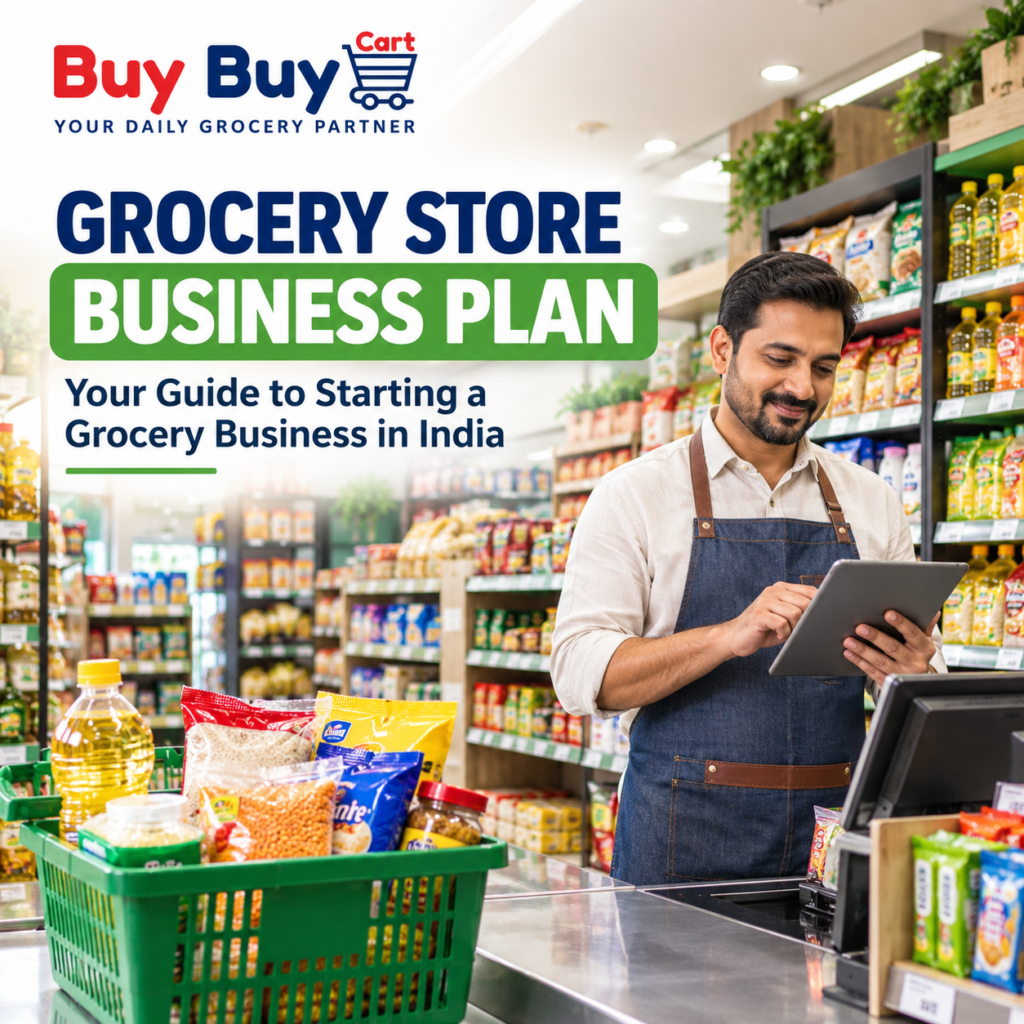
The Grocery Store Business Plan is a blueprint for someone hoping to become a successful retailer in India. Grocery stores sell everything from necessities and ready-to-eat food items to toiletries and household items, thus serving customers all year round. Such consistent need creates an attractive avenue for potential businesspersons who want to enter the industry and existing kirana shop owners who decide to expand their business operations.
Nevertheless, it is not enough just to rent out a store and buy products for it. In order to establish a successful grocery shop, one needs to know his/her target location, calculate the costs needed to establish the business, find dependable suppliers, register the business, and organize the work of the store properly. There is a multitude of competitors in supermarkets and online grocery stores.
Whether you’re going to start a small kirana store in your neighbourhood or open a supermarket, efficient planning would help you in decision-making as well as in minimizing financial risks. A good business plan would help you start your grocery store operations and win over customers. The detailed development of your plan will guide you through the process of starting a grocery store in India – from the initial investment and licensing to the innovative implementation.
Assess the Market and Select Your Supermarket Business Model
Check the demand in your market area. You should examine the nearby residential areas, customer shopping habits, your competitors’ grocery stores, and what type of goods are in high demand. If a grocery store is located in an area where there is an apartment or housing society, the store may benefit from daily purchases. However, if you set up a store in a large market, it can cater to customers who are searching for a variety of products.
Choose a grocery store business plan model according to your budget and the level of demand in your locality; for instance, a kirana shop requires lesser area as compared to a neighborhood grocery store, which must possess more product categories and shelves.
Calculate your Grocery Store Funding and Startup Costs
Your investment for a grocery store in India will be defined by the size and location of your store, its inventory, and the business model you choose. Visit that funding plan to include an estimate of your startup costs for a grocery store based on your business type.

Your other major costs could include:
- Rental costs and deposit: The rental costs differ based on the location and commercial rent rates
- Interior design and equipment: This includes the shelving, counters, storage facilities, lighting, and refrigeration if needed
- Initial inventory: This comprises grocery essentials, fast-moving consumer goods, packaged products, and important household requirements
- Capital needs: POS billing, weighing machines, digital payment apps, and inventory software
- Additional costs: This encompasses labor charges, electricity bills, registration fees, advertising costs, and an emergency cash reserve
In conclusion, you may spend an estimated ₹ 3 lakh to ₹ 10 lakh for a small grocery store and around ₹ 15 lakh for a larger store, depending on factors including your city, size of the store, lease agreement, and inventory availability.
Also Read: How to Start a Profitable Supermarket Business in India
Fulfill All Necessary Registrations and Licenses
Identify the licenses and registrations that you’ll need to operate your business. Requirements may differ based on your business type and location.
In most cases, a business license, Shops and Establishments registration, GST registration, and food business licensure or registration are required. You may also need local trade permits and authorizations.
Check with the right agencies or a knowledgeable professional to obtain the licenses and registrations you need. Taking action early will help you avoid unnecessary compliance and regulatory issues.
Plan Your Product Types, Vendors, and Stock
The types of products that you are interested in selling should match the products that people in your area usually buy. Start with basic products like rice, flour, beans, oils, spices, dairy products, snack foods, and beverages, as well as hygiene items and cleaning products.
Establish relationships with honest suppliers and wholesalers. It is important that you compare prices, seller terms, delivery periods, product quality, and return policy.
Effective management of your grocery store inventory is also crucial for the success of the business. You should control the movement of both your fast-moving and slow-moving items and keep track of their expiration dates in order to be able to replenish stock in accordance with your actual needs. Do not store unnecessary inventory items in your warehouse because excess inventory hampers your organization’s working capital and causes unnecessary expenses due to spoilage and expiry.
Be Aware of Grocery Store Profit Margins and Daily Activities
In the grocery store business, profit margins can fluctuate depending on various factors such as product categories, brands, purchasing methods, and sales volume. For instance, the margin structure of staple food items, general FMCG products, fresh items, and household items cannot be similar.
Many people do not know the difference between gross margin and net profit. Gross margin accounts for sales earnings minus the cost of goods sold; net profit takes into account the operating costs like rent, wages, electricity, delivery, wastage, and other overheads.
You need to track daily sales, purchase costs, stock shortages, and customer needs. Competitive pricing, low expenditure, trustworthy service, and customer loyalty can help in achieving profitability in the long run.
Utilize Technology to Expand Your Grocery Operations
Technological innovations play a big role in enhancing the efficiency of grocery businesses in terms of their operations. For instance, the available POS systems can facilitate both billing and sales record-keeping, while programs meant for inventory control can streamline replenishments and status updates. Also, the introduction of electronic payment options has simplified the payment process.
After your store becomes established, consider having a loyalty rewards program, marketing campaigns through WhatsApp, and ensuring that your customers have the option of ordering and getting their groceries delivered online.
Think About Buying a Grocery Store Franchise
Initiating an enterprise independently allows you higher independence in terms of decision-making and branding but entails building your own systems and supply chain.
In contrast with independent startups, grocery franchises provide you a reputable name, advice on how to run your business, as well as help with different systems such as technology, stock management, etc., according to the terms of the franchise agreement.
Assess the costs of starting a business using a franchise, fees, any obligations, supply process, and assistance in your venture once you are interested in such a business. In addition, you can consult already owners of franchises once you have such interests.
If you are looking for a grocery retail business with a structured approach, you may wish to look into BuyBuyCart and its partners. Please visit BuyBuyCart’s site for more information.
Most Commonly Asked Questions
What is the investment required for starting a grocery shop in India?
Investment amount varies depending on factors like size of the store, its site, inventory, and business model being followed. A small grocery could require an investment of approximately 3–10 lakh, whereas larger grocery stores can require upwards of Rs. 15 lakh. One should account for expenses such as rent, equipment, initial stock, permits, and working capital while budgeting.
Is grocery store business profitable in India?
Yes, grocery stores can turn a profit as long as they have a steady customer base providing enough business. However, it should be noted that profit margins in grocery stores differ based on product category, terms of suppliers and sales volume, along with overhead costs.
Should I choose a grocery store franchise or establish my own store?
When selecting to run a grocery store franchise, you might take advantage of brand recognition, management aid, technological help, and product supply, taking into consideration contractual arrangement regulations. One advantage of running your store instead of being part of a franchise is that you will be in control of your logo and decisions. It is advised to take a look at all the investment matters, expenses, charges levied for the business model, and the amount of support provided.