
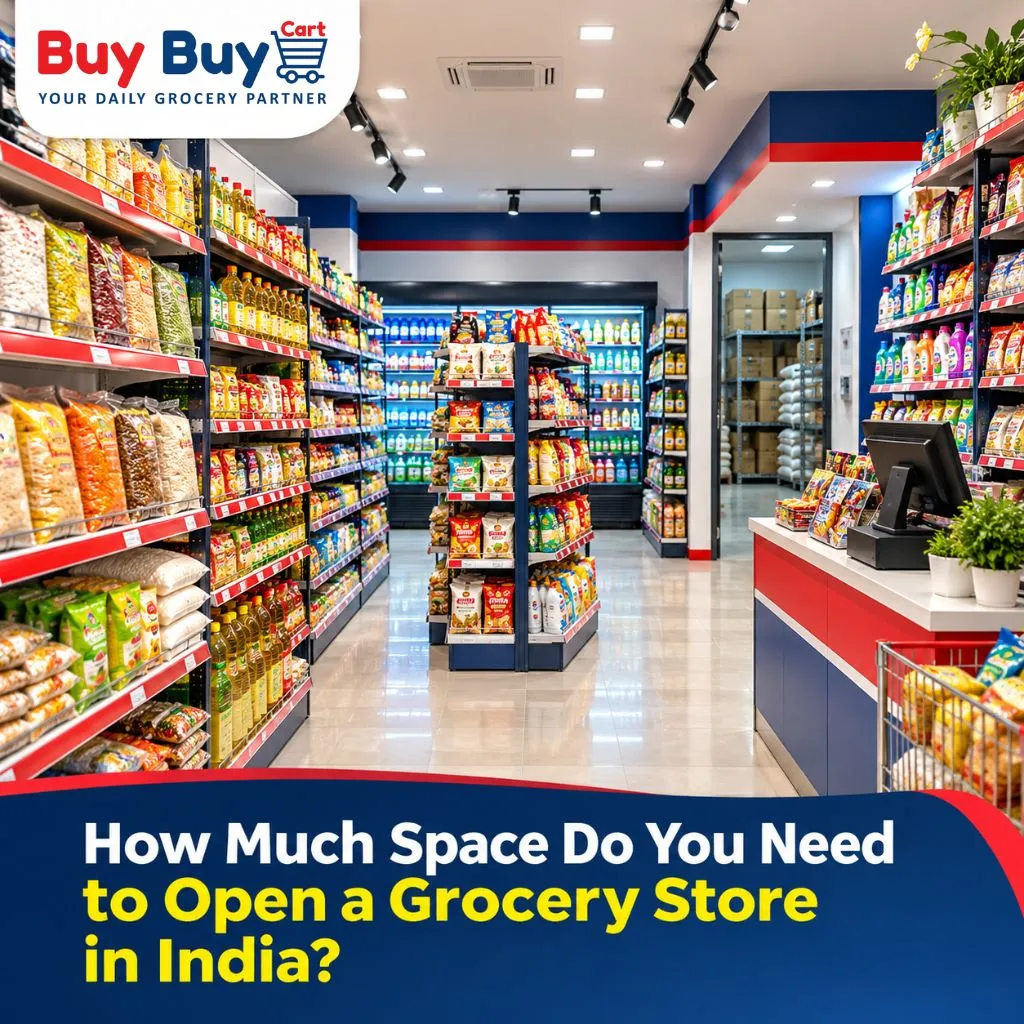
Taking the right premises is one of the primary considerations in setting up a grocery store in India. The size of the store affects the quantity of merchandise that can be displayed, how customers will move around in the store, the amount of products stored in the outlet, and the extent to which day-to-day operations can be performed comfortably. Although a bigger space may offer more opportunity to exhibit merchandises, it would lead to paying increased rent on a monthly basis.
On the other hand, a small shop could limit the range of products as well as create some problems related to storage of goods. The type of premises needed will depend on the model of the business, customer niches targeted, location, and amount of available investments. Thus, a small kirana store with daily essentials for the locals will have different needs in terms of premises as opposed to a large supermarket with lots of goods ranging from groceries to household and personal care products.
Having a clear idea of the grocery store space requirements before signing a lease can save money and help with store layout planning. This paper provides insights about the required space based on the format of the store, and how to allocate the available area in an efficient way.
Minimum Space Required to Open a Grocery Store in India
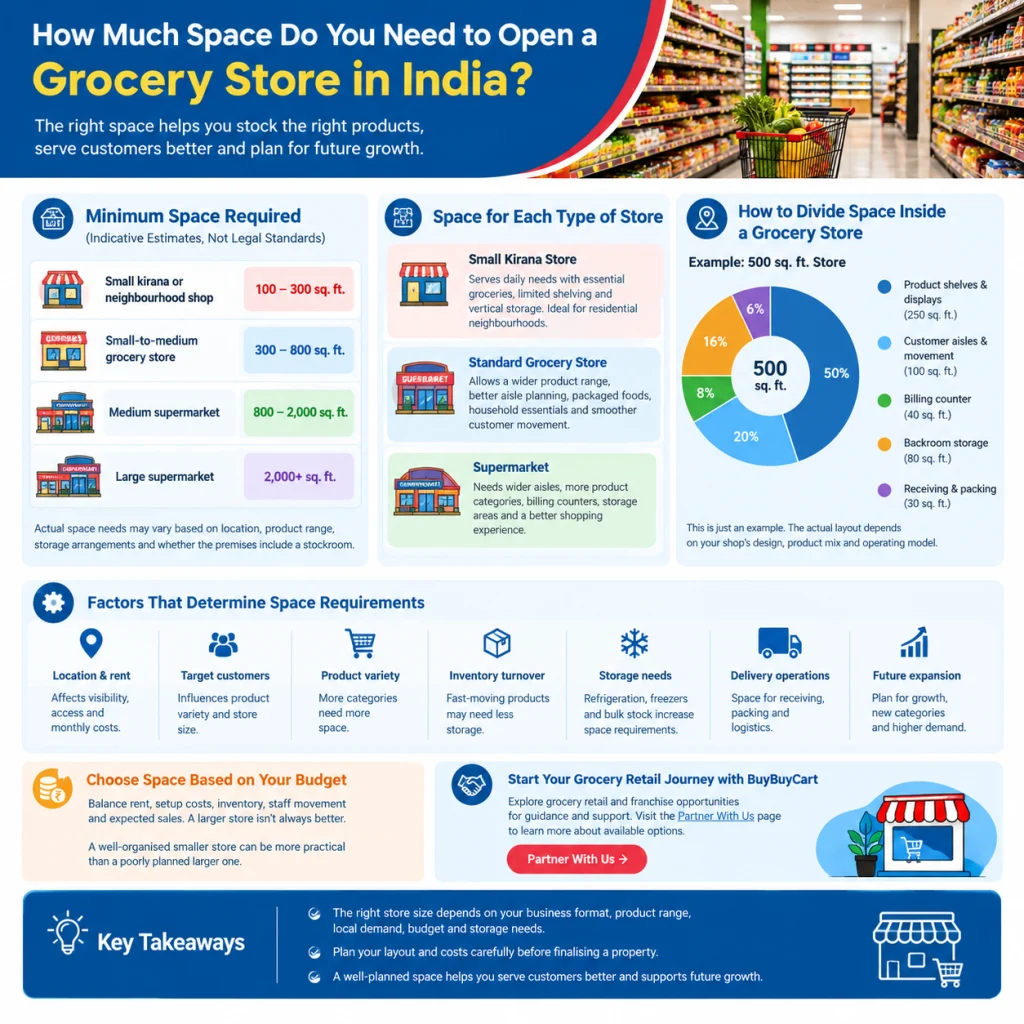
The space needed for a grocery store depends on its format and product mix. A small gujjar grocery store should function in small space, while a supermarket requires more space for aisles, shelves, counters and inventory.
This table gives only a rough estimate of the required space.
Grocery Store format Approximate Space
- Small grocery store 100-300 sq. ft.
- Small to medium grocery store 300-800 sq. ft.
- Medium supermarket 800-2000 sq. ft.
- Large supermarket 2000+ sq. ft.
These space requirements estimate only the size of the property and may not correspond to the usable space in various stores. The retailer’s space requirements will depend on such aspects as whether the store has a separate stockroom, refrigeration units or a packing area.
How Much Space Each Grocery Store Form Requires?
Kirana Store
Kirana Stores usually need space ranging from 100 to 300 sq. ft., providing consumers with basic essential items like rice, flour, pulses, oils, and other household products. This format can be accommodated in residential areas where consumers seek to save time and consume products conveniently.
It is very important to utilize available space properly. Use of shelves mounted on walls, clearly delineated sections, and vertical storage will allow to accommodate many items in one small store without making it cluttered. Nevertheless, it is necessary to avoid putting too many products on shelves or storing heavy items inappropriately.
Standard Grocery Store
A grocery store of about 300–800 sq. ft. can provide a greater choice of products and offers flexibility in layout. It can accommodate more brands, packaged food, personal care products, cleaning supplies, and selected items in fresh produce depending on the facilities available.
At this size, it becomes easier to classify products into categories and provide a better customer experience. Space should be reserved for moving, billing, and restocking. Retailers should plan where cartons with the new stock will be located.
Supermarket
A medium supermarket can be around 800–2,000 sq. ft., and bigger formats can be larger than 2,000 sq. ft. These supermarkets usually provide a larger product selection.
A store may require additional area for wider passageways, multiple product sections, checkout counters, fridge units, and stock area. The proper area required will depend on the type of retail, anticipated traffic flow of shoppers, and product categories one is going to sell. Therefore, people who are planning a supermarket need to finalize their product selection and arrangement of goods before starting to look for a location.
How to Allocate Space in a Grocery Store
A proper layout of a grocery store in India must balance product arrangement and customer flow and activities. Claims that you may have the maximum number of shelves installed will only mean reduced convenience of shopping.
As an illustration, a grocery store that is around 500 square feet could make use of the following possible distribution of space:
- Space type Illustrative use
- Rack and shelf space 250 sq. ft.
- Aisles and customer space 100 sq. ft.
- Cash counter 40 sq. ft.
- Back-room space 80 sq. ft.
- Receiving area 30 sq. ft.
- Total 500 sq. ft.
This is only an example. How much space one needs really depends on the design of the store, how one arranges the shelves, what products are sold, and how the shop is operated.
Factors That Determine the Space Required for a Grocery Store
Choosing the appropriate site and rent must be taken into account when selecting an ideal location for the grocery store. The location could be an urban shopping centre with costly rent or a smaller community shopping area. The key is to select a shopping venue that has good visibility and accessibility but does not cause an excessive increase in your monthly expenses.
Moreover, your target customers and product variety also play an important part in the grocery store size. A small store located in the neighborhood, selling essential goods, will require fewer shelves than a supermarket offering numerous types of goods that include dairy and frozen products, household needs, and many others. All these factors should be considered when evaluating the right location.
It is just as important to consider both inventory turnover and storage requirements as it is to consider the selling area. Inventory turnover is the rate at which you sell and replace products. Fast sellers may not need to be kept in storage for long periods of time, while large purchases or slow-moving products can take up space unnecessarily. Delivery trucks, coolers, freezers, and packing facilities have the potential to expand your storage requirements as well.
Finally, think about your future growth prospects. If you’re planning to add new items or customers, you need to find a setup that can be adjusted as you grow. Take into consideration the property’s electrical supply, ventilation system, delivery access, and applicable local building regulations before signing a lease.
Also Read: How Digital Marketing Helps Grocery Stores Attract More Customers
How Much Space Should You Choose Based on Your Budget?
When planning to invest in a grocery store, you should consider the total expenses of running your store, not just the cost of rent, which includes deposits, shelving, refrigeration equipment, payment systems, initial stock, office expenses, and working capital.
A bigger shop does not always mean a good business decision. If the demand for groceries in that area is not high, extra square meters would not lead to enough income to offset the costs of rent, maintenance, and utilities.
To start with, you have to analyze the demand, define the necessary product groups, and make a first draft of a floor plan. After that, you can compare commercial properties based on the total area, length of the rental contract, access, and storage. Choose the size of the property that will comply with your business plan as well as allow for possible growth.
Conclusion
The ideal location of the grocery store will depend on the store concept, product assortment, customer profile, location, price, and warehouse needs. A tiny kirana store might work perfectly in 100-300 sq. ft. of space, but a supermarket usually requires much more space to create organized displays, have enough space for checkout, and manage stock managing.
Before you select a property, you should evaluate usable area, create a suitable design layout, and calculate full operating costs. A properly designed small grocery store may be more suitable for running a business than a big one with high rent costs and overcrowded premises.
If you want to explore grocery business opportunities, visit the BuyBuyCart website and check what the next steps you may take there.
Frequently Asked Questions (FAQs)
What is the minimum space needed to start a grocery store in India?
A small kirana or local grocery store can be operated from around 100-300 sq. ft. The required ground area will depend on factors such as the types of products being sold, storage requirements, location, or the design of the store. A large supermarket will operate from a bigger ground area.
How much ground area is required to start a supermarket in India?
A mid-sized supermarket will require about 800-2,000 sq. ft., and a big supermarket will require about 2,000 sq. ft. or more. The exact requirement will vary from one supermarket to another depending upon the number of product categories, width of aisles, number of billing counters, refrigeration and storage facilities.
How do I choose the right space for my grocery store?
Consider your budget, your target customers, your expected demand, your product range, and your expected rents to determine the size of your store. Make a simple floor plan consisting of shelves, customer aisles, a billing counter, and storage. Compare the usable area of different properties before you choose your store space. Also check out franchise opportunities from BuyBuyCart to know about grocery retailing business.