
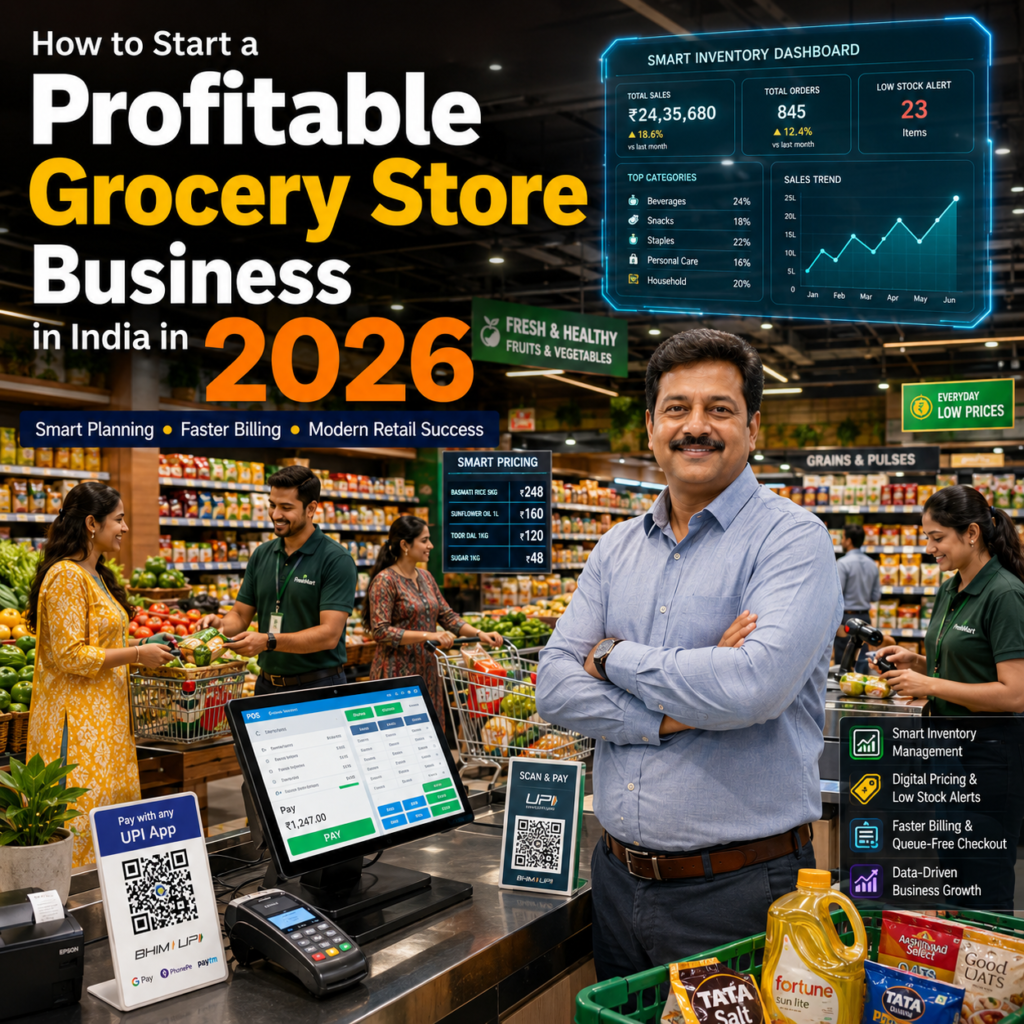
Starting a grocery store business in India is no longer just about opening a small shop and selling daily essentials. In 2026, the grocery retail industry is rapidly evolving, and consumer behaviour is also evolving, as customers want fast billing, cleanliness in-store layouts, availability of products, digital payment methods, and ease of shopping.
Customers have changed their shopping expectations for both local Kirana stores and contemporary supermarkets.
Although many entrepreneurs view grocery stores as a safe and stable business opportunity in India, as people always have a need for food, household products, dairy products, snack food, and personal care products, profitability depends on how intelligently the grocery store is run.
Several grocery store business owners continue to face challenges with long lines at checkout, unclear stock prices, ineffective employees, and higher numbers of complaints from customers, particularly during busy shopping periods. Therefore, if a customer has stood in line for 15 minutes to check out after a long, tiring day, he/she may never return to your store again. Conversely, a well-run grocery store with fast checkouts generates loyal customers and provides referrals to other customers.
If you plan to launch a grocery store in India by 2026, this book provides information on the investments, planning, technology, and customer experience that you will require to develop your grocery store into a profitable business.
Rapid Growth of Grocery Store Business in India
With changing consumer buying patterns, the Indian grocery market is growing quickly. Urban families are looking for shopping that is convenient, quick, uses digital payments, has home delivery services, uses a more modern retail environment, etc. At the same time, many small kirana shops are adapting to change via Point of Sale (POS) systems, barcode billing, and inventory control.
Successful grocery retailers today do much more than just sell goods; they are developing a loyal relationship with customers by:
1) Providing a faster checkout experience
2) Providing better product availability
3) Maintaining clean and organized store environments
4) Structuring a fair pricing strategy
5) Offering modern forms of convenience through digital technology
6) Providing friendly customer service and support.
All these changes are providing significant opportunities for aspiring entrepreneurs to get into the grocery store business with adequate planning.
Grocery Retail Industry’s Business Model
Before you begin your store, you need to decide which kind of grocery store franchise to build.
Kirana Store:
Kirana stores are best suited for residential neighborhoods and often require a lower capital investment. They typically specialize in daily essentials and have personal relationships with their customers.
Mini-Supermarket:
A mini-supermarket offers more categories than a kirana store, along with a better display method, creating a better shopping experience. These mini-supermarkets usually serve middle-income families who want convenience.
Full-Supermarket:
Full supermarkets typically require a larger investment than either a kirana or mini supermarket and include more complex management systems. They tend to be located in high-density urban areas and provide shoppers with all the food items that they need to create a complete grocery purchase.
Franchise Grocery Store:
Today, many entrepreneurs are choosing grocery franchises because they receive assistance regarding day-to-day operation, have access to a name brand, have the resources of a supplier network, and gain technological assistance. Choosing the appropriate grocery franchise will help eliminate many mistakes that new grocery store business owners make and improve their success.
If you are considering joining the retail industry, the best way to understand the day-to-day operation of your grocery store, as well as inventory management and customer retention strategies, is to look for a trusted “Partner With Us” opportunity.
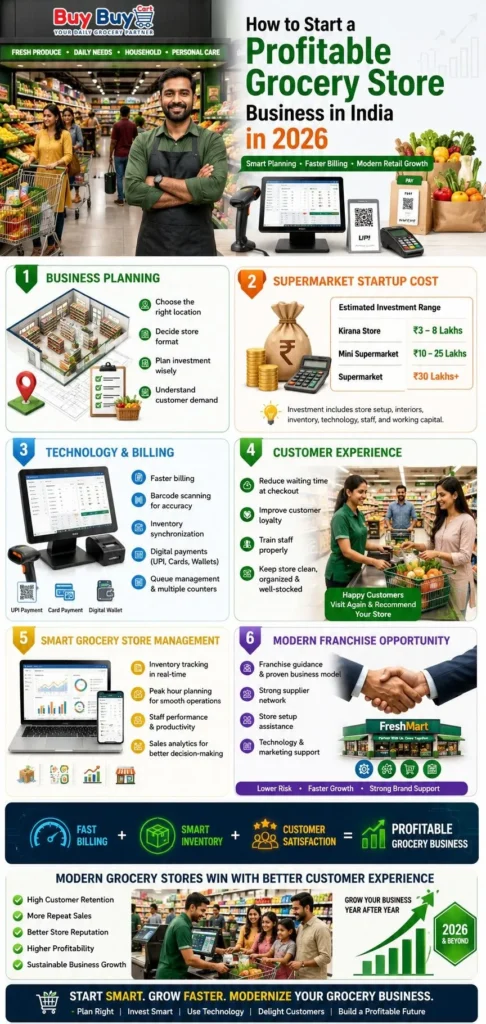
Planning Grocery Stores: The First & Foremost Best Way to Start
Poor Planning is One of the Main Reasons Grocery Stores Business Fail
Many People Open Grocery Stores and spend a Lot of Money on Decorating/Stocking Their Store But Do Not Consider How Customers Move Around Their Store or the bill-paying area, or how the inventory is synchronized with Each Other.
Location Is Everything
Location is the Number One Reason Why Grocery Store Businesses Succeed
A Good Grocery Store Will Usually Be Located In An Area With:
- A Lot of People Living or work around the store
- Apartment Buildings or Communities Nearby
- Ample Parking Near The Store
- Highly Visible From The Street/Commercial Areas
- Limited Competition in The Area
- A High Number of Customers Walking Near/Through The Store Daily
Stores that are located in family communities Typically Perform Better Than A Store That Is Located Elsewhere Based On Frequent Visits From Customers (Repeat Customers) To Create The Monthly Sales For The Grocery Store Business.
How Much Money Do You Need to Start a Supermarket in India?
The costs of opening a supermarket will vary based on things like how big your store will be, where it will be located, what kind of building you’ll need, and what kinds of technology support you will have:
Here’s a breakdown of what you can expect to spend on opening a supermarket in 2026:
Store Type Approx Investment
- Small Kirana Store₹3 – 8 Lakhs
- Mini Supermarket ₹10 – 25 Lakhs
- Medium Supermarket₹30 – 60 Lakhs
- Large Grocery Store₹70 Lakhs+
Some basic items included in opening your supermarket could include:
- Shop rent or property
- Interior setup
- Shelving and racks
- Checkout counters
- Barcode scanners
- Point of Sale Software
- Initial Stock of Inventory
- Store staff salaries
- CCTV and Security
- Refrigeration units
- Branding and signage
A lot of first-time supermarket owners forget to factor in working capital, or the money they will need to continually support the grocery store business through inventory purchases, as grocery stores need continuous replenishment of fast-moving inventory items.
Also Read: How Much Does It Cost to Open a Grocery Franchise in India?
How The Use of Faster Billing Processes Can Promote Recurring Customers
When business owners think about their grocery store’s long-term success, they usually only think about the price of their products, but providing a good customer experience is just as important, if not more so.
Think about someone who buys their groceries at the end of their workday. They complete their shopping fairly quickly, they now have to wait in line for 20 minutes to check out. Most of the time, the negative experience at the checkout will outweigh the positive experience from shopping there.
How Faster Checkouts Can Improve Your Grocery Store Business
By using a faster billing process, you can achieve:
Increased repeat customers
Decreased abandoned shopping carts
Improved customer trust
Better crowd control during peak shopping hours
Increased productivity from your employees
Increased daily sales volume
Common Checkout Mistakes in Grocery Stores Business
Grocery stores may not always recognize how much business they lose due to ineffective or inefficient checkout processes. Here are some common mistakes made by grocery store businesses that drive customers away and possibly even put them out of business:
1. Insufficient Number Of Billing Counters
For many grocery stores, one billing counter on weekends or at night is insufficient for providing a reasonable service level to customers trying to check out.
2. Inadequately Trained Employees
Employees who do not receive adequate training can slow down the checkout process by performing billing functions more slowly or causing confusion with regard to payment and discount transactions.
3. Limited Digital Payment Options And Services
Most of today’s consumers expect payment options such as UPI, cards, wallets, and QR Codes for making purchases. Often, when grocery stores do not have this emerging type of payment option available, it can cause customers great inconvenience.
4. Inventory Not Synchronized With Billing System
This common major issue leads to numerous unhappy customers because the SKU(s) that were available on the shelf at the store but not in inventory cannot be scanned and/or billed.
5. Lack Of Queue Management Strategy
Check out areas that are overcrowded, as they create stress on both customers and employees. Simple improvements, such as the addition of a dedicated express counter for customers who have 10 items or fewer in their baskets, can greatly reduce line time for normal checkouts.
Effective Strategies for Grocery Store Management
In order for grocery stores to be profitable, they need to operate in a disciplined way
Synchronizing Inventory
Synchronizing inventory helps eliminate both stock‐outs (not enough products in stock) and over‐stocking (too many products in stock).
Real-time updates to inventory through Point of Sale (POS) systems allow grocery store owners to make better purchases of products.
Training Staff
Although a grocery store can be set up well, if the staff do not behave appropriately, the store will be unsuccessful.
Every store should have its employees trained on the following:
- Customer communication
- Fast checkout handling
- Product placement
- Digital payment assistance
- Peak hour managing
Friendly staff helps earn customer loyalty and repeat business.
Managing Peak Hours
Heavy customer traffic occurs during evening hours, weekends, and on holidays. Smart grocery stores will:
- Have an adequate number of active checkout lanes
- Strategically allocate floor staff
- Have fast-selling products pre‐stocked
- Manage lines using technology and placement of service counters
Increasing Popularity of Self-Checkout in India
The self-checkout method for grocery shopping is gradually becoming more popular in big cities and premium grocery stores throughout India. Self-service checkouts allow customers to scan their products and pay for their items using digital payment systems.
There are several advantages of self-service checkout methods:
- Decreased waiting periods
- Less client congestion at the checkout area
- Increased customer convenience
- Increased store efficiency
While using a self-service checkout system may not work for all small grocery stores at the moment, it is expected to become much more widespread as organized retail continues to grow.
Existing Customer Satisfaction Strategies
Customer satisfaction in grocery retail happens through small but consistent customer experiences.
Keep Essential Products on Hand
When a frequently used product isn’t available to customers, it causes frustration.
Track all fast-moving inventory items on a regular basis.
Keep Stores Clean
A clean grocery store creates an immediate sense of trust.
Customers will link hygiene with product quality.
Offer Multiple Payment Options
Providing customers with multiple options (UPI payment, credit/debit card payment, digital wallet, contactless payments) makes shopping easier.
Reduce Billing Wait Times
By having a quick billing process, shopping will be a more relaxing experience.
Many supermarkets that have been able to build a quick billing process have had increased repeat visits from customers due to the improved ease of shopping.
Opportunities in Grocery Store Franchises in India
Many starting out in grocery retail opt to pursue franchises as they provide critical operational support and an established way of doing things.
A Good Modern Grocery store Franchise Provides Support With:
Create Your Store
Source Your Suppliers
Create Your Brand
Create Your Inventory System
Use A Modern Cashier System
Train Your Staff
Support Your Marketing
Minimises Operational Mistakes From First-Time Owners
For New Owners Unfamiliar With Independent Retail Stores, Partnering With An Experienced Grocery Brand Will Simplify The Process And RESULT IN Better Long-Term Business Stability.
Q&A: People Also Ask
Is the grocery business profitable in India in 2026?
Yes, Grocery Businesses continue to be Profitable; however, now they depend highly on efficient operations, Customer Service, and Smart Inventory Management that will Facilitate Daily Demand Without Fail.
How Big Should A Supermarket Be?
The Minimum Size Of A Supermarket Will Be 500-1000 SQ.FT., But A Medium-Sized One May Require Up To 2000 or more sq. ft., Depending On Your Expected Customer Traffic And Product Assortment.
What Types Of Technology Do Grocery Stores Use?
A Cash Register System, Barcode Scanning Equipment, And A Good Inventory Control System, Electronic Payments, And Automated Billing Are The New Essentials For Efficient Grocery Operations.
Conclusion
The opportunity for starting a successful grocery store business in India in 2026 is promising but success will require more than just having a product to sell.
Today’s customers want to shop with more convenience and speed, with an organized presentation of products, quicker checkout time through digital payment processing, and an overall enjoyable shopping experience. Grocery store owners willing to invest in advanced technology, train their staff, synchronize inventory across sales channels, and consider strategies to improve the customer experience will be more likely to earn sustainable profits.
Whether you plan to open a small kirana store, a moderately-sized supermarket, or build a very large grocery retail business, there are some serious considerations involved with the initial planning of your grocery business. Operational efficiency, improving the customer’s check-out experience, and creating brand loyalty are all critically important to achieving long-term growth.
If you are starting out as a new entrepreneur in the grocery retail industry, finding the right operational support or properly evaluating a trusted grocery franchise partner could help to mitigate risk and streamline business operations.
The grocery retail business in India is changing rapidly. Entrepreneurs who adapt early to the changing landscape will stay far ahead of their competition.