
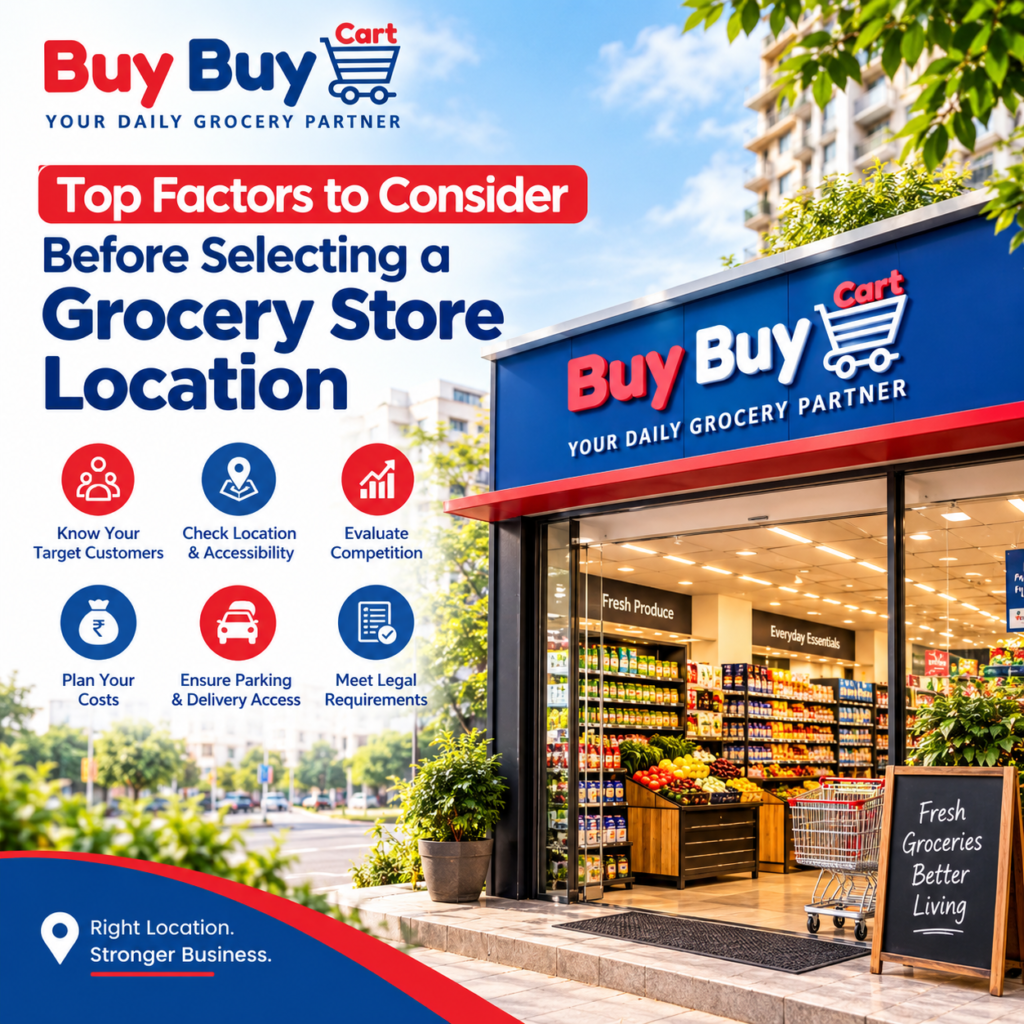
Starting a grocery store can provide a good opportunity for business in India, but it is very important to make the right choice of the location of the store. Despite the fact that the store operates on the principle of quality goods at affordable prices, it may fail to attract clients if it is situated at an inconvenient place. An appropriate location opens doors to visibility; it makes clients visit the store again and again and allows local inhabitants do their daily shopping with ease.
Since the grocery retail market of India comprises traditional kirana shops, local supermarkets and convenience stores, and organised retailers, one can conclude that every type of enterprise acts with its own types of customers, being different with their shopping styles. Thus, finding a suitable place for a shop means doing much more than just missing the opportunity to rent a shop at a good price.
Being a successful entrepreneur means knowing the local demand and competition, evaluating accessibility, and making calculations of the expenditures as well as running costs before making the final decision. Whether you are starting your first grocery retail shop or looking to expand your business, proper location planning in advance will help you minimize risks. This article gives you a brief discussion of the different aspects to take into account.
Why Location Matters for a Grocery Store
Grocery stores usually rely heavily on the convenience and loyalty of their buyers. People often buy essential products like milk, vegetables, rice, flour, cooking oil, snacks, and household supplies. Customers want to buy their essentials from the venue that is easy to access from their homes or jobs.
A good location can increase in-store traffic, product positioning, and customer access to the store. On the other hand, an unfortunate choice of a location may cause problems related to the high cost of rent, lack of parking space, low demand, or strong rivalry. Besides, the location determines the delivery range, suppliers’ accessibility, and costs of doing business. This is how the understanding of these issues can help entrepreneurs make the best decisions in terms of investing.
Top Factors to Consider When Choosing a Grocery Store Location
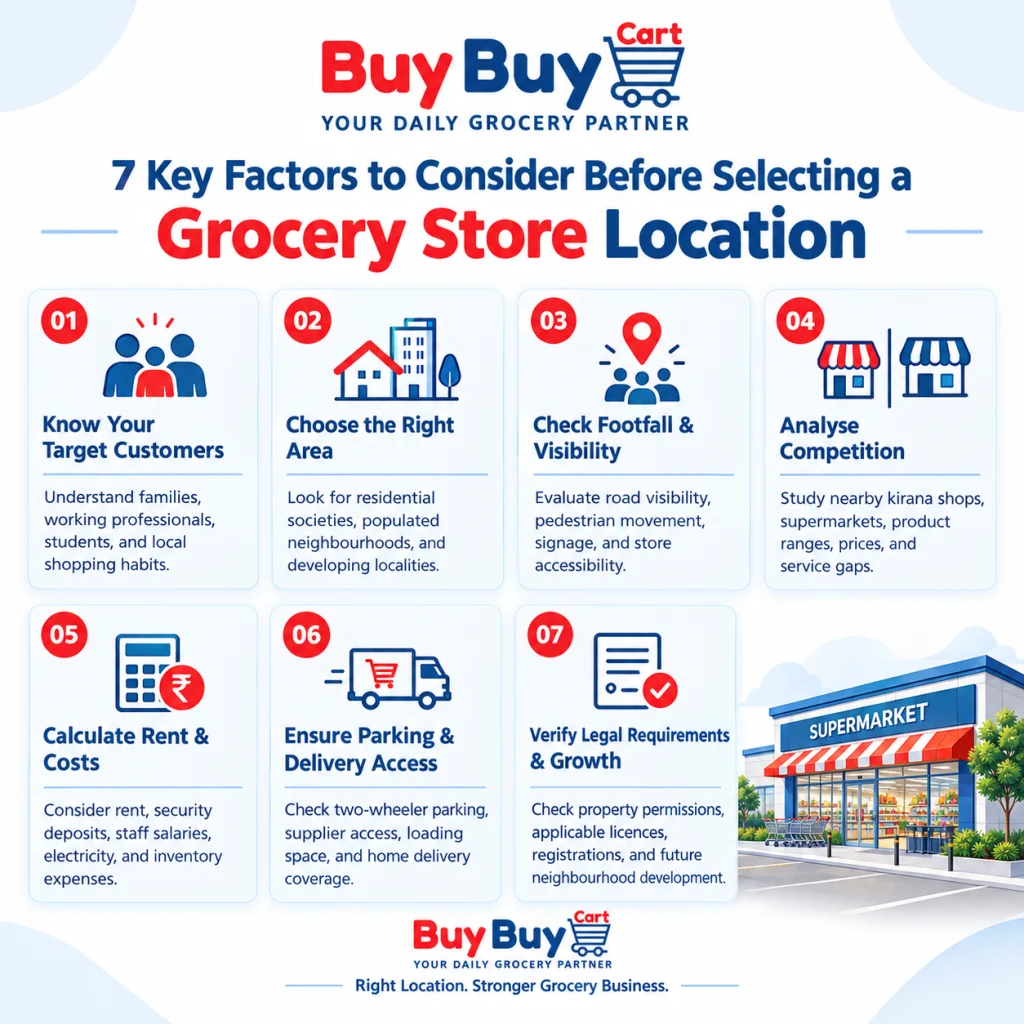
Identify Your Target Customer
Before looking for a property, it’s essential to know who your likely store customers are. The families might need to buy groceries and household items once a month, and the professionals would likely be interested in buying items fast or enjoy home delivery. Young people might be looking for cheap snacks, drinks, and prepared meals.
You should analyze the population of the area, family types, what customers prefer to buy, and their spending habits. For example, if the area has many residential buildings, it is evident that people would love to buy fresh products, groceries, and chemicals.
Also Read: Best Location Selection Tips for Opening a Grocery Store
Select an Appropriate Residential or Commercial Location
Grocery shops thrive in residential neighborhoods because people prefer to purchase essential goods near their homes. All locations near apartment complexes, housing societies, and existing residential colonies can be potential sources for repeat customers.
Emerging neighborhoods may also give good business opportunities if new residential buildings in the area attract people who have never lived in the local residential areas before. Ensure that people have already settled in the area and look for nearby facilities and services.
Commercial zones or mixed locales may attract office employees, residents, and passers-by. Before making a final decision about the project, it is crucial to look at the level of activity in the area, availability of various facilities, and quality of communications.
Assess Visibility and Foot Traffic
A grocery store must be clearly visible and accessible. Stores located on busy roads and near residential areas or community locations will have a higher chance of getting noticed.
But simply having a lot of people passing through the street does not guarantee good sales. Track the movement of pedestrians and vehicles throughout the day and during weekends. Make sure that shoppers can park safely and access the store easily.
Having good signs, an inviting shop front, sufficient lighting, and an accessible entrance can help as well.
Assess Nearby Rivals
Prior to making a decision on the location of your grocery store, first recognize and analyze nearby grocery stores, hypermarkets, convenience stores, and other retail establishments engaged in the sales of daily essentials products. It is a good strategy to visit these companies to comprehend their assortment, pricing, customer service, work hours, and delivery solutions.
Market demand doesn’t mean competition will render a site ineffective for business. Numerous grocery store owners can successfully operate in a highly competitive area due to the fact that a large number of customers need groceries in such place. Therefore, the key question is whether it is possible for your store to satisfy a particular customer demand.
For instance, you can focus on establishing a more effective supply of goods, better shelving, fresher food, easier checkout process, and delivery services. It is also vital to spot the weak points in the current supply of services in order to create a solid business case.
Determine Rental and Operating Expenses
Rental costs have a crucial role in maintaining the overall stability of a grocery store. The property located on a busy road may provide good exposure but might require higher rents and deposits. On the contrary, renting a small space in a residential area may be cheaper and provide constant customers from the locals.
Start from listing monthly expenses including rent, utility bills, salaries of workers, maintenance, storage of inventory, security deposits, etc. Once the expenses are listed, calculate the sales needed to cover them, and then check if this amount is realistic in the particular area you are planning to rent a property.
Assess Accessibility, Parking, and Delivery Options
Convenience is an important element of grocery shopping as customers must be able to reach the store easily and suppliers need sufficient space to load and unload goods.
Check if two-wheeler parking is available nearby, if the entrance is easily accessible, and if delivery partners can come and collect orders conveniently. If you want to offer a home delivery service, examine the number of households available within a reasonable delivery range and the accessibility of the road from the store to nearby residential areas.
Check the Laws and Projections for Growth
Before you sign on the dotted line, make sure you understand the legalities surrounding the property in question in terms of commercial usage, leasing clauses, and local regulations. Depending on your state and business type you may need shop registration, business license, food licenses, municipal licenses, and so on.
Laws about businesses differ in terms of jurisdiction, and location, thus making it important to verify the information with the local authorities.
Providing for long-term development is another point to keep in mind. The construction of new residential areas, introduction of better access roads, and other events may lead to a greater demand in the future.
Common Mistakes to Avoid When Selecting a Grocery Store Location
There are several pitfalls that can raise the financial risks of starting a grocery store. Before making a lease commitment, do not make these mistakes:
- Select a site just because the rent is cheap.
- Disregard competition and consumers.
- Neglect the day-to-day costs of operating the business and the need for inventory.
- Forget to consider the parking situation, the availability of delivery vehicles, and the problems of transportation to the site.
- Sign before finding out about the permits or registration needed for construction on the property in question.
Making time to consider these points will help prevent costly mistakes and enhance awareness of the surroundings.
How to Start Your Own Grocery Store Business?
Choosing the right place for your store is just one part of establishing and running a grocery retail business. Besides the location, entrepreneurs need to pay attention to such matters as marketing, inventory, relationships with suppliers, operations of the store, and pricing.
If you are looking for a well-structured business opportunity, find out more about the Franchise Opportunities at BuyBuyCart.com and the available partnership options. Make sure to check the business model, responsibilities, investment needs, and support.
Conclusion
In conclusion, selecting the best Grocery Store location is about analyzing various factors like customer requirements for the product, visibility, accessibility, competition in the market, rent and possible chances for development in the future. Location which suits one retailer may not be appropriate for another retailer as the needs for the store differ, and the business is directed to different customer segments.
When making decision about a place, observe the surrounding area for a while, communicate with potential customers, study competitor site, and analyze operational costs associated with the grocery store business. Check the necessary permits and whether the desired range of products and services could be offered from the selected location.