
Supermarkets are constantly under pressure to bring in customers and keep them coming back to their store due to the ever-increasing competition within the retail industry. As there are more and more places to shop than ever before (local grocery stores, hypermarkets, and online grocery shopping), just providing grocery items isn’t going to get you there; supermarkets will need to put a greater emphasis on building solid customer relationships if they want to be successful in this competitive market.
Customers who have developed loyalty to a supermarket brand represent one of the most valuable assets to a supermarket brand. Not only do loyal customers tend to buy from you regularly, but they also typically spend more over time and share their experience with others (friends/family), decreasing overall costs associated with acquiring new customers and increasing long-term revenue for your business. The retention of existing customers also contributes greatly to the overall success of a supermarket in terms of its profit margins.
Many factors contribute to customer loyalty in supermarkets, and they include: Product Quality, Pricing, Customer Service, Convenience, Trust, and Personalised Experience. Knowing these factors can assist retailers in establishing an atmosphere where customers will continue to return on a weekly basis. This article will discuss the important factors that contribute to customer loyalty and the means in which supermarkets can improve the way they maintain a relationship with their customers as the retail environment continues to evolve.
Why Customer Loyalty Matters for Supermarkets
In addition to simply being a frequent visitor, loyalty involves the emotional bond and level of trust a shopper has developed with a supermarket’s brand. In the example of supermarket loyalty, it is evident that when customers consistently select the same supermarket, even if there are other supermarkets nearby, they have established an emotional connection that has transcended the price they pay for products at the supermarket.
This positive association with the supermarket will lead customers to make more purchases at that location, as well as be more likely to participate in the supermarket’s promotional activities and advocate on behalf of the supermarket to others. The recommendation of a loyal customer may ultimately lead his or her family members, friends, or members of the online community to shop at the same supermarket.
Some of the key advantages of having a loyal customer include:
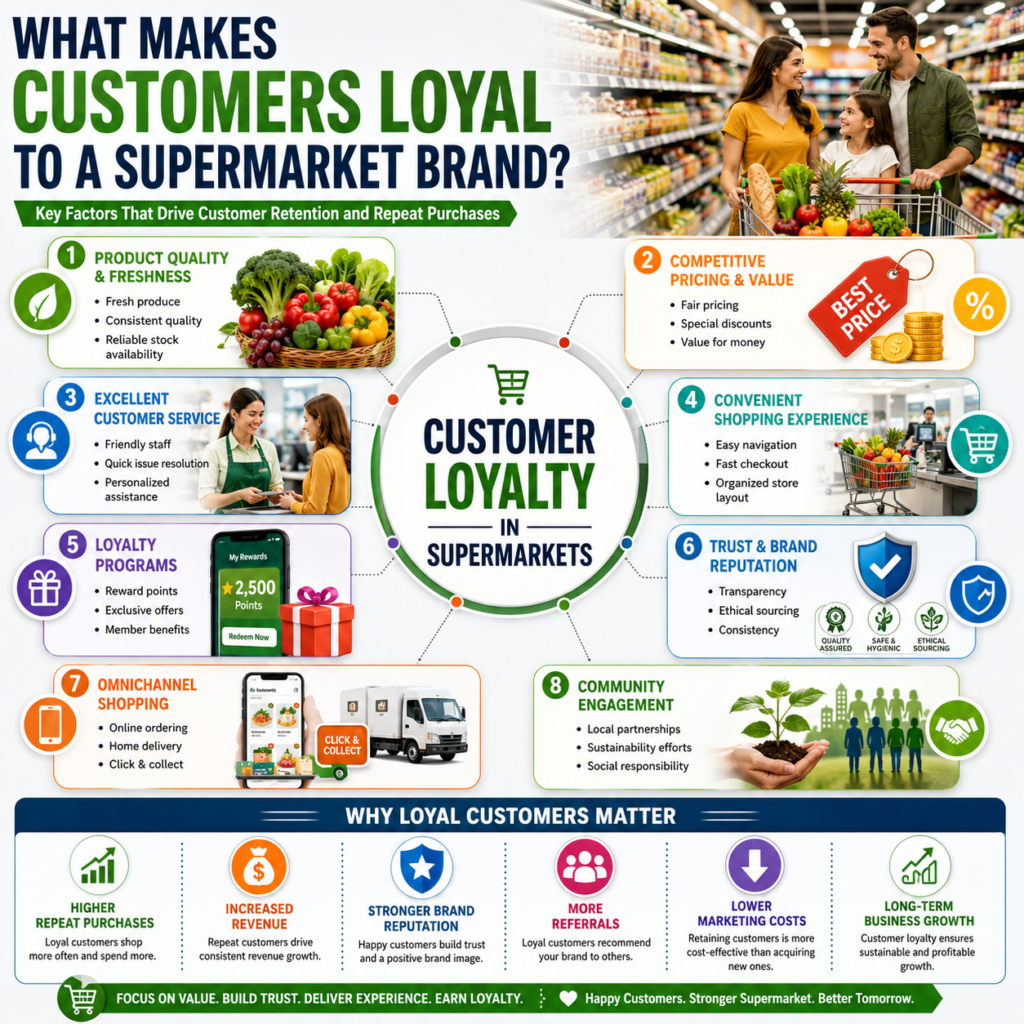
The customer has a higher lifetime value as a customer; repeat purchases are made more frequently; the cost to advertise and acquire new customers is decreased; there is an enhanced brand image; loyal customers will show increased resistance to promotions from competing businesses; there is an increased word-of-mouth referral from a loyal customer; the supermarket will experience enhanced profitability and stability in revenues.
By investing in customer retention strategies, supermarkets have the potential to have long-term financial success compared with focusing solely on attracting new customers to their stores.
Key Factors That Make Customers Loyal to Supermarkets
Good Quality and Freshness of Products
The primary reason people go back to grocery stores is trust in the quality of the products. Customers get a strong impression of a grocery store’s quality when they see fresh produce, fruit, vegetables, dairy, meat, and bakery goods. Grocery customers also want to feel comfortable knowing that the grocery store has safe, high-quality products, and that their money will be well spent on groceries.
Another reason why customers return to grocery stores is reliability. Customers want to know that they can depend on finding good-quality products every time they shop. A grocery store with consistently fresh and high-quality produce and an established reputation will gain the confidence of grocery customers as they continue to shop.
There are some reasons why customers develop loyalty based on the quality of groceries:
- Fresh and high-quality produce
- Consistent quality of groceries
- Availability of a consistent stock of groceries
- Proper handling and storage procedures for groceries
- Good selection of groceries
- Availability of established brands at grocery stores
If a grocery store meets the above criteria, grocery customers will naturally develop better loyalty to the grocery store.
Competitive Pricing and Value
Price is a significant factor influencing how customers shop for groceries, but not all loyal customers are loyal strictly due to price. Customers may focus more on value than they do price, and some customers will choose to pay a little extra if they believe they are getting better quality, convenience, or service in the end.
Supermarkets that are able to communicate value to their customers tend to outperform their competition. Supermarkets can create the perception of low prices while still maintaining a profit by utilising strategic promotions, discounts, bundles, and private-label products.
What customers want:
- Clear and Easy to Understand Pricing
- Frequent Discounts and Promotional Offers
- Discounts for Loyalty Program Members
- Value Offers through Bundles or Packs
- Pricing Competitively on Staples
- Pricing Fairly Across the Different Categories of Products
When retailers implement a reasonable price strategy, they create a continual purchase opportunity for the shopper while also building customer satisfaction.
Excellent Customer Service
Outstanding customer service can turn one-time customers into long-term customers. When customers have a friendly, personable interaction with employees, are helped by knowledgeable employees, and receive help in solving problems quickly, it creates a positive experience they will remember.
Today’s consumers expect more than just a transaction to take place when they shop at the supermarket. They want employees who can recommend products to them, answer their questions, and help them locate the products they need. Resolving complaints quickly shows customers that the supermarket cares about their business.
- Good customer service practices include:
- Approachable and Friendly Employees
- Resolving Complaints Quickly
- Personalised Assistance to Customers
- Train Professional Staff
- Provide Helpful Recommendations for Customers
- Consistent Service Quality
A good overall customer experience in a supermarket can often be the key decision-making factor in determining whether a customer will choose to shop at that supermarket over competing supermarkets.
Convenient Shopping Experience
Consumers increasingly prefer to shop conveniently. Today’s busy shoppers prioritise convenience when choosing grocery stores because they offer a simple, stress-free shopping experience. Every step of the shopping experience, from parking availability to store layout, affects the consumer’s overall experience as they navigate through the store.
An organised store layout allows the consumer to locate the items they wish to purchase quickly. An efficient checkout service lowers wait times and increases customer satisfaction levels. The more convenient the shopping experience is for the customer, the more likely it will be that the customer will shop at the same store again.
Some elements that enhance consumer convenience are:
- A logical store layout
- Clear signage for direction and navigation
- Self-checkout options
- Quick billing processes
- Ample parking for customers
- Longer operating hours
Grocery stores that focus on convenience will have a better chance of maintaining their customer base than those stores that do not focus on convenience.
Effective Loyalty Programs
The loyalty programs offered by grocery stores are often the most effective ways to encourage repeat business from customers. This is because grocery store customers appreciate being rewarded with discounts and other incentives for these repeat visits.
However, just accumulating reward points is not enough for a successful loyalty program. Newer loyalty programs now utilise customer data to create personalised rewards and promotions targeted to specific shopping habits.
Some of the popular features of grocery store loyalty programs are:
- Reward point systems
- Cash back programs
- Exclusive discounts for members
- Birthday and anniversary incentives
- Personalized coupons
- Access to promotions earlier than the general public
When customers feel valued and rewarded by grocery store brands, they tend to develop a greater emotional connection to those grocery store brands.
Trust and Brand Reputation
The relationship between trusting a supermarket and the supermarket’s reputation is one that is essential to the growth of a loyal customer base. In order for consumers to be loyal to a supermarket, they need to know that the items they are purchasing are safe, fair-priced, and will be delivered as promised. In most cases, when a customer does not trust a supermarket, this can damage a supermarket’s reputation and cause customers to leave the store at an historic rate.
Transparency is a key component of building trust. Supermarkets that can provide clear communication to their shoppers about where their products come from, how they are produced, and their pricing will be able to create stronger bonds with their customers.
Examples of trust-building strategies include:
- Honest product descriptions
- Ethical sourcing methods
- Consistent product quality
- Transparent pricing
- Reliable return policies
- Strict food safety policies
Positive branding strategies for supermarkets will help strengthen trust, which will ultimately lead to long-term retention of customers.
Omnichannel Shopping Experience
Consumers who use both physical and digital shopping options want a seamless shopping experience. As supermarkets grow to become more integrated with online and offline shopping options, they will continue to meet their customers’ changing shopping behaviour.
Whether they choose to shop in a store, on a mobile application, or have their groceries delivered to their home, customers will expect the same pricing, promotions, and service levels across all shopping channels. The development and implementation of a successful omnichannel shopping strategy enables supermarkets to provide flexibility to satisfy the consumer, while also providing more opportunities for creating customer engagement.
Examples of important omnichannel shopping features for supermarkets include:
- Online ordering for groceries
- Mobile applications for shopping
- Delivery to residential locations
- Click and collect services
- Visibility of real-time inventory levels
- Digital payment options
Supermarkets will be able to create stronger customer relationships and customer retention through the flexibility offered by an omnichannel shopping strategy.
Also Read: Why Customers Prefer Modern Supermarkets Over Traditional Stores
Community Social Responsibility & Consumer Engagement
Currently, customers are looking for brands that connect with them personally. Companies that give back to their communities through volunteer work or using socially responsible practices will create an emotional bond with their customers, which creates brand loyalty.
Supermarkets that give back to their local community/states by working with/through local businesses and/or helping local people through charitable work are viewed as being committed to something greater than just making money.
Some examples of how supermarkets can replicate this are as follows:
- Working with local suppliers
- Reducing plastic usage
- Assisting with food donations
- Sponsoring local events
- Promoting sustainable sourcing of products
- Investing in new/green initiatives
Customers prefer to do business with brands that have a positive impact on their local community.
Frequent Changes in Customer Loyalty to Supermarkets
Long-established supermarket chains can easily lose customers who do not receive consistent service and/or products; small aggravations or inconveniences over the course of time will result in many customers searching for other alternatives once they begin to accumulate.
When a customer chooses to leave one supermarket and go to another, this usually occurs for one of the following reasons:
- Poor customer service from employees
- Low availability of products (frequent stock shortages)
- Higher prices than other supermarkets
- Long wait times to check out
- Poor product quality (inconsistent quality)
- No Personalised Offers for Customers
- Store does not seem to be clean / well maintained
- Limited selection of products to purchase
By addressing these types of customer grievances proactively, the retailer can increase their customer retention/loyalty and overall level of satisfaction with the store to a great degree.
How Modern Supermarkets Build Long-Term Customer Relationships
Supermarkets understand that building customer loyalty requires ongoing interaction with their customers and not just through one transaction. Retailers utilise data analytics, the insights gained from their customers, and digital technology to understand customer preferences better and provide more individualised shopping experiences.
Supermarkets leverage their understanding of a customer’s previous purchases to suggest additional items and provide incentive offers and to create customised promotions. Once again, mobile applications enhance the level of engagement with customers by allowing them to manage their rewards and communicate.
Supermarkets use many strategies to build customer relationships effectively, including but not limited to:
- Personalised data-driven insights
- Mobile customer loyalty applications
- Customer feedback programs
- Customized promotions
- Continuous service improvements
- Targeted communications
Through these initiatives, supermarkets can form meaningful customer relationships and create long-term customer loyalty.
Future of Supermarkets Customer Loyalty
As customer expectations change and evolve, Supermarkets must adapt in order to keep their competitive edge. Retailers are increasingly turning to emerging technology and changing consumer values to create loyalty among their customers.
Artificial Intelligence is playing an important role in delivering product recommendations based on a customer’s past purchases or in helping to make predictive pricing decisions. Consumers are becoming increasingly aware of the importance of sustainability and are willing to support environmentally responsible retailers. Smart technology is progressing rapidly to provide enhanced, quicker, and more convenient shopping experiences.
Future trends impacting Supermarket customer loyalty include:
- AI personalized recommendations
- Predictive customer insights
- Smart shopping carts
- Contactless shopping experiences
- Sustainability incentives and/or rewards programs
- Hyper-customised promotions
- Enhanced customer engagement via mobile apps
- Voice-assisted shopping tools
Supermarkets that use innovative strategies will have a stronger chance of keeping their customers and growing their brand trust.
Conclusion
Customer loyalty is one of the major components to achieving long-term success for supermarket retailers. Although maintaining a competitive price point is a necessary element of success, a combination of product quality, exceptional customer service, a convenient shopping experience, trust, and a personalised shopping experience are the true components that create customer loyalty. Customers return to their supermarkets that provide consistent value in their shopping experience and make the shopping process simple, fun and rewarding.
As customer expectations are constantly evolving, so must supermarkets develop a customer-centric business model that will create customer value through every touchpoint. Through the use of loyalty programs, omnichannel offerings, community engagement and the use of data, supermarkets can use these methods to improve their relationship with customers.
The most successful supermarkets will realise that the process of establishing customer loyalty occurs over time through providing consistent performance and care for their customer. By investing in customer satisfaction, developing customer trust and providing innovative shopping experiences, supermarkets can form long-lasting relationships with customers and drive repeat sales and sustainable growth. Supermarkets that create, develop and nurture customer loyalty are the brands that will continue to thrive in today’s ever-growing competitive environment.
Frequently Asked Questions (FAQs)
Q. Why is Customer Loyalty Important?
A. Customer loyalty leads to repurchase, reduced marketing expenses, long-term profitability and growth of your brand.
Q. What Are the Influencing Factors of Customer Loyalty?
A. Customer loyalty is driven by product/service quality, pricing, customer service, convenience, trust, Loyalty Programs, and individualised customer experiences.
Q. How Do Supermarkets Use Loyalty Programs to Increase Retention?
A. Retail establishments use loyalty Programs to encourage customers to return by rewarding them for regular/repeat purchases with rewards such as points or discounts.
Q. What is the Importance of Customer Service in Supermarket Loyalty?
A. Providing customers with pleasant experiences through friendly staff, resolving issues expeditiously and providing individualised assistance will assist in developing a base of repeat customers.
Q. How Can Supermarkets Build Long-Term Relationships With Customers?
A. Use customer data responsibly; provide individualised customer experiences; frequently request customer feedback; continually enhance products/services; and provide a consistent level of product/service quality.
If you would like to build customer loyalty to increase sustainable growth in your supermarket business, the keys are to deliver an outstanding value experience, provide individualised customer experiences, and maintain a consistent level of service quality. Through this understanding of what is most important to customers, supermarkets can convert occasional purchasers to loyal lifelong customers and develop a sustainable competitive advantage for years to come.