
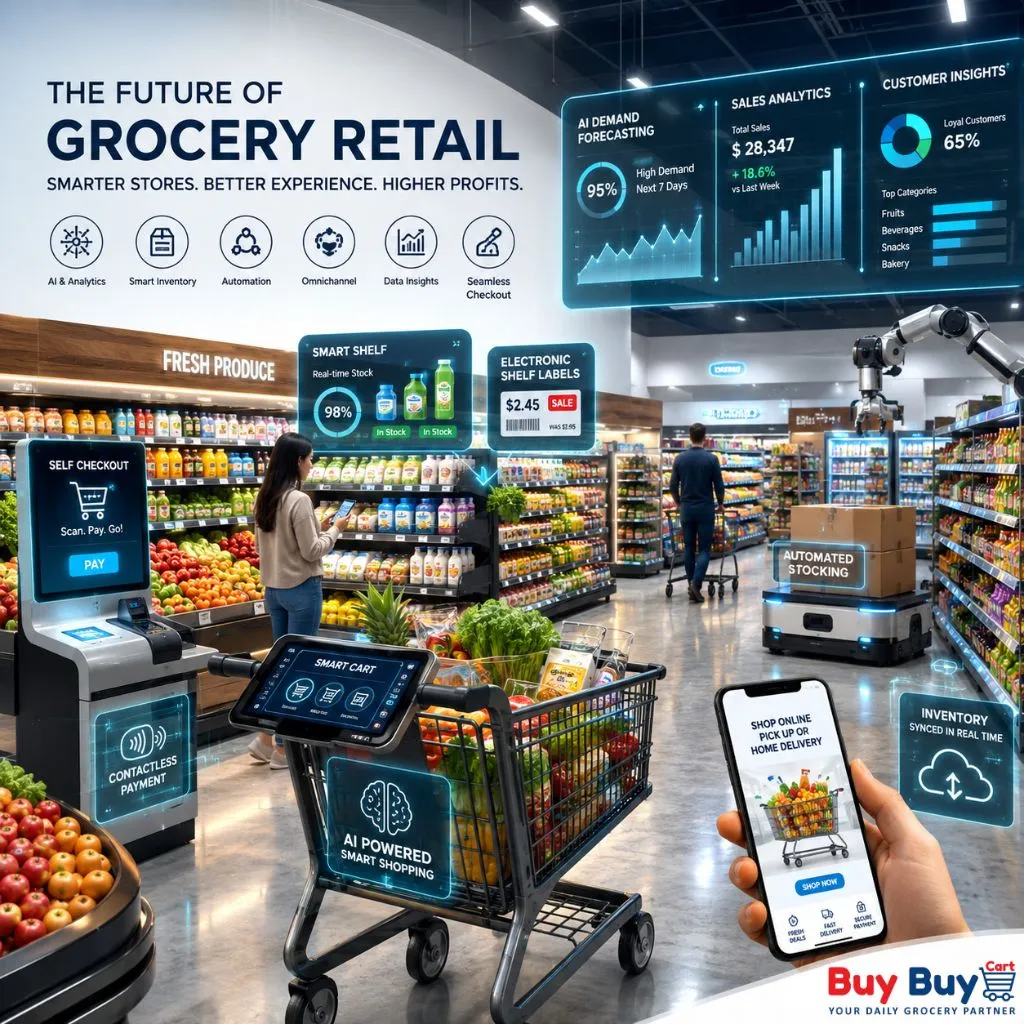
Technological advances are restructuring the grocery retail market at a rapid rate. Grocery retailers are utilizing digital innovations to improve operational efficiency, reduce costs, and provide customers with better grocery shopping experiences, with innovations in areas such as automated inventory control, product knowledge through artificial intelligence (AI) based data analytics, etc.
Grocery store technology is no longer solely for supermarket chains; all sizes of retail grocery establishments are utilizing grocery store technologies to differentiate themselves from the competition in a continuously evolving retail grocery marketplace.
With consumers seeking quicker delivery, targeted promotions, accurate product information regarding inventory levels, and an effortless grocery shopping experience both online and in physical grocery stores, grocery retailers must meet these consumer demands while facing a variety of other pressures such as increasing operational costs, inventory management challenges, decreased numbers of employees in the store to assist customers, and increased competition from retail grocery companies in every sector.
Grocery technology provides grocery retailers across the spectrum opportunities to overcome these obstacles on their way to achieving new growth opportunities. In this blog, we will discuss the current grocery store technology trends that are transforming the way grocery stores conduct business and how grocery retailers of every size can leverage grocery store technologies to continue to grow their grocery franchise businesses over the long term.
Why Technology is Becoming Essential for Modern Grocery Stores
As time has gone on, the grocery sector has changed. The average shopper has changed their shopping habits to be more about the experience of shopping rather than just going to the grocery store to get their basic needs. Customers expect to have their needs met more conveniently and quickly with personalized service that is consistent regardless of where and when they shop, and will abandon one retailer for another if that retailer doesn’t provide them with a digital-first experience.
Technology allows grocery stores to operate more efficiently, decrease waste, have a better handle on staffing, maintain accurate inventory, provide a better level of service, and provide customers with a better overall experience. Using technology in modern grocery stores allows them to track their operations in real-time so owners can make decisions based on facts rather than by guessing.
Additionally, competition has increased; independent grocery stores are now competing against supermarkets, online grocery delivery platforms, fast/express delivery companies (i.e., quick commerce), and large multi-store retail chains. By investing in new technology for grocery stores now, grocery businesses can remain competitive while still being able to operate efficiently and profitably.
In conclusion, technology is what prepares grocery stores for future challenges as customer expectations continue to change. If retailers have a modern, flexible digital infrastructure, they can quickly pivot to be able to accommodate changing consumer behaviours and continue serving their customers and/or meeting their needs.
Grocery Store Technology Trends Retailers Should Watch
AI-Powered Inventory Management
Inventory is at the heart of a grocery store. Having an excess of inventory ties up your cash, while stockouts can annoy customers and negatively impact sales. Retailers today depend on smart inventory management solutions that provide retailers with accurate forecasting of future demand using AI technology instead of using outdated methods.
AI uses historical purchase patterns, seasonal trends, weather forecasts, local events, and customer behaviour to create demand predictions for grocery items in the future. Automating the process of ordering and receiving inventory using the data generated from AI reduces spoilage and waste, increases stock levels on popular items, and provides retailers with the ability to have a better rate of inventory turnover, while providing customers with a reliable supply of their grocery needs.
AI also assists retailers with identifying slow-moving items and makes recommendations for pricing adjustments or promotional campaigns prior to the merchandise becoming obsolete. Retailers achieve an improved rate of inventory turnover, while customers enjoy a continual supply of items they frequently purchase.
Smart / Intelligent POS Systems
Modern-day grocery point of Sale systems do much more than their predecessor: take payments for groceries purchased by customers. Grocery store management systems, which reside in the cloud, allow retailers to manage all of their store expenses and revenue streams from one source of information (e.g., billing, inventory, loyalty program, employees, promotions and reporting).
Retailers have access to real-time dashboards that will allow them to view their sales and business analytics from any place in the world. Retailers are able to analyze which items are their highest-selling items, peak grocery sales hours, profit margins on all of their products, and how customers purchase groceries.
Automating many of the routine business processes associated with running a grocery store improves the accuracy of billing, reduces the amount of time it takes to process a customer for each sale, and makes each day of running a grocery store easier and less stressful.
Self-Service Checkout & Contactless Payment Methods
As consumers look for more convenience, self-service checkout systems are fast becoming one of the most recognizable technologies available to grocery retailers today by enabling customers to check out on their own with reduced wait times in line.
In addition, the use of contactless payment methods (such as digital wallets, UPI, NFC credit/debit cards, and QR code payments) at the checkout is combining with self-service checkout to increase the speed and convenience of completing purchases.
From the retailer’s point of view, using self-service checkout solutions provides many benefits:
- Longer lines are reduced during busy shopping periods
- Higher levels of customer satisfaction
- More efficient use of staff
- Reduced operational costs
- Increased convenience for customers while shopping
While employee-assisted self-service checkouts are also important, hybrid self-service checkout solutions offer flexibility for different customer preferences.
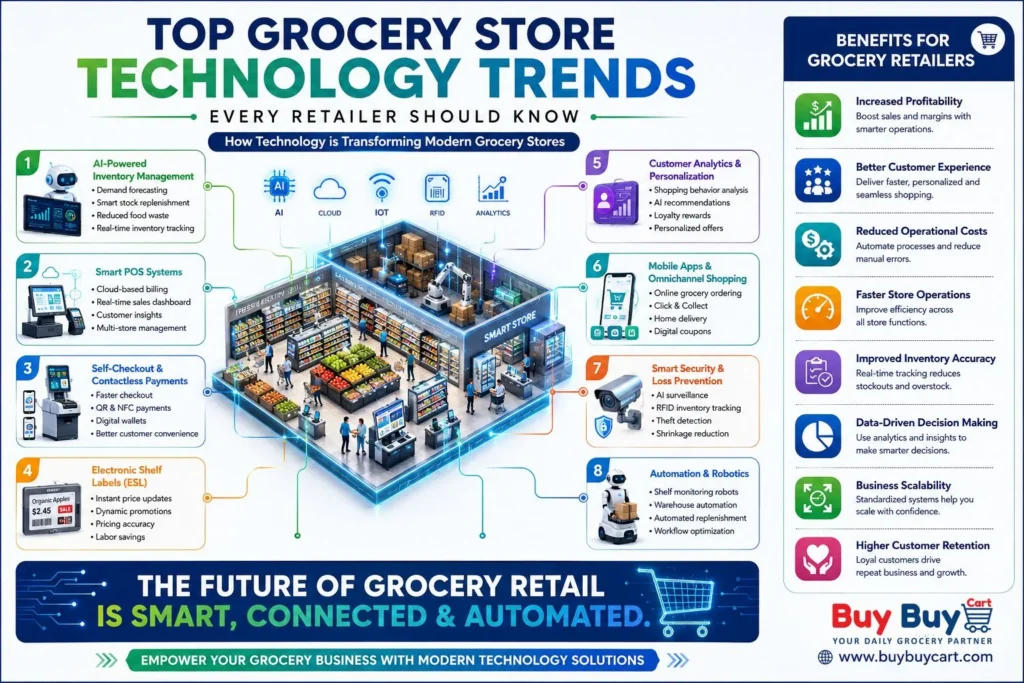
Electronic Shelf Labels (ESLs)
Traditional paper price tags need to be updated by hand, and there is a risk of pricing errors; however, retailers can instantly update prices throughout thousands of products through centralized electronic systems with the use of electronic shelf labels (ESLs).
ESLs will enable retailers to enhance pricing accuracy, dynamically adjust prices with promotional offers and flash sales, and adjust prices in real-time. The use of ESLs will dramatically reduce the labour cost associated with replacing paper price tags.
For retailers managing thousands of SKUs in supermarkets, ESLs can represent a significant investment, and as a result, improve operational efficiency and provide customers with a higher level of trust in their ordering experiences.
Customer Data Analytics and Personalization
In the retail sector, customer data has become one of the most important assets for retailing. Today’s grocery store management systems (think POS) track customer purchase behaviour, how frequently they shop (foot traffic), what categories of products customers buy, loyalty program purchases, etc.
Retailers can use sophisticated analytics to generate personalized offers that encourage customers to re-engage and repeat their purchases.
Here are just a few examples of how retailers can use customer data analytics to produce personalized offers:
- Personalized discount coupons
- Personalized product recommendations
- Birthday rewards
- Holiday promotions
- Loyalty/membership incentives
By focusing on delivering targeted promotions rather than just generic discounts, retailers can achieve higher conversion rates and get better ROI from their marketing.
Mobile Apps and Omnichannel Retail
Today’s consumers want flexibility in shopping options. Some will continue to shop in-store but increasingly prefer the convenience of online ordering, home delivery, and/or click-and-collect shopping.
Mobile apps connect these shopping channels into an integrated omnichannel shopping experience, allowing consumers to browse inventory, build shopping lists, place orders, track deliveries, and receive personalized offers on their smartphones.
By offering a seamless omnichannel shopping experience, retailers can strengthen their relationships with consumers and capture more sales opportunities beyond their physical stores.
With the future of grocery retailing moving into a more digitally advanced environment, retailers who provide an integrated online and offline shopping experience will earn greater customer loyalty.
Intelligent Security and Theft Prevention Tech
Grocery retailers are still affected by retail shrinkage, which will negatively impact their profitability. AI-powered modern surveillance systems in grocery retail can see suspicious activities, monitor the behaviour of people during checkout, and can recognize any abnormal movement of inventory.
Integrated inventory tracking systems give real-time visibility of the discrepancies that exist in inventory, allowing faster investigations into loss from theft, administrative error, or supplier problems.
Intelligent Security technology protects both the company’s revenues and also creates a safer shopping environment for both the customer and employees.
Automation in Grocery Business
Automation is rapidly expanding from warehouses to the normal operation of grocery stores. Robots will perform tasks such as checking for empty shelves, verifying prices are accurate, and even helping with inventory audits.
By using warehouse automation, order fulfillment is quicker and fewer human errors occur. Automation also enhances workflow when it comes to receiving, transferring stock, replenishment, and tracking products.
As the global labour shortage persists, automation will allow grocery retailers to achieve the same level of efficiency in their operations without affecting customer service.
Also Read: How AI in Grocery Retail Is Transforming Shopping Experience
How Small and Mid-Sized Grocery Stores Can Adopt Technology Without Huge Investments
Many independent retailers think that advanced grocery store technology is only for large supermarket chains. The good news is that cloud-based solutions have made it easier for grocery retailers to undergo digital transformation.
Grocery retailers are able to start small with technology that will provide them immediate benefits instead of spending significant amounts of money on clustering tech investments. Starting with implementing a cloud-based POS system, using inventory management software, implementing digital payment solutions, and introducing customer loyalty programs will provide grocery retailers a good starting point.
Grocery retailers should first identify their largest operational challenge to solve. If they have issues with inventory accuracy, they need to focus on a smart inventory management solution. If they have issues with customers experiencing long lines at checkout, they should upgrade their POS systems or add self-checkout options. Small improvements usually yield fast returns on your investment to continue to finance technology investments.
Providing training to employees as part of the implementation of the technology is also important. Without understanding how to use the technology, employees won’t be able to utilize the technology successfully and with confidence.
Role of Technology in Building a Scalable Grocery Franchise Business
Technology is key to building franchises and growing them across an entire system because all locations must be operated using the same type of system for consistency to happen. With standardized Grocery Store Technology systems set up across the franchise, all parts of the franchise operate using the same inventory, pricing, reporting, customer loyalty, and operational workflows.
With centralized dashboards that allow franchise owners and corporate teams to evaluate sales, inventory levels, employee performance, and customer satisfaction in real-time across all of their locations, they can now maintain brand consistency and streamline the decision-making process.
Franchise entrepreneurs interested in getting into grocery retailing should consider the BuyBuyCart Franchise Program available on the Partner With Us page at www.buybuycart.com. This opportunity gives entrepreneurs a chance to build a modern grocery business with standardized operating systems, retail expertise, and scalable technology infrastructure.
In addition to the content being beneficial for those wanting to learn more about retailing, there are several resources that can also be paired together. For example, this article and the Retail Shelf Strategy Guide, the Psychology Behind Supermarket Product Placement, and the Supermarket Inventory Management Guide work in conjunction with a technology-driven retail strategy.
Common Challenges When Implementing Grocery Store Technology
When it comes to introducing new technologies into grocery stores, there can be challenges for retailers that need planning and preparation prior to implementation. The upfront investment of hardware, software, and support services can seem to be high, especially for small retailers; however, by focusing on technologies that offer measurable ROI, retailers can eventually recoup their implementation costs.
Employee resistance is another common barrier faced when implementing technology solutions in grocery stores. Oftentimes, employees are not interested in implementing a technology solution if they are not properly trained and adequately supported after the initial training.
The complexity around system integrations can also make it a challenging process for grocery retailers to successfully implement grocery technology. Therefore, retailers need to choose technology solutions that can integrate all of their business functions, such as inventory management, POS, accounting, loyalty, and reporting, into one cohesive platform.
Data security has become a major issue with grocery retailers as they are collecting increased amounts of customer payment and transaction data. The implementation of strong password policies, encrypted payment processing, frequent software upgrades, and secure cloud servers is vital to protect this sensitive information.
Finally, in order for grocery retailers to achieve successful digital transformation, they must execute strong change management. Grocery retailers should implement new technologies in a phased approach, while communicating to both employees and customers why they are implementing the technology in a specific manner.
Future Trends Shaping Grocery Retail Technology
Next-Gen Grocery Store Technologies are becoming increasingly intelligent and automated. The use of Artificial Intelligence (AI) and Machine Learning (ML) will continue to develop advancements in demand forecasting and customer personalization. Predictive analytics can help retailers predict customers’ purchasing habits with extreme accuracy before they even enter a store.
Shelf monitoring, improving inventory accuracy and removing checkout friction through computer-vision technologies. Smart shopping carts with sensors will likely phase out manual checkout transactions completely.
Robotics will automate repetitively completing tasks within the store, whilst IoT devices will continuously monitor real-time performance of appliances such as refrigeration systems & energy consumption.
Voice-activated shopping assistants, hyper-personalized promotional offers, along with autonomous micro-fulfillment centres will revolutionize the grocery retail sector, creating efficiencies for businesses while providing exceptional customer experiences.
Retailers who choose to implement innovative technologies now will find themselves positioned favourably as the marketplace continues to change rapidly in the future.
Conclusion
The grocery sector has entered into an entirely new era of operation with the advancement of technology impacting almost every area of operation, including customer engagement, inventory management, checkout, security, analytics and franchise development. By investing in the right Grocery Store Technologies, retailers can enhance their operational efficiencies, minimize waste, improve their profitability and produce brilliant shopping experiences for their customers.
If you own an independent grocery store, manage a supermarket, or are a start-up entrepreneur planning to pursue your first retail opportunity, developing modern shopping technologies one by one can give you significant competitive advantages. Those companies that invest in new technology will be best positioned to succeed in the rapidly changing grocery marketplace.
Frequently Asked Questions (FAQs)
- What do we mean by Grocery Store Technology?
Grocery Store Technology includes any of the digital tools/technology you use in the day-to-day operations of your grocery store. This can include things like software tools, automation systems, Artificial Intelligence (AI) solutions, Point of Sale (POS) platforms, and inventory technologies that are used in your grocery store to improve the customer experience and make your operations more efficient.
- How does AI help to manage grocery store inventories?
AI can help you forecast inventory needs and buy products based on how much you sell through an analysis of sales data, seasonal sales trends and customer demand. In addition, by forecasting customer demand, AI can also help to reduce stockouts (running out of product) and waste and to automate the replenishment of inventory.
- Can smart POS systems be used in small grocery stores?
Yes, Cloud-based POS systems are typically affordable, scalable, and able to help small grocery stores manage their billing, inventory, customer loyalty, and reporting functions much more effectively and efficiently.
- Why is self-checkout technology becoming so popular?
Self-checkout technology offers customers the ability to check out with little or no waiting time, and optimizes employee allocations, while also substantially increasing operational productivity.
- How can grocery retailers begin their digital transformation journey?
Retailers should start with cloud-based POS software, inventory management systems, digital payment systems, and customer loyalty programs before moving into AI, automation and advanced analytics.